Walnuts on Anne’s Grave
Ofrenda a la tormentaThe walnuts on Anne Arbizu’s grave are Flora’s private offering to the dead woman she loved and the only remaining link she believes she can carry to her. Their meaning comes from a story Anne told her about women’s power, but the nuts acquire a more intimate significance through Flora’s grief: she imagines that Anne’s energy endures in them and that her will can remain alive. In the encounter with Amaia Salazar, this small object turns an unspoken attachment into something Flora cannot calmly touch or explain.
Origin and Meaning
Flora says that Anne taught her to understand walnuts as vessels of female power, a power women in Baztán had exercised for centuries. Anne described that power as something that could be concentrated, through desire, in a single nut, and claimed that she knew how to use it. Flora retrospectively calls these ideas adolescent fantasies, the sort of belief that can make young people feel exceptional. But she also makes clear that Anne believed them, and that she believed them too when she was with her. The memory therefore belongs not only to a superstition but to the relationship in which it was shared.
The walnut’s meaning changes, for Flora, with Anne’s death. Anne had said that the energy did not end when a person died. Flora says she likes to think that Anne’s energy is concentrated in the walnuts now, and describes the fruits as the only thing connecting her to Anne. Leaving them on the grave is consequently more than a habitual gesture of remembrance: Flora understands each offering as a way of carrying something to Anne, so that Anne’s will may continue within it. The belief offers continuity where death has imposed separation, while remaining grounded in Flora’s own admission that she chooses to believe it.
Amaia’s Test
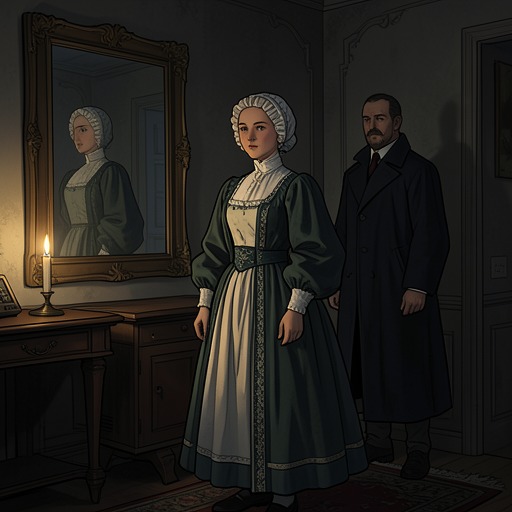
Amaia brings home a walnut she has taken from Anne’s grave. While sitting beside Flora on the sofa, she places it in Flora’s hand, repeating a gesture Sara Durán had made that afternoon. Flora’s response is abrupt: she tries to rid herself of the fruit so violently that most of her whisky spills across her skirt. Amaia retrieves the walnut from the cushions and holds it before Flora, who looks at it with visible fear and demands that Amaia remove it from the house.
The physical details make the object’s effect unmistakable. A nut that Flora has repeatedly left at a grave is suddenly present in her home, in her hand, and under her gaze. Her attempt to reject it leaves a stain on her skirt; Amaia, rather than letting it disappear among the cushions, recovers it and keeps it before her. Flora says Amaia does not understand what it is, then explains that it is something for Anne. The distinction matters: Flora does not present the walnut as a random token or a keepsake for herself, but as an offering whose destination and meaning remain tied to the dead woman.
Amaia asks why Flora leaves walnuts on the grave and why she denies that she loved Anne, assuring her that nobody will judge her. Flora does not answer with a direct confirmation. Instead, she puts down her glass and repeatedly rubs the whisky stain with a paper napkin, then uses the same napkin to wipe away her tears. Her crying recalls an earlier occasion when Amaia mentioned Anne and their relationship. The repeated association between Anne and Flora’s uncontrolled grief gives the walnut scene emotional evidence of a bond that Flora has not yet been able to state plainly.
The Confession Behind the Offering
Later, as Flora carries the empty glasses to the kitchen and washes them, Amaia asks again why she leaves nuts on Anne’s grave. Flora first says that Amaia would not understand, then explains Anne’s exceptional influence over other people. She recalls Anne as knowing her own unusual qualities and possessing a powerful hold over others that Flora cannot readily describe. The explanation deepens the walnut’s significance: Flora’s offering preserves not merely an image of Anne but the force Flora believes Anne possessed.
Flora’s account also holds belief and distance together. She can call the walnut story a teenage fantasy, yet she says she shared Anne’s belief in it and still finds comfort in the possibility that Anne’s energy survives. The nuts thus mark a continuing attachment without resolving its supernatural truth. Their importance lies in what Flora makes of them: material remains become a link to a person whose death has not ended her influence in Flora’s imagination.
Narrative Significance
The walnuts turn an otherwise deniable relationship into a visible pattern. Amaia has seen them on Anne’s grave and understands their significance well enough to use one as a deliberate test; Flora’s fear, distress, and tears reveal how charged the offering is for her. Yet the object does not function as a simple proof or a final declaration. Flora explains its connection to Anne and to the belief they shared, while leaving Amaia’s question about love unanswered. The scene lets the walnut carry both what Flora can disclose and what she still cannot say directly.
Its movement from grave to hand, from hand to sofa cushions, and finally back into Amaia’s pocket gives the exchange its quiet force. On the grave, the nut is Flora’s chosen message to Anne; in the house, exposed to Amaia, it becomes a challenge to Flora’s silence. The same small fruit can therefore be offering, remembrance, and emotional evidence without losing the uncertainty at the heart of Flora’s belief. It preserves Anne’s presence for Flora, but also makes the cost of that continuing bond impossible for Amaia to overlook.