Gus: The Theatre Cat
Old Possum's Book of Practical Cats“Gus: The Theatre Cat” introduces Gus through his place at the Theatre Door, then lets his history as a performer emerge in the stories he tells. Its portrait is built around a contrast: the theatre belongs to the present, but Gus measures it against the mystery and acclaim of his own past, especially his celebrated creation, Firefrorefiddle, the Fiend of the Fell.
The Theatre Cat
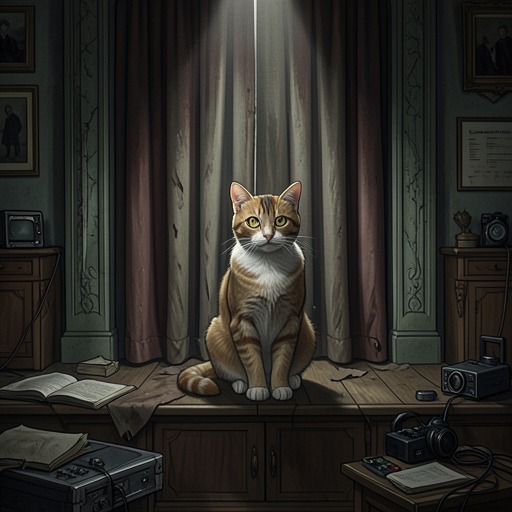
Gus is identified as the Cat at the Theatre Door. The title’s theatrical identity is more than a label: the song makes the theatre the frame through which he is known, while its attention turns from his present association with the venue to the performer he once was. His life in the theatre comes into view through recollection rather than through a staged scene from his past.
A Career Recalled in Anecdotes
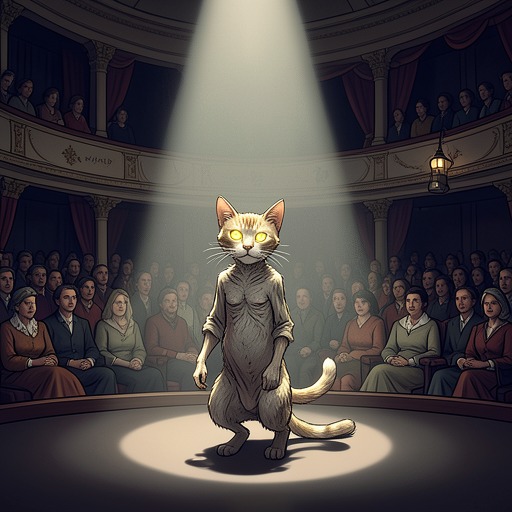
Gus regales his companions with anecdotes from what the song calls his palmiest days. He describes himself as once having been a star of the highest degree and recalls acting with Irving and Tree. He also tells of his success on the Halls, where the Gallery gave him seven cat-calls. The account holds accomplishment and comic deflation together: Gus remembers a career with distinguished associations, but one of its sharpest audience responses was a chorus of disapproval.
The song makes his self-presentation part of the portrait. Gus likes to relate these successes, and his recollections arrive as anecdotes for an audience rather than as a detached record of his career. The shift into his own first-person account gives his reminiscences a performed quality: even in recollection, he is once again taking the stage.
Firefrorefiddle and the Repeated Claim
Among Gus’s parts, he singles out Firefrorefiddle, the Fiend of the Fell, as his grandest creation. The claim is emphasized through recurrence. The narrator first presents this role as the creation Gus loves to cite; Gus then repeats the claim in his own account, invoking history as its witness. Repetition turns the role into the centrepiece of his remembered career and shows how persistently he returns to it.
Memory Against the Modern Theatre
Gus’s memories acquire a sharper edge when he contrasts modern productions with the mystery of his own performance. He recalls the moment when he made history as Firefrorefiddle, returning once more to that role as the measure of theatrical excitement. The song does not supply an account of the production itself; instead, it makes Gus’s repeated recollection the evidence of its importance to him. His past survives as a story he tells, and the returning memory gives the portrait its mixture of theatrical grandeur, comic self-regard, and nostalgia.