Victorian era
Old Possum's Book of Practical CatsThe Victorian era appears in Old Possum’s Book of Practical Cats as a measure of remembered time: Old Deuteronomy’s fame reaches back before Queen Victoria’s accession, while Gus recalls the days of Victoria’s reign to criticize how kittens are trained in the present. These brief references give the poems a long historical horizon, but do not develop the era into a detailed setting or historical account.
Historical Scale and Old Deuteronomy
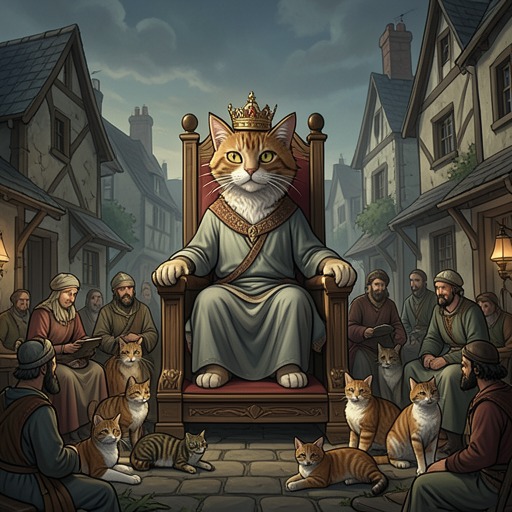
Old Deuteronomy is said to have been famous in proverb and rhyme “A long while before Queen Victoria’s accession.” The comparison places his reputation beyond the lifetime of a single generation and makes the Victorian threshold a marker of just how old his renown is. In the poem’s playful scale of feline longevity, the date functions less as a precise chronology than as a way to make the cat’s past seem vast.
The surrounding portrait strengthens that impression: Old Deuteronomy is described as having lived many lives in succession and as having buried nine wives, with the speaker hinting at a still greater number. The Victorian reference belongs to this deliberately extravagant account of age and accumulated history; it anchors the joke in a recognizable historical point without supplying a calculable lifespan.
Gus’s Recollection of the Reign
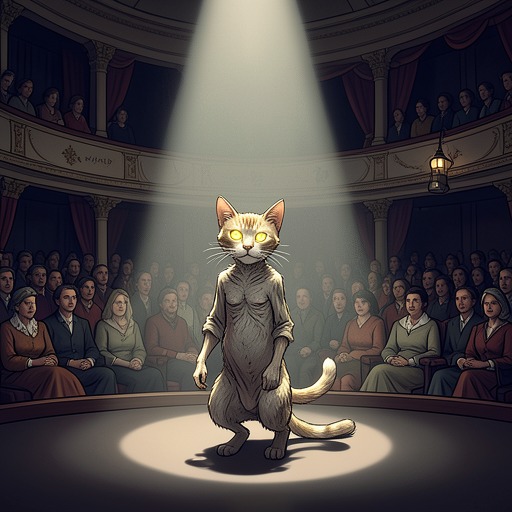
Gus uses the other explicit reference to frame a complaint about changing standards. Recalling what he calls “the days when Victoria reigned,” he says kittens are no longer trained as cats were in his time. He contrasts that former practice with the present, in which kittens are not drilled in a regular troupe and supposedly consider themselves clever merely for jumping through a hoop.
The contrast is part of Gus’s self-presentation as an experienced theatre cat. His recollection follows his claim to have rescued a child from a house on fire, so the remembered past carries both professional authority and a theatrical history of service. The poem gives no independent account of Victorian training customs; it presents them through Gus’s nostalgic comparison with younger performers.
The Era’s Function in the Book
Together, the references use Victorian time in two different ways. For Old Deuteronomy, Queen Victoria’s accession is a distant boundary that measures the depth of a cat’s fame. For Gus, Victoria’s reign is a remembered period against which the present can be judged as less disciplined. One reference enlarges the past; the other turns it into a standard of practice.
The Victorian era therefore supplies historical depth without becoming the poems’ main subject. Its significance lies in the contrast it enables between remembered and present experience, and in the comic scale by which feline lives, reputations, and traditions seem to outlast ordinary human measures of time.