
Public Reputation and Private Reality
Old Possum's Book of Practical CatsThis flow traces how each cat’s public reputation is built from partial evidence, performance, and the gap between what observers see and what remains hidden.
increasing Bearing strength in each event
 decreasing
Bearing strength in each eventdecreasingA Name People Use
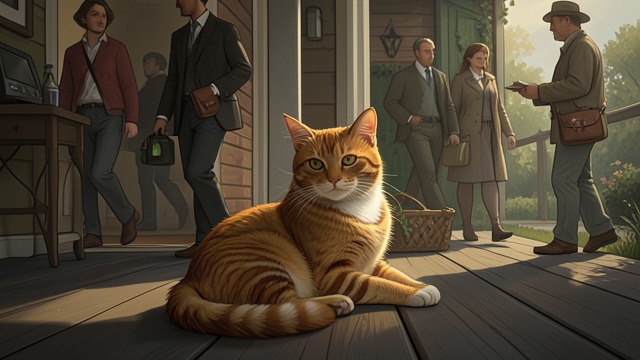
A Name People Use
Social Recognition
A family’s everyday name makes a cat easy to identify in conversation.
The name belongs to a shared social setting.
It records how people have chosen to recognize the animal.
An Incomplete Portrait
The name cannot capture all of the cat’s character.
The poem distinguishes public familiarity from intimate knowledge.
A relationship begins with recognition but cannot end there.
The Famous Old Cat
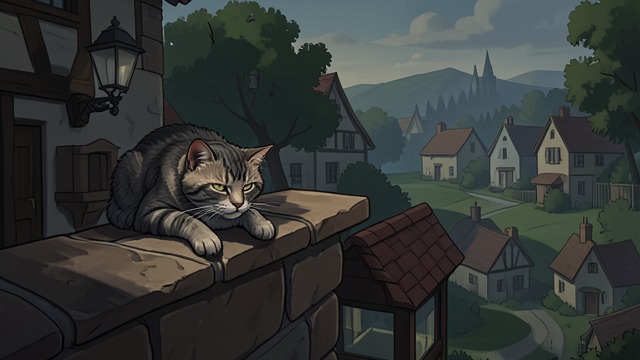
The Famous Old Cat
Reputation Across Generations
Old Deuteronomy is remembered in local proverb and rhyme.
The village’s stories turn his long life into public legend.
His reputation connects present observers to earlier generations.
A Living Presence
He is not merely a story when he rests on the vicarage wall.
The Oldest Inhabitant reacts to a real and familiar cat.
Public memory gains emotional force through renewed encounter.
The Actor’s Self-Portrait

The Actor’s Self-Portrait
A Claimed Past
Gus tells friends that he once starred in notable theatrical roles.
His stories shape how his companions see him in the present.
Performance continues through his account of performance.
Memory and Companionship
The club audience gives his recollections a social setting.
His friends may hear a boast, but they also hear an old performer preserving himself.
His public reputation becomes an emotional bond sustained by listening.
The Mystery of Macavity

The Mystery of Macavity
Reputation Without Presence
Macavity is blamed for crimes even though investigators never find him there.
His public identity grows from accusations and absence.
The gap makes him more legendary than directly knowable.
An Unavailable Relationship
Authorities cannot confirm what they believe about him.
The poem’s audience recognizes the pattern but cannot resolve it.
Macavity’s reputation binds observers through shared frustration.
The Cat Behind the Greeting

The Cat Behind the Greeting
Address Before Knowledge
A person may greet a cat before knowing its name.
The formal approach recognizes a presence without claiming intimacy.
Respect makes room for a relationship still developing.
Private Reality Remains
Even friendship does not erase the cat’s independent identity.
The collection’s public portraits never fully disclose the animals they describe.
The final bond is built on affection that accepts what it cannot possess.
At the start of the naming poem
When the village recalls Old Deuteronomy
When Gus recounts his career
As investigators repeatedly search for him
At the final advice on addressing cats
