Dogs
Old Possum's Book of Practical CatsDogs are presented both as comic figures in everyday life and as participants in a noisy, recurrent canine feud. The contrast is central: the usual town dog tends toward clowning, but the Pekes and Pollicles are singled out as proud, passionate foes whose hostility persists wherever they meet.
Identity and Characterization
In the discussion of how to address Cats, the speaker first insists on the distinction between Cats and Dogs, then characterizes Dogs as pretending to like a fight. The generalization is immediately qualified: the usual Dog about town is inclined to play the clown, rather than display excessive pride. These lines offer a comic social type, not a single individual, and the speaker explicitly excludes the Pekes from it, calling them and similar canine figures exceptional.
The Pekes–Pollicles Rivalry
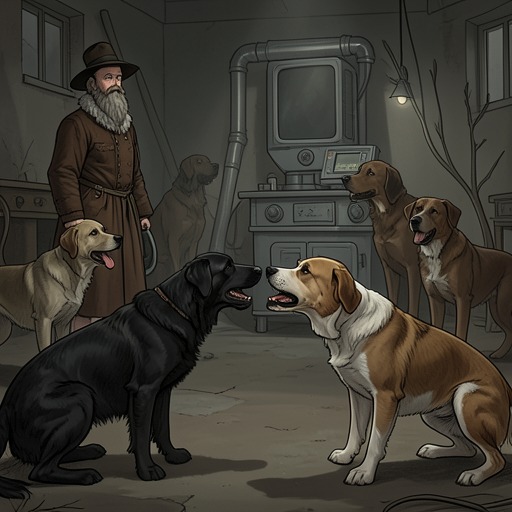
The account of the Pekes and the Pollicles describes them as proud and implacable, passionately opposed wherever they go. Their feud is presented as a repeated condition rather than a dispute confined to one encounter: the same antagonism recurs from place to place. This makes them a pointed exception to the more clownish image of the ordinary town Dog.
Collective Noise and Effects
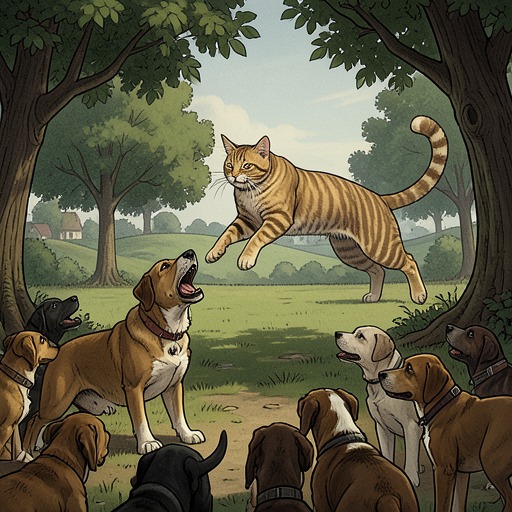
When the bold canine combatants assemble, their barking grows loud enough to be heard all over the Park. The disturbance has effects beyond the dogs themselves: traffic stops, the Underground trembles, and some neighbours become afraid. The episode enlarges a comic quarrel into a spectacle that disrupts public life, while keeping the dogs’ collective noise at its centre.