Gus
Old Possum's Book of Practical CatsGus, also known by his full name Asparagus and identified as the theatre-door cat, is a former stage star whose present physical frailty stands against the theatrical distinction he remembers. His account of his career is built from specific performances and achievements, culminating in his claim that his grandest creation was Firefrorefiddle, the Fiend of the Fell. The contrast between his shabby appearance and his expansive recollections gives the portrait its defining tension: the stage remains vivid in his stories even as his body bears signs of age and illness.
Identity and Present Condition
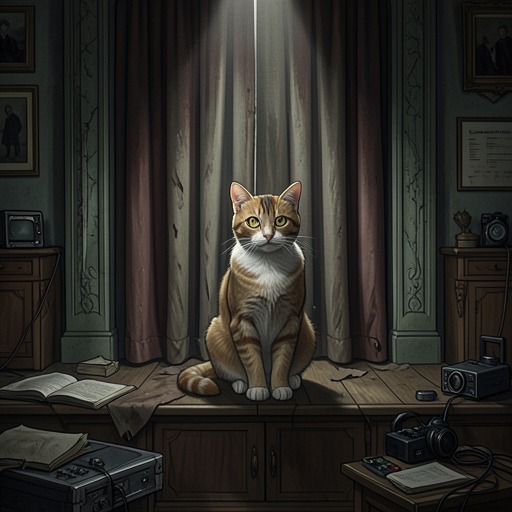
Gus is introduced as the cat at the theatre door, a position that connects his identity directly to the world of performance. His full name is Asparagus, but the name is considered such a fuss to pronounce that he is usually called Gus. The change is practical and habitual: the longer name gives way to the short one used in ordinary address. The text offers both names, while presenting Gus as the familiar form.
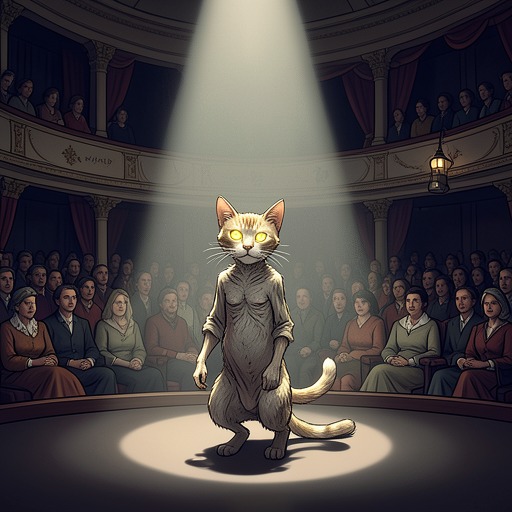
The description of him in the present is sharply physical. His coat is very shabby, he is thin as a rake, and palsy makes his paw shake. These details are set beside the assertion that in his youth he was among the smartest of cats. The passage does not explain the cause of his condition or describe treatment; instead, it places visible frailty beside remembered distinction. That contrast establishes the distance between the performer he was and the cat now encountered at the theatre door without erasing either side of the portrait.
Career and Repertoire
Gus recalls having been a star of the highest degree. The claim is supported by named theatrical associations: he says he acted with Irving and Tree. The names give his recollections a professional frame, while the passage keeps the evidence in the form of his own account of past success. His standing is further evoked through his experience on the Halls, where the Gallery once gave him seven cat-calls. That number makes the recollection precise, but its meaning is not presented as simple acclaim: the audience response is part of the story he chooses to tell about his career.
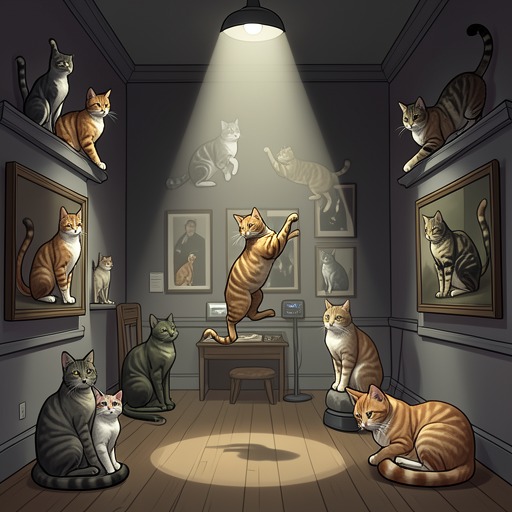
His remembered work ranged across different kinds of performance. He says he played every possible part, and recalls that during the Pantomime season he never fell flat. He also reports having understudied Dick Whittington's Cat. Together, these details sketch a career that included broad role-playing, pantomime, and understudy work, rather than a single celebrated appearance. The passage does not supply a chronology or a list of productions; instead, it lets Gus's own selection of roles and achievements convey the breadth he attributes to his theatrical life.
The career account reaches its high point in the creation he calls his grandest: Firefrorefiddle, the Fiend of the Fell. Gus returns to this claim, presenting it first as something he loves to tell and again as a conclusion to his account of parts played. The repetition gives the creation a special place in his self-portrait. Rather than simply adding another item to a résumé, it becomes the story to which his memories repeatedly lead.
Anecdotes and Self-Presentation
Gus loves to regale listeners with anecdotes from his palmiest days, but the pleasure has a stated condition: someone else pays. The detail makes his storytelling a social exchange as well as a recollection of former success. He is not shown giving a formal account of his life; he tells stories, and the passage emphasizes both the audience for them and the circumstance under which he enjoys telling them. The anecdotes keep his theatrical past in circulation in the present.
His manner of recounting that past is confidently self-promotional. He describes himself as a star, emphasizes the range of parts he played, recalls never falling flat in pantomime, and singles out his own greatest creation. These are claims made through his reminiscences, not an independent catalogue of his career. The passage preserves that distinction: Gus's pride and the concrete names in his stories shape the reader's picture, while his account remains recognizably his own version of his achievements.
Narrative Role and Significance
Gus's portrait is structured around contrast and recurrence. The opening details establish the shabby coat, thin frame, and shaking paw; the career memories then restore a version of him as a performer who worked with Irving and Tree and took pride in his stage accomplishments. The two modes coexist. His recollections do not undo the physical description, and his present condition does not cancel the theatrical identity he continues to assert through stories.
The return to Firefrorefiddle gives the account a refrain-like shape: Gus's many roles and experiences ultimately gather around the creation he most wants remembered. The Gallery's seven cat-calls offer a different, less triumphant piece of theatrical history, while his claims about pantomime and his grandest creation emphasize success as he sees it. That range makes the reminiscence more particular than a simple boast. Gus is presented through a performance of memory itself: he selects episodes, names his achievements, and sustains his connection to the theatre by telling what he says happened there.