Bill Sikes
Oliver TwistBill Sikes is the most physically menacing and morally irredeemable figure in Charles Dickens's Oliver Twist, a professional housebreaker whose capacity for cruelty defines the novel's darkest episodes. Unlike Fagin's sly, manipulative villainy, Sikes embodies raw, unthinking violence; his presence in the story marks the point at which the criminal underworld shifts from petty theft to lethal brutality. His relationship with Nancy, his murder of her, and his subsequent flight and death form one of the novel's central arcs, illustrating the inescapable consequences of a life given over entirely to savagery and self-interest.
Identity and Appearance
Sikes is introduced as a stoutly-built fellow of about five-and-thirty, dressed in a black velveteen coat, very soiled drab breeches, lace-up half boots, and grey cotton stockings that enclose a bulky pair of legs with large swelling calves—the kind of legs that always look incomplete without a set of fetters to garnish them. He wears a brown hat and a dirty belcher handkerchief around his neck, and his broad heavy countenance bears a beard of three days' growth and two scowling eyes, one of which displays various parti-coloured symptoms of having been recently damaged by a blow. His voice is a deep growl, and his habitual mode of address is a stream of curses and threats. He is accompanied everywhere by a white shaggy dog named Bull's-eye, whose face is scratched and torn in twenty different places, and who shares his master's vicious temperament.
Role in the Criminal Underworld
Sikes operates as a housebreaker and robber, occupying a higher tier of criminality than Fagin's pickpocket gang. He is a freelance enforcer and heavy, hired by Fagin for jobs requiring physical force rather than sleight of hand. Their relationship is one of mutual distrust and mutual need: Fagin fears Sikes's violence but relies on his muscle, while Sikes despises Fagin's cowardice and cunning but depends on him for fencing stolen goods and for information. Sikes makes no secret of his contempt for the Jew, telling him, "I've got the upper hand over you, Fagin; and, d—me, I'll keep it." He is aware that Fagin would betray him if it were profitable, and he responds with open threats. The dog Bull's-eye functions as an extension of Sikes's own nature—brutal, loyal only to its master, and feared by everyone else.
Relationship with Nancy
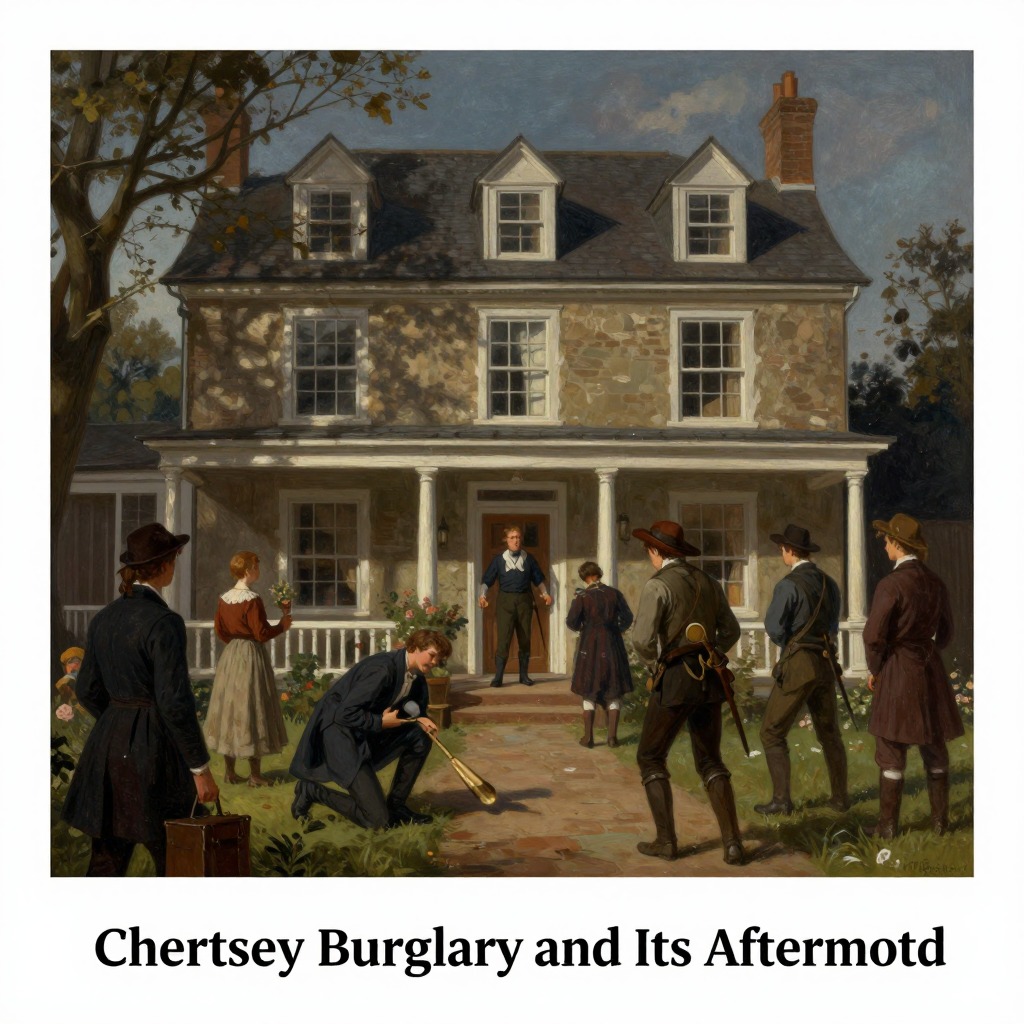
Nancy is Sikes's lover and victim, bound to him by a terrible, self-destructive loyalty that she herself cannot fully explain. She nurses him through a fever after the failed Chertsey burglary, enduring his blows and curses. When she secretly meets Rose Maylie and Mr. Brownlow on London Bridge to betray the gang's secrets, she does so out of compassion for Oliver, but she refuses to abandon Sikes, telling Rose, "I am chained to my old life. I loathe and hate it now, but I cannot leave it." She admits that she would stay with him even if she knew he would kill her. Sikes, for his part, treats her with casual brutality—striking her, threatening her, and ultimately murdering her when he learns of her betrayal. The murder is the novel's most harrowing scene: he beats her twice with a heavy club after she falls, and her dying gesture is to hold up Rose Maylie's white handkerchief as a prayer for mercy.
The Murder and Its Aftermath
Fagin, having set Noah Claypole to spy on Nancy, learns of her meeting on London Bridge and reports it to Sikes. Sikes rushes home, confronts Nancy, and in a frenzy of rage beats her to death with a heavy club. The murder is followed by a prolonged and psychologically intense flight. Sikes attempts to clean the room, burning the club and cutting bloodstains from his clothes, but he is haunted by the corpse's staring eyes. He wanders the countryside in a state of terror, unable to escape the vision of his victim. He tries to drown his dog Bull's-eye to eliminate a clue, but the animal senses his intent and runs away. The pursuit closes in as news of the murder spreads, and Sikes is cornered in Jacob's Island, a squalid slum on the Thames.
Death
Trapped by an angry mob in a house on Jacob's Island, Sikes attempts to escape by lowering himself from the roof with a rope. As he puts the noose over his head, he sees a vision of Nancy's eyes and staggers backward, losing his balance. He falls from the parapet, and the rope, which he had intended to use for his descent, tightens around his neck. He drops thirty-five feet and is hanged by his own rope, dying instantly. The dog Bull's-eye, leaping for his master's shoulders, misses and falls into the ditch below, dashing out his brains against a stone. Sikes's death is a grotesque parody of judicial execution—a self-inflicted hanging brought about by his own guilty conscience.
Thematic Significance
Sikes represents the pure, unmediated violence that lurks beneath the surface of the criminal world Dickens depicts. Unlike Fagin, who schemes and manipulates, or the Artful Dodger, who treats thievery as a game, Sikes has no redeeming qualities and no capacity for change. His relationship with Nancy illustrates the destructive power of loyalty twisted into codependency, and his murder of her is the novel's moral turning point, after which the forces of justice and retribution close in inexorably. His death, caused by his own hand and his own terror, suggests that even the most hardened criminal cannot escape the psychological consequences of his actions. In the novel's final moral economy, Sikes is not brought to justice by the law but by his own guilt, which manifests as a hallucinatory vision that literally unbalances him and leads to his destruction.