Dick
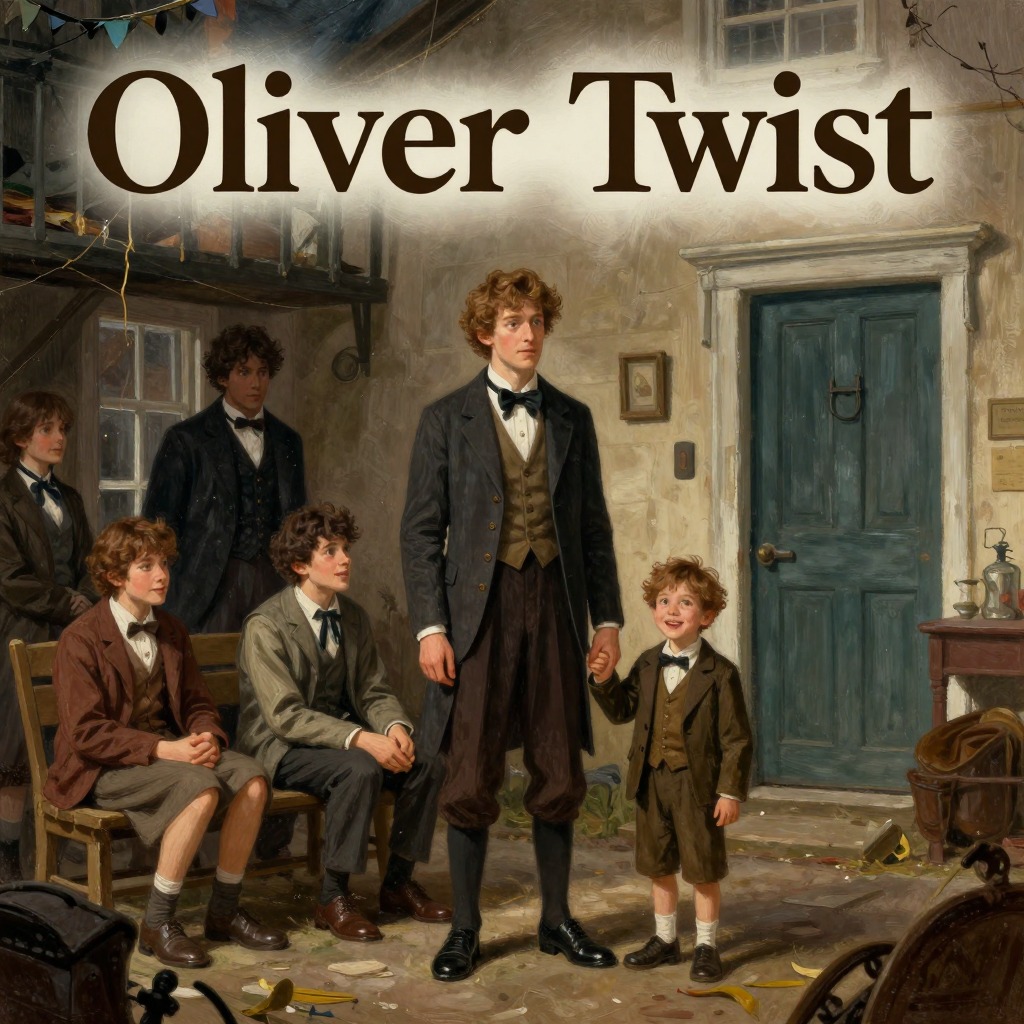
Oliver TwistDick is a minor but profoundly resonant figure in Charles Dickens's Oliver Twist, a pale, dying workhouse boy whose brief encounter with Oliver on the morning of his flight to London provides the orphan with his first and only blessing. His subsequent death, revealed in the novel's final chapter, serves as a quiet but devastating counterpoint to the story's eventual happy resolutions, underscoring the cost of institutional cruelty and the fragility of childhood innocence in a world governed by the Poor Law.
Identity and Background
Dick is a fellow inmate of the branch workhouse, or "farm," run by Mrs. Mann, where Oliver spent his first nine years. He is described as a "pale and thin" child with "sunken" cheeks and "large and bright" eyes, his "scanty parish dress" hanging "loosely on his feeble body" and his "young limbs" wasted "like those of an old man." He is one of the few companions Oliver has known, and the two have shared the common experiences of being "beaten, and starved, and shut up together, many and many a time." When Mr. Bumble visits the farm to collect Oliver, he inquires after Dick, and Mrs. Mann reports that he is not improving, calling him an "ill-conditioned, wicious, bad-disposed porochial child." Bumble, after hearing Dick's earnest request to send a message to Oliver, declares that "that out-dacious Oliver had demogalized them all" and orders Dick locked in the coal-cellar.
The Farewell and Blessing
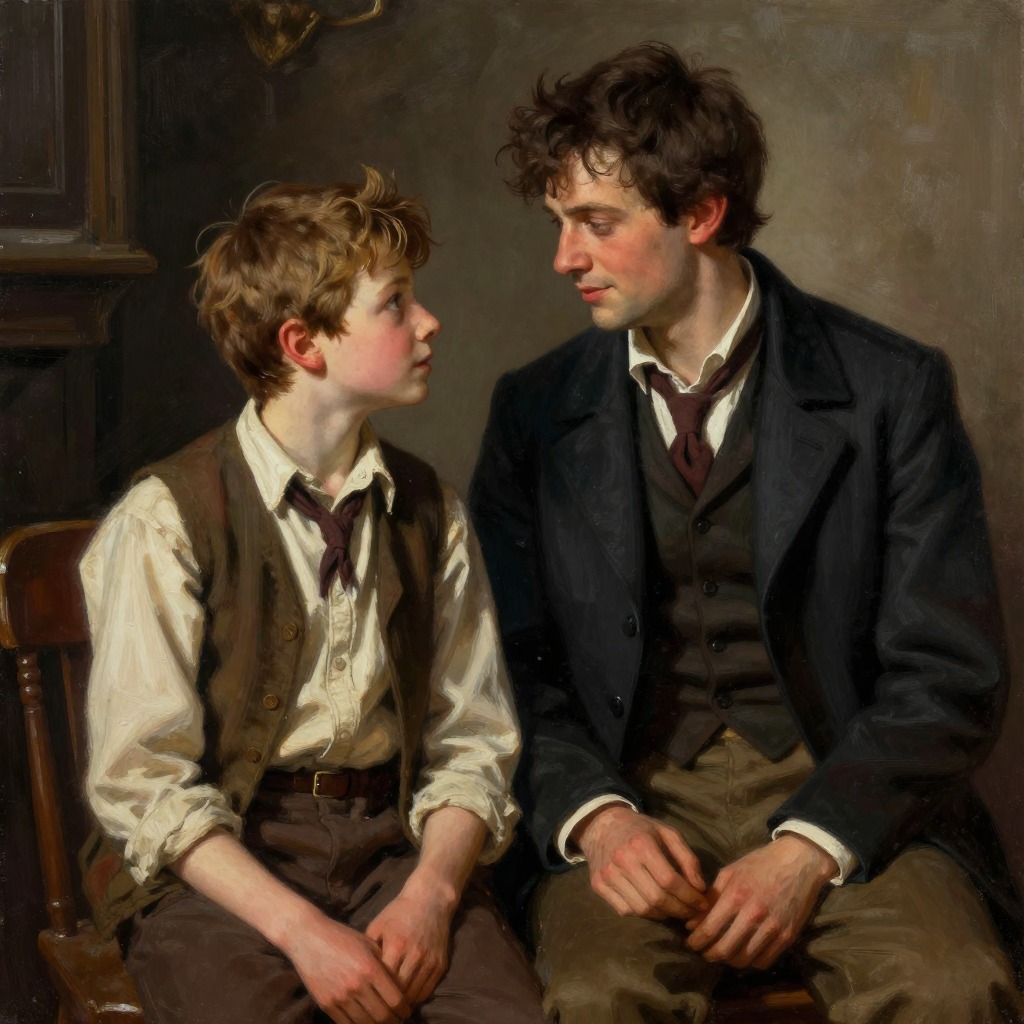
Dick's most significant scene occurs early in the novel, when Oliver, having run away from Mr. Sowerberry's, stops at the farm to say goodbye. Oliver finds Dick weeding a garden bed, and the boy runs to the gate, thrusting "his thin arm between the rails to greet him." Dick reveals that he has heard the doctor say he is dying, but he speaks of it with a "faint smile," expressing gladness to see Oliver but urging him not to stay. Oliver promises they will meet again, but Dick replies, "I hope so... After I am dead, but not before. I know the doctor must be right, Oliver, because I dream so much of Heaven, and Angels, and kind faces that I never see when I am awake." He then climbs the low gate, flings "his little arms round Oliver's neck," and says, "Good-b'ye, dear! God bless you!" The narrator notes that this blessing "was the first that Oliver had ever heard invoked upon his head; and through the struggles and sufferings, and troubles and changes, of his after life, he never once forgot it."
Death and Thematic Significance
Dick's death is revealed in the novel's final chapter, during the celebration of Rose and Harry Maylie's marriage. Oliver, who has been searching for his old friend, is told the news, and the narrator simply states, "Poor Dick was dead!" This quiet revelation, placed amidst the general happiness, serves as a stark reminder of the many children who do not survive the workhouse system. Dick's fate contrasts sharply with Oliver's own rescue and happy ending, highlighting the role of chance and the intervention of kind individuals in determining a child's destiny. His death also reinforces the novel's critique of the Poor Law, which systematically neglects and destroys the most vulnerable. Dick's final wish—to leave his "dear love to poor Oliver Twist" and to tell him that he was "glad to die when [he] was very young" so that he might join his little sister in Heaven—transforms him from a mere victim into a figure of spiritual grace, whose blessing lingers as a source of strength for Oliver throughout his subsequent trials.