Portrait of Agnes Fleming
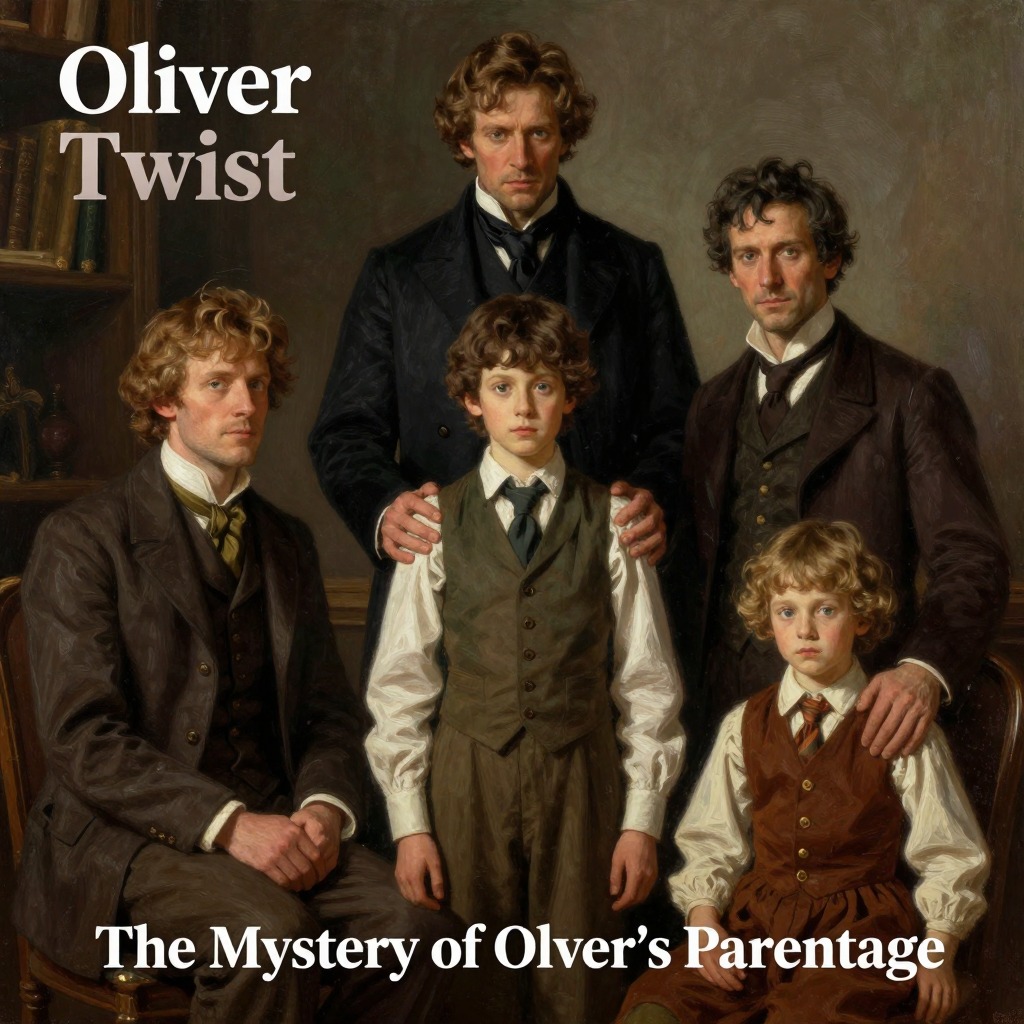
Oliver TwistThe Portrait of Agnes Fleming is a painted likeness of Oliver Twist's mother, whose discovery in Mr. Brownlow's house triggers the recognition of Oliver's identity and sets in motion the revelation of his parentage.
Appearance and First Encounter
The portrait hangs in the housekeeper's room at Mr. Brownlow's house, directly opposite the chair where Oliver sits during his convalescence. It depicts a lady with a beautiful, mild face and sorrowful eyes that seem fixed upon the boy. Oliver is immediately struck by it, asking Mrs. Bedwin, "What a beautiful, mild face that lady's is!" and confessing that "the eyes look so sorrowful; and where I sit, they seem fixed upon me. It makes my heart beat as if it was alive, and wanted to speak to me, but couldn't." Mrs. Bedwin, who does not know the subject's identity, dismisses it as merely a painter's fancy, but Oliver's reaction is profound and instinctive.
The Recognition Scene
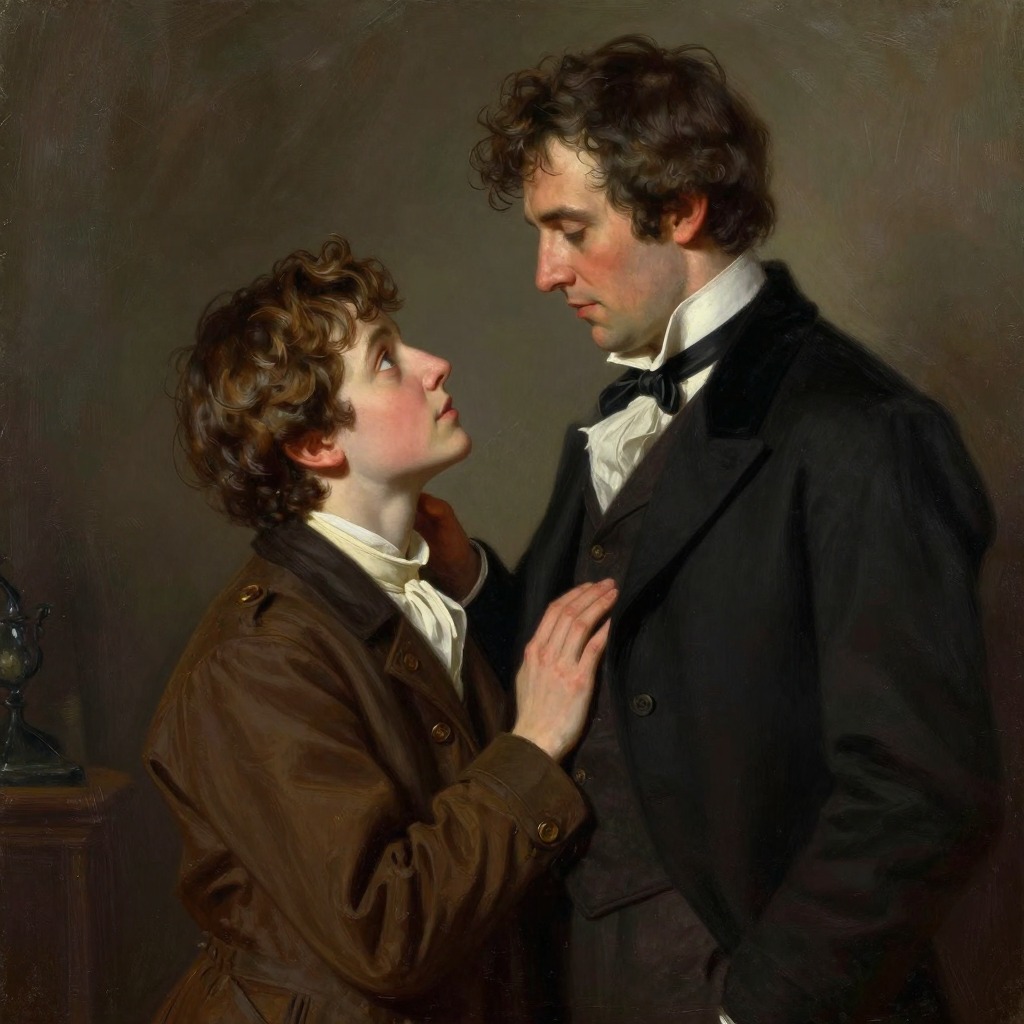
When Mr. Brownlow enters and sees Oliver beside the portrait, he is stunned. He points hastily from the picture to the boy's face and cries out, "Why! what's this? Bedwin, look there!" The narrator records that "there was its living copy. The eyes, the head, the mouth; every feature was the same. The expression was, for the instant, so precisely alike, that the minutest line seemed copied with startling accuracy!" This moment of recognition is so overwhelming that Oliver, still weak from fever, faints. The portrait is then removed from the room to avoid upsetting him, though Oliver later expresses his love for it and his wish to see it again.
Narrative Function and Symbolism
The portrait serves as the crucial material link between Oliver and his mother, Agnes Fleming. It is the object that first alerts Mr. Brownlow to the possibility of a connection between the orphan boy and his own past. The painting was left with Mr. Brownlow by Edwin Leeford, Oliver's father, before his final journey abroad. Mr. Brownlow later explains that when he first saw Oliver in his dirt and misery, "there was a lingering expression in his face that came upon me like a glimpse of some old friend flashing on one in a vivid dream." The portrait thus functions as a silent witness to the truth, a visual prophecy that the narrative will eventually fulfill. Its removal and eventual return symbolize the temporary concealment and ultimate revelation of Oliver's true identity.
The Portrait and the Revelation of Identity
In the climactic scene where Monks is forced to confess, Mr. Brownlow produces the portrait as evidence. He tells Monks, "When your brother: a feeble, ragged, neglected child: was cast in my way by a stronger hand than chance, and rescued by me from a life of vice and infamy... his strong resemblance to this picture I have spoken of, struck me with astonishment." The portrait is thus not merely a decorative object but a piece of evidence that, combined with Nancy's information and the recovered locket and ring, completes the proof of Oliver's parentage. It is the visual anchor of the novel's central mystery, the face of the mother whose story is finally told in full.