Toby Crackit
Oliver TwistToby Crackit is a housebreaker and occasional confederate of Bill Sikes, distinguished by his vanity, self-satisfaction, and a cowardice that becomes unmistakable under pressure. He appears in the narrative as a figure of comic pretension within the gang, yet his actions carry serious consequences, most notably his abandonment of the wounded Oliver Twist after the failed burglary at Chertsey. Crackit's role illuminates the precariousness of the criminal life and the moral emptiness that lurks beneath its swaggering surface.
Identity and Appearance
Toby Crackit is introduced as a man of about thirty-five, dressed in a smartly-cut snuff-coloured coat with large brass buttons, an orange neckerchief, and a coarse, staring shawl-pattern waistcoat. He has little hair on his head or face, and what he has is of a reddish dye, tortured into long corkscrew curls. He is a trifle above the middle size and apparently rather weak in the legs, but this does not diminish his own admiration of his top-boots, which he contemplates with lively satisfaction. His speech is marked by cant terms and a self-conscious flashiness that he mistakes for style. He is first seen lounging on a couch with his legs higher than his head, smoking a long clay pipe, in the ruined house near Chertsey where the burglary is planned.
Role in the Chertsey Burglary
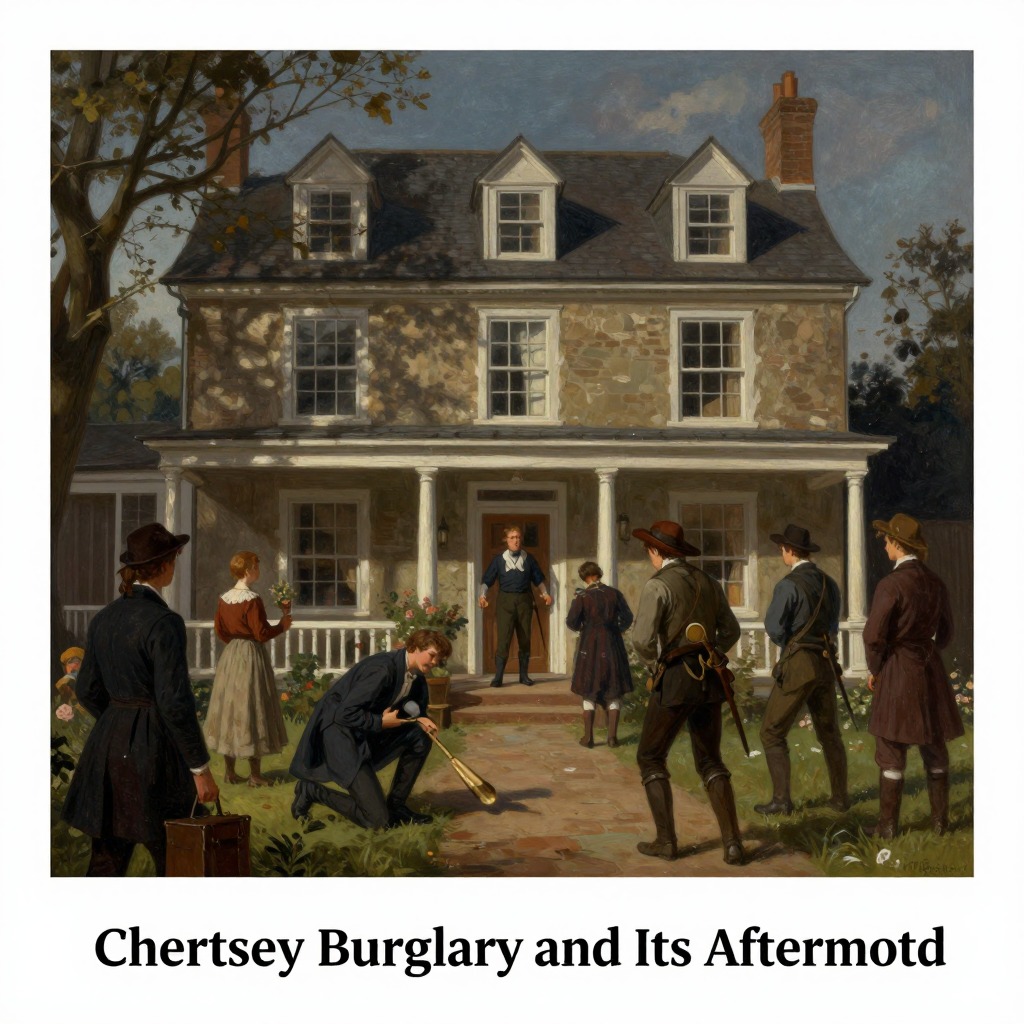
Crackit is the one who has been reconnoitring the target house for a fortnight, wearing sham whiskers and a canary waistcoat, but failing to corrupt any of the servants. When Sikes proposes an outside job, Crackit is the partner who sounds the panels of the door and shutters. On the night of the burglary, he climbs the garden wall first, hoists Oliver up after him, and later drags the boy to the house when Oliver, horrified, tries to flee. When the alarm is raised and the occupants fire, hitting Oliver, Crackit flees with Sikes, carrying the wounded boy between them. But as the pursuit closes in, Crackit's nerve breaks: he calls out "It's all up, Bill! drop the kid, and show 'em your heels," and abandons both Sikes and Oliver, running for his own life.
Cowardice and Self-Preservation
Crackit's defining trait is a reflexive self-preservation that overrides any loyalty. After the burglary, he makes his way back to Fagin's den, where he delivers the news with studied nonchalance, eating and drinking before he will speak. He reports that the boy was left in a ditch, alive or dead, and that he knows no more. When Fagin, frantic, rushes out, Crackit remains behind, concerned only with his own safety. Later, when the gang is broken and Fagin arrested, Crackit takes refuge in a house on Jacob's Island, where he is joined by other fugitives. When Sikes arrives, Crackit's fear is palpable: he draws back from the window, his pale face betraying the truth before he speaks. He lets Sikes in only because he has no choice, and when the mob surrounds the house, he offers no resistance, standing "quite helpless and bewildered."
Narrative Significance
Crackit serves as a foil to the more brutal Sikes and the more cunning Fagin. His vanity—the careful curls, the admiration of his own boots—marks him as a man who performs the role of a gentleman-cracksman without possessing the genuine hardness it requires. His cowardice in abandoning Oliver and his willingness to save himself at any cost underscore the moral bankruptcy of the criminal world, where even the bonds of partnership dissolve under threat. He is a reminder that the gang is held together not by loyalty but by mutual fear and self-interest, and that its members are, in the end, each alone.