A life changed by doing nothing
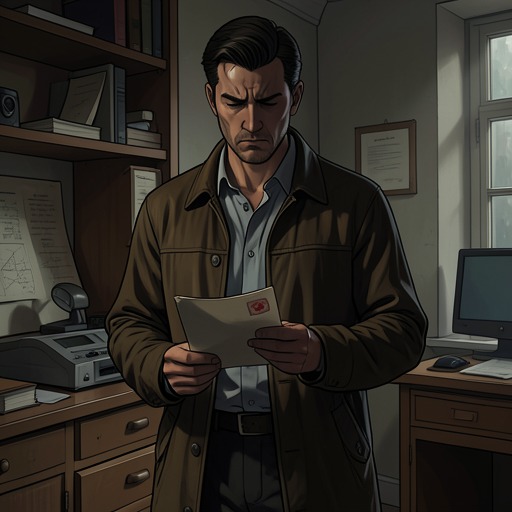
On Chesil BeachA life changed by doing nothing names the lasting consequence of Edward Mayhew’s silence when Florence Ponting ran from him on Chesil Beach. The novel follows the distance between what he could have done—call after her, reassure her, and give their marriage time—and what he actually did: stand still as she disappeared down the shore. In old age, he recognizes that his failure to act was not a neutral pause but a choice with consequences extending across a lifetime. The alternative life remains unknowable; the regret, and the life that followed, do not.
An Encounter That Nearly Did Not Happen
The idea begins before the beach, in the couple’s awareness that their meeting depended on accident. They regarded themselves as too sophisticated to believe in destiny, yet wondered how easily their paths might have crossed earlier in Oxford. They imagined possible encounters at St Giles’ Fair, May Morning, a Cherwell Boat House punt, or the Turk, but none of these conjectures became a meeting. As teenagers, they had lived in different worlds; in 1958 they both chose London for higher education, Edward Mayhew at University College London and Florence Ponting at the Royal College of Music, and still failed to meet.
Their London lives scarcely overlapped. Florence did not know Edward’s pubs in Fitzrovia and Soho; he knew nothing of the Wigmore Hall or her neighborhood’s tea rooms. They later found it exciting that they had been together in Trafalgar Square in 1959, among twenty thousand people at a demonstration to ban the bomb, without recognizing one another. The coincidence makes their eventual meeting feel neither inevitable nor entirely miraculous: it was one more event that could have passed without consequence.
They met only after their courses ended, when both had returned to their respective family homes to wait for examination results. For Edward, the day might have been ordinary: he could have read on a mossy bench at the far end of the garden, beneath a giant elm, avoiding his mother. Florence watched him from a kitchen or sitting-room window, sometimes for twenty minutes, then played piano upstairs. The one classical piece Edward knew was from the Anna Magdalena Notebook. He tried to ignore her gaze, while she did not approach if she saw him reading; her late husband had taught her not to interrupt their son’s studies. Their first encounter thus emerges against a pattern of nearness and reserve. The story’s recurring question is not simply whether chance brings people together, but what they do when a chance to respond finally arrives.
The Beach and the Unmade Choice
The decisive inaction follows the collapse of the wedding night and the confrontation on the beach. Florence’s distress and Edward’s misunderstanding leave them caught in a conversation she can see no way to resolve. When his words go too far, she turns her back. She imagines herself instead at Oxford railway station, violin case in hand, travelling to rehearsal with the quartet: a life of shared work on difficult but solvable problems. With Edward, she can imagine no solution unless she makes a proposal, and she doubts her courage to do so. She feels entangled with a man whose interests in wildflowers, crops, and medieval kings seem far from her own chosen world.
The eventual separation turns on a small, available action. Edward could have called after Florence or followed her; the narrative later makes clear that she ran in distress, certain she was about to lose him, even though she had never loved him more hopelessly. The sound of his voice, she would have experienced as deliverance, and she would have turned back. Instead, he remains silent in what the narration calls cold and righteous stillness. She hurries along the shore until she is only a blurred point against the long, pale shingle. The force of the missed opportunity lies in the contrast: the intervention imagined is modest, but the consequence of withholding it is immense.
The Life That Follows
After returning home, Edward refuses to explain himself to his father. His mother has already forgotten that he is married, and his twin sisters, Harriet and Anne, pester him with questions. He takes them to the bottom of the garden and makes them promise separately never to mention Florence’s name again. A week later, he learns that Mrs Ponting has arranged the return of the wedding presents. His parents quietly set a divorce in motion on the grounds of non-consummation. At his father’s prompting, Edward writes to Geoffrey Ponting, regretting a change of heart and offering an apology, his resignation, and a brief farewell without mentioning Florence.
For about a year, pride keeps Edward from looking her up or writing. Because he hears nothing from her, he becomes convinced that she is with someone else. As the late sixties bring new freedoms and fashions, he revises his understanding of her proposal: what had seemed ridiculous, disgusting, or insulting now appears generous, self-sacrificing, and ahead of its time. He never tells his friends about the night. His subsequent life is busy and varied: he helps administer rock festivals, starts a health-food canteen in Hampstead, works in a Camden Town record shop, writes rock reviews, becomes a part-owner of the shop, and travels through France with a woman who becomes his wife for three and a half years. He also lives in Paris. These experiences give him a life, but they do not erase the relationship he left behind.
Retrospective Recognition
In later years, Edward imagines explaining his life to Florence in less than a minute. He sees himself as having drifted through it half-asleep, inattentive, unambitious, unserious, childless, and comfortable. His tangible achievements include a tiny flat in Camden Town, a share in a two-bedroom cottage in the Auvergne, and two specialist record shops, jazz and rock and roll, whose precarious businesses are being undermined by Internet shopping. He has friends, has known wild times, and is godfather to five children, though he does not begin to play a meaningful role in their lives until they are older.
After his mother dies in 1976, Edward returns to care for his father, whose Parkinson’s disease is advancing rapidly. His father dies at home in 1983, and Edward remains in the family cottage, first using it as a retreat from Camden Town and then, in the early nineties, making it his home. He is not simply unhappy or inactive: he plays cricket for Turville Park, takes part in a historical society in Henley, helps restore the ancient watercress beds in Ewelme, and works twice a month for a trust supporting brain-damaged children. In his sixties he still makes long walks, passing the avenue of limes and, in good weather, taking routes by the wildflowers at Maidensgrove or the butterflies at Bix Bottom before returning through beech woods to Pishill church.
The landscape turns these walks into encounters with the absent Florence. At a fork in a beech wood, Edward imagines her pausing over her map on the August morning when she set out to find him; at a view over the Stonor valley, he wonders if she stopped to eat her orange. Such recollections keep the lost meeting vivid but cannot restore it. He admits that he has never loved anyone as much or found anyone, man or woman, who matched Florence’s seriousness. He imagines that staying with her might have made him more focused and ambitious, perhaps even led him to write the history books he once considered. He knows the Ennismore Quartet has become eminent, but refuses to attend its concerts or look at its recordings and photographs, preferring the remembered young woman with a dandelion in her buttonhole, velvet in her hair, and a canvas bag on her shoulder.
Meaning of the Missed Opportunity
Edward’s final understanding is not that Florence’s proposal itself could have supplied a lasting answer. He concludes that what she needed was certainty of his love and reassurance that there was no hurry when they had a lifetime ahead. Love and patience, if he had possessed both at once, might have helped them through. This remains a counterfactual, not a recovered history: the novel cannot establish what their marriage or possible children would have been like. It shows instead how Edward’s later knowledge changes the meaning he assigns to the silence.
The phrase “This is how the entire course of a life can be changed—by doing nothing” gathers the novel’s pattern of near meetings, delayed understanding, and irreversible consequence. Edward’s inaction does not make the rest of his life empty; it makes his varied later life coexist with the knowledge that he failed to pursue the person he loved most. At the end, the remembered beach is both a specific place and the point at which an unspoken reassurance might have turned Florence back. The missed opportunity is therefore not merely a regret about a past decision. It is the recognition that a life can be shaped by an action never taken, and that understanding the alternative cannot make it happen.