Marjorie Mayhew
On Chesil BeachMarjorie Mayhew is a wife and mother whose brain damage, caused by a railway accident, reorganizes her family’s life and remains unnamed within it for years. The Mayhews protect her through a shared fiction of ordinary domesticity: her husband and children treat her as the capable keeper of a household she cannot in fact run. When Lionel Mayhew finally tells their fourteen-year-old son, Edward, what happened, the name of her condition makes visible both the family’s long accommodation and the distance it has created.
Identity and Background
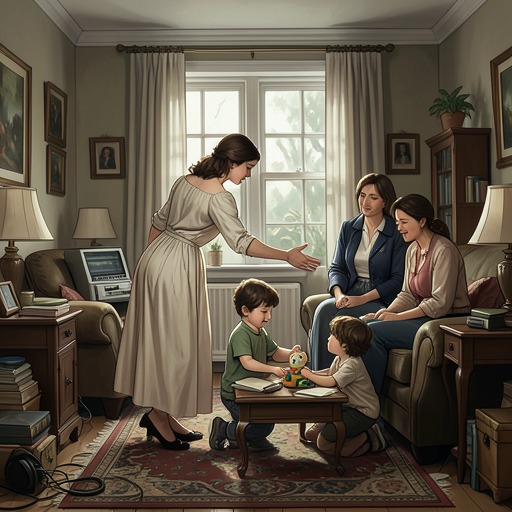
For most of Edward’s childhood, Marjorie is a familiar, though elusive, presence in the home. He cannot remember her changing around the time of his fifth birthday, and grows up alongside her condition as though it were simply part of family life. She appears as a gentle, gaunt figure, sometimes affectionate and communicative, at other times absorbed in her projects or remote from those around her. The children do not initially understand this contrast as evidence of an illness; her difference is something they live with before they have words to explain it.
Marjorie’s life is shaped by an accident that occurred while she was pregnant with twins. In December 1944, she was stepping from a train before it had stopped when the carriage door swung from a traveller’s grasp and struck her. The impact fractured her skull and left her with lasting damage to her personality, intelligence, and memory. She remained in a coma for just under a week. The traveller, described by witnesses as a distinguished-looking older man carrying a bowler hat, umbrella, and newspaper, left the scene and was never identified. Lionel later told Edward that he hoped the man had carried his guilt with him.
Daily Life and Domestic Patterns
At home, Marjorie moves from one activity to another with a dreamy, disorderly intensity. She plays a small set of piano pieces repeatedly, faltering at the same points, and tends a shapeless flower bed in the middle of the narrow lawn. Her painting materials remain scattered: watercolours, jars of discoloured water, brushes, rags, and unfinished pictures. She also cuts magazine images for scrapbooks, leaving clippings underfoot and paste brushes where she has set them down. Bird-watching, knitting, embroidery, and flower arranging join the same succession of interests, pursued without much order or completion.
Her routines do not reliably meet the practical needs of the household. During occasional anxious spells, she may suddenly focus on an immediate task: Edward’s long fingernails, a torn garment, or the twins’ bath. She then fusses, scolds, or embraces the children, sometimes combining these gestures as she tries to respond to everything at once. The family has learned that the materials or preparations required may not be available, and that Marjorie will soon drift back to her own activities. These episodes nonetheless bring moments of affection and attention into a household whose daily work is largely carried by Lionel and the children.
The Family’s Shared Fiction
Marjorie understands herself as a devoted wife and mother whose work keeps the home in order, and as someone entitled to leisure after her duties are done. The family sustains this picture rather than openly challenging it. At meals, they thank her for food even when Lionel has prepared it, and they do not correct her when she speaks of shopping or ironing as though those tasks were part of a busy domestic day. Repeated courtesies make the imagined household feel temporarily within reach, but the arrangement depends on not discussing the discrepancy between Marjorie’s account and the family’s circumstances.
The silence also shapes how the Mayhews relate to people outside the home. They protect Marjorie from the scrutiny of their friends and protect their friends from encounters they might not understand. The accepted local description is that she is artistic, eccentric, and charming, perhaps a genius. Her statements about her activities are not treated by the children as ordinary lies to expose; they are bound up with the version of herself the family is trying to preserve. Their collusion offers a way to live together, but it also leaves the children without a clear explanation of what has happened to their mother.
Edward Learns the Cause
When Edward is fourteen, Lionel tells him in the garden that Marjorie is brain-damaged. Edward initially experiences the description as disloyal and insulting, even though he recognizes its truth. The word resolves a contradiction: he had always known that his mother was different, yet had never understood that difference as a condition. The conversation does not introduce a new change in Marjorie; it changes Edward’s understanding of the life he has already lived with her.
Lionel’s account takes Edward back to the railway accident and supplies a cause for the altered person he has known since early childhood. As father and son stand beneath an elm on a late-May day, Lionel holds his pipe without lighting it until he has finished speaking. He tells Edward that he has been kind and helpful to his mother and insists that knowing the facts changes nothing. The twins arrive before the conversation can continue, and Lionel repeats that reassurance as they draw Edward back towards the house.
Change and Narrative Significance
The naming of Marjorie’s condition has consequences beyond explanation. Edward feels relief because the family’s unspoken recognition has finally been given a term, but the term also separates him from his mother and his immediate circumstances. He imagines himself as someone who will eventually leave and return only as a visitor. His response combines guilt with an excitement at discovering a private self beyond the family role he has occupied. Lionel’s reassurance offers care, but it cannot undo the new distance Edward feels.
Marjorie is presented through both the practical effects of her condition and the family’s effort to preserve an idea of normal life. Her hobbies, anxieties, unfinished tasks, and intermittent affection establish the daily texture of that life; the accident and delayed explanation clarify its cause without making the family’s accommodation disappear. Her story is therefore also the story of a silence: for years, the children inhabit a reality they can recognize but not name, until Edward’s new knowledge alters his relationship to the past and to the family he expects one day to leave.