Oxford
On Chesil BeachOxford gives Edward Mayhew and Florence Ponting a shared geography before it gives them a shared life. They grow up close enough to imagine that their paths might have crossed repeatedly, meet there by chance as young adults, and marry in the city. After their marriage breaks down, Edward passes through Oxford again on his way home, leaving the place that had once promised connection as part of a separation neither can undo.
A City of Near-Misses
In their early teens, Edward sometimes came down from his family's home in the Chiltern Hills to visit Oxford. Years later, he and Florence would speculate about the occasions on which they might have encountered one another: St Giles' Fair, May Morning, or a visit to the Cherwell Boat House. Edward remembered punting there only once; neither could establish that they had actually met on any of these occasions. The imagined encounters mattered because they made the eventual meeting seem at once accidental and almost inevitable. Looking back, they could map their childhood and school years onto the same city, while recognizing that a small change in circumstance might have kept their lives apart.
Oxford also had a more specific place in their memories. Nearly a decade before their adult meeting, Edward had invited Florence to his home in Park Town to see a television set, a new invention that she found ridiculous. The episode left her with a memory of the boy, though when they met again she had forgotten his name. Their later recollections make the city a record of proximity without recognition: streets and youthful occasions seem to offer repeated chances, but none becomes the moment that joins them.
The Accidental Meeting
By 1958, both had chosen London for study: Edward attended University College London, and Florence the Royal College of Music. Their adult meeting therefore did not result from a planned reunion in Oxford. Edward returned to the city on an aimless bicycle journey from the countryside. After reaching Henley, he intended vaguely to travel to London, but boarded a train going in the other direction and arrived in Oxford. The city, once the source of much of his teenage excitement, now struck him as provincial after London. With no clear purpose for his visit, he walked along St Giles and saw a handwritten notice for a lunchtime meeting of the Campaign for Nuclear Disarmament.
Florence arrived separately. After an unspoken disagreement with her mother, Violet Ponting, she had left home saying she was going to post a letter. She turned toward the city centre with only a loose plan to browse the covered market or spend time by the river. The meeting notice drew her into the same hall that Edward entered shortly afterward. She was already inside when he saw her. Their first conversation began with the meeting's subject: Florence offered him a pamphlet about the consequences of a hydrogen bomb falling on Oxford. The coincidence brought together people whose earlier histories had repeatedly approached, but never quite intersected.
Courtship and Marriage in the City
Oxford remained important after the encounter because Edward and Florence's relationship developed toward marriage there. They had understood themselves as too sophisticated to believe in destiny, yet continued to wonder at the chance that had placed them in the same meeting. The city gave that chance a setting: a return journey without a firm destination for Edward, an unplanned change of direction for Florence, and the same public gathering for both.
Their wedding took place at St Mary's Church, Oxford. The service was decorous, and the reception that followed was cheerful; friends from school and college gave them a lively send-off. From the city they drove in a small car belonging to Florence's mother to a hotel on the Dorset coast. Oxford thus marks the formal beginning of their marriage, but the narrative soon sets that beginning against the couple's inability to speak openly about their difficulties. The distance between the wedding's public celebration and the private crisis that followed makes the city a threshold rather than a guarantee of a shared future.
Return and Separation
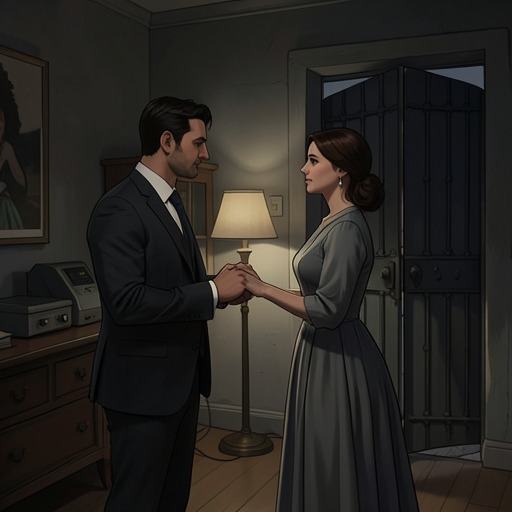
After the wedding-night confrontation at Chesil Beach, Florence left the hotel and was driven to Dorchester, hoping to catch a train back to Oxford. Edward did not know at first that she had been called home because of a family illness. The hotel staff understood that she had left urgently, while Edward interpreted her departure through his own anger and sense of humiliation. Oxford was the destination of her return, but the available account does not describe her journey beyond her attempt to reach it.
Edward returned by a different route. At dawn he drove Florence's mother's car to the Pontings' house, left it outside with the keys in the ignition, and went through town carrying his suitcase to catch an early train. He did not look toward Florence's window. His passage through Oxford reversed the emotional direction of the wedding journey: the city that had brought them together now served as the point at which he deliberately avoided contact and continued alone. He then walked from Henley to Turville Heath, taking care not to follow the route Florence had taken the previous year.
A week later, Florence's mother arranged for the wedding presents to be returned, and Edward and Florence's parents quietly set a divorce in motion on the grounds of non-consummation. Edward wrote to Geoffrey Ponting, apologizing for a change of heart and offering his resignation and farewell without mentioning Florence. Oxford's significance therefore extends beyond the wedding itself. It gathers the couple's imagined earlier crossings, their actual meeting, their marriage, and Edward's departure into a single geography—one that makes the difference between being near one another and finding a way to remain together especially clear.