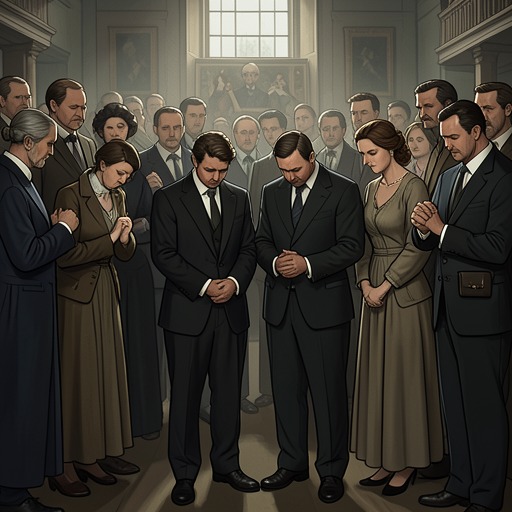
With my body I thee worship
On Chesil BeachWith my body I thee worship is a phrase from the wedding service that acquires a troubled significance on Edward and Florence’s wedding night. It first appears as part of the ceremony’s language of marital commitment; later, Edward invokes it as an obligation, exposing the distance between a public vow and the couple’s private experience.
The Vow and Florence’s Understanding
After the ceremony, Florence reflects that marriage has committed her to a particular form of physical intimacy. In her view, signing the register affirmed this expectation, while the celebration and its customs distracted from what she now sees as the agreement’s central meaning. She regards her decision as her own responsibility, and the realization intensifies her distress. Her response gives the phrase an unsettling double force: it belongs to a shared ceremony, but she experiences its marital implication as something she has agreed to endure.
Edward’s Appeal
During the couple’s unsuccessful attempt to consummate the marriage, Edward recalls that the vicar blessed their union with the words With my body I thee worship. He imagines physical intimacy as a freedom available to them within marriage, yet his impatience and fear of losing control complicate that ideal. The phrase expresses what he believes their marriage should permit, but it does not establish that Florence experiences the same promise as freedom.
Conflict Between Promise and Experience
Later that night, Edward raises the vow directly, insisting that Florence made the promise before everyone and treating her refusal as an insult to him. The phrase thus shifts from religious and ceremonial language into an accusation. Its meaning is not stable between the spouses: Florence has understood marriage as imposing an expectation she feels responsible for accepting, while Edward uses the same words to press his claim against her resistance. This gap makes the vow a concise expression of the scene’s failed communication and of the difference between a public commitment and mutual willingness.