
Time and False Urgency
On the RoadThis flow traces the tension between Dean Moriarty’s claims to know time and the practical urgency, fatigue, and consequences of constant motion.
increasing Bearing strength in each event
 decreasing
Bearing strength in each eventdecreasingThe First Schedule

Time Organized
Routine
Dean Moriarty assigns exact hours to visits with Marylou, Camille, and Carlo Marx, turning emotional complexity into a tightly timed schedule.
Irony
The precision suggests control while the underlying relationships remain unstable.
The Car’s White Line
Trusting Motion
Conviction
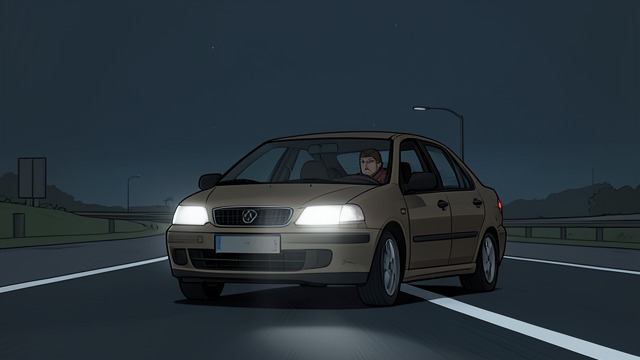
Dean Moriarty tells Sal Paradise that everything will be taken care of as the car follows the white line through the night.
Risk
His confidence in time and motion sits uneasily beside dangerous driving and the passengers’ dependence on him.
The Crowded Present

Attention to Everything
Experience
Dean Moriarty urges Sal Paradise to notice details in strangers and landscapes rather than give in to ordinary worries about mileage, weather, and money.
Tension
His attention can feel liberating, but it does not remove the material problems the travelers face.
The Exhausted Driver

Speed Has a Cost
Strain
Dean Moriarty drives at extreme speed for hours, while Sal Paradise fears a crash and retreats to the back seat. Their passengers whisper that Dean is dangerous.
Consequence
The road’s exhilaration becomes physical risk rather than abstract freedom.
The Final Uncertainty

No One Knows What Comes Next
Reflection
Sal Paradise concludes that nobody knows what will happen to anyone beyond the forlorn rags of growing old.
Meaning
The final uncertainty counters Dean Moriarty’s confidence that they know time and that everything will be taken care of.
Dean’s early Denver relationships
During the 1948 drive from Virginia
During the 1949 westward crossing
During the 1949 drive from Denver toward Chicago
At the novel’s close
