Johnny
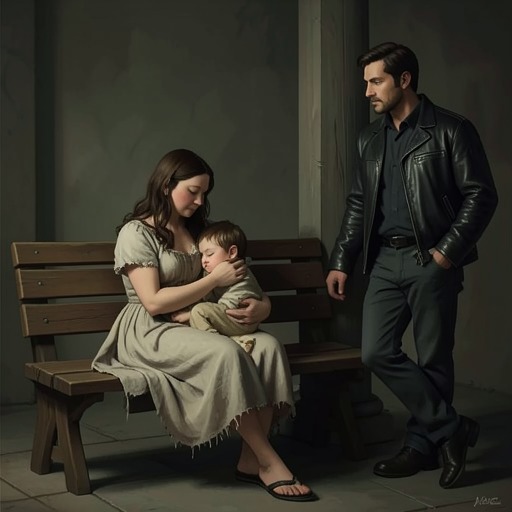
On the RoadJohnny, Terry’s seven-year-old son, is a dark-eyed, sweet-natured child whose arrival gives Sal and Terry’s unsettled life in California a familial shape. He is not merely carried along through the cotton-field episode: his comfort helps determine where the adults sleep, he joins the work that sustains them, and his play with Sal gives their makeshift household its warmth.## Identity and Arrival Johnny is introduced as Terry’s little boy, arriving with her, her brother Rickey, and Rickey’s friend Ponzo. Sal describes him as dark-eyed and sweet. The group sets out together in Rickey’s 1938 Chevrolet, but its wandering trip and the adults’ drinking soon make clear that there is little security around the child. When they return to Sabinal after a long day, Johnny falls asleep on Sal’s arm; Terry and Sal choose a two-dollar motel room partly because they now have a child to make comfortable.
The following night, Johnny sleeps in his clothes, and sand from his shoes spills onto the sheets. Sal and Terry get up in the middle of the night to brush it away. The small domestic task marks a change in their relationship: they are not only lovers travelling together, but adults sharing responsibility for a child whose needs shape their decisions.## Life in the Cotton Camp Sal and Terry move into a vacant tent five miles outside Sabinal, in the cotton fields and grape vineyards. For a dollar a day, the tent offers a bed, a stove, and a cracked mirror hanging from a pole. Johnny is there when Sal enters, and the three wait together for Rickey and Ponzo to arrive. The men bring beer rather than a dependable livelihood; their plan to make money selling manure repeatedly gives way to drinking. The tent, and the work Sal seeks nearby, become the more immediate basis of the household.
When Sal takes a cotton-picking job at three dollars for every hundred pounds, he initially imagines that he can manage the work alone. Terry says that she and Johnny will come help. Sal objects, but Terry knows the labor and insists that picking cotton is hard. At dawn, Sal joins a neighboring family of Okie cotton-pickers in the farmer’s field. He struggles to free each cotton boll and soon finds his fingertips bleeding; the experienced pickers work more quickly, while the dew makes the cotton heavier in the morning.
At midday, Johnny and Terry cross the field to join Sal. Johnny proves faster than Sal, as does Terry, and they leave separate piles of picked cotton for him to add to his bag. Their assistance makes the family’s economic interdependence visible: the child participates in the day’s labor, while Sal feels shame that he cannot support them by himself. By sunset Sal has picked fifty pounds and earned a dollar and a half, enough for only a modest evening’s groceries.## Relationship with Sal and Terry Johnny’s relationship with Sal develops through practical care and play. After the day in the field, Sal rides a borrowed bicycle to a crossroads store and returns with food. Terry warms it on the tent stove; Johnny sits on Sal’s chest as the three share the evening, and he and Terry draw pictures of animals in Sal’s notebook. The scene gives the cramped tent a tenderness that contrasts with the hard day and the poor return for Sal’s labor.
Their closeness is also present in the ordinary repetition of camp life. Sal earns about a dollar and a half a day and spends the evenings buying groceries. He plays with Johnny, who likes being tossed into the air and down onto the bed, while Terry mends clothes. Sal’s trousers are torn from kneeling in the field and are sewn by Terry; his straw hat, originally Johnny’s toy, has become part of his own ragged work clothes. These exchanges show how the household shares what little it has, with objects and care passing between its members.
Johnny is asleep—or believed to be asleep—when Sal and Terry go to bed together. Terry says that the boy does not mind, but Johnny is in fact awake and says nothing. The quiet detail leaves the child present within the adults’ intimacy without assigning him words or an interpretation. It also underscores how little privacy their shared tent affords.## Work, Vulnerability, and Narrative Role The cotton camp is a fragile refuge rather than a secure home. Rickey and Ponzo continue to come and go, and their proposed manure business never materializes into reliable income. Sal and Terry depend instead on cotton picking, yet Sal’s fifty-pound first day yields only a dollar and a half. Johnny’s help contributes to that effort, while his presence makes the adults’ choices about shelter and daily life more consequential.
The surrounding camp is marked by poverty and tension. An Okie family lives in a larger neighboring tent, and its grandfather, too old to work, has watched the family move from Nebraska to California during the Great Depression and remain there. Sal hears that Terry’s husband is back in Sabinal and looking for him. Later, after a violent incident at the roadhouse—an event Sal hears about rather than witnesses—he keeps a large stick in the tent in case the Okies decide that the Mexicans are disturbing their camp. Johnny’s world is therefore both intimate and precarious: play, shared food, and family care coexist with meager wages, uncertain shelter, and the adults’ fear of conflict.
For a time, Sal forgets the East, Dean, Carlo, and the road, imagining himself as a man of the earth. Johnny helps give that temporary rootedness its lived form. The child is not given a separate journey or an independently narrated resolution; instead, his place in the story is registered through the concrete demands and consolations of shared life. He is carried, fed, helped, and played with—and, in turn, helps Sal experience the cotton-field household as more than another passing stop.