Larimer Street
On the RoadLarimer Street is a Denver thoroughfare that gathers the novel’s travelers, former prisoners, and restless local company into a landscape of makeshift exchange and renewed departure. It appears both as a place where people try to turn what they have into cash and as part of the nocturnal social world that draws the road narrative onward.
Street and Roadside Encounters
Larimer Street enters the narrative during a Denver stop with Henry Glass, a recently released young man traveling toward a brother and a possible job in Colorado. Sal takes him there to pawn his penitentiary suit. The pawnbroker recognizes its origin before it is fully unwrapped and refuses it, explaining that he gets such suits every day from the Canon City men. Henry carries it away in a paper bag, changes into new jeans and a sports shirt, and eventually throws the suit into an ashcan. The failed sale turns the street into a visible meeting point for people whose release has not yet translated into secure work or an easy return to ordinary life.
The novel widens this episode into a portrait of the street’s circulating population: it is overrun with former prisoners trying to sell prison-spun suits. Henry’s discarded clothing is therefore more than a failed pawnable item; in this setting it marks a repeated struggle to shed the material signs of incarceration. Yet the street offers no simple passage out of that past. Henry’s new clothes alter his appearance, while his need to spend his remaining prison money and find companionship remains immediate.
Denver’s Social Circuit
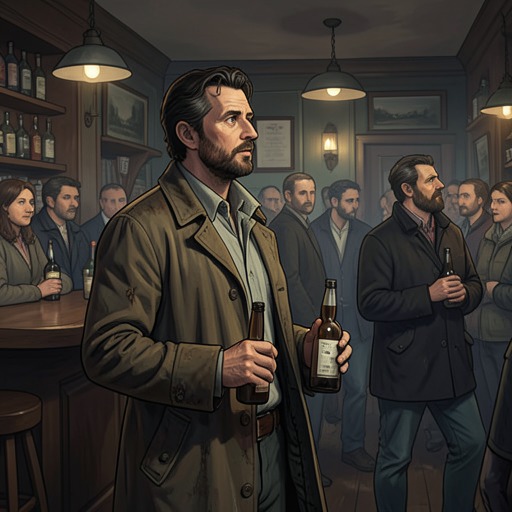
After the attempt to pawn the suit, Sal and Henry go to Dean Moriarty’s old Glenarm bar and call Tim Gray. Tim arrives with Stan Shephard, and the group begins drinking together. From the bar, the night expands through Denver’s taverns and roadhouses, reaching the Five Points bars as well as establishments along West Colfax. Larimer Street is thus one node in a mobile urban circuit: people gather, recognize one another, and move on through the city rather than settling in one fixed social scene.
The wider Denver gathering later includes a large party at the Windsor, where Denver D. Doll, Roy Johnson, Stan Shephard, Tim Gray, Babe Rawlins, Ed Dunkel, Tom Snark, Sal, and others crowd around joined tables. Doll proposes sending Carlo Marx a penny postcard, and the company writes it together amid drinking, fiddle music, and the noisy presence of former prospectors and ex-convicts. The scene’s exuberance sits beside the city’s accumulated history: the party moves through spaces associated with earlier lives and vanished fortunes, while its participants make their own brief, improvised community.
A Place of Passage and Return
Larimer Street’s significance lies in the contrast between its hard exchanges and its sociability. The refusal to buy Henry’s suit exposes how little value the prison garment has in the ordinary market, even as the street’s crowds show how common that predicament is. The bar calls and ensuing rounds of drinking offer fellowship, but not a settled solution: Henry spends money, the group ranges from one venue to another, and Stan’s participation becomes part of his decision to leave Denver for Mexico.
Across the novel, road movement repeatedly brings characters back through familiar American places, where prior journeys and present circumstances overlap. Larimer Street anchors that pattern in a specific urban setting: it is a place to try to dispose of the past, meet companions, and set another departure in motion, without suggesting that any of those acts fully resolves the instability that brought the travelers there.