Mobile
On the RoadMobile is a coastal waypoint in the journey south, marking the travelers’ passage out of northern winter and into the warmth of the Gulf. Its significance lies less in a long stay than in the change it makes palpable: after thirty-two hours on the road, the group reaches the city, casts off its winter clothes, and presses onward with Dean Moriarty at the wheel.
Arrival in the South
The approach begins in darkness after Sal Paradise has driven through South Carolina and beyond Macon, Georgia, while Dean, Marylou, and Ed Dunkel sleep. When Sal wakes Dean to take over, the two get out for air and recognize from the fragrant grass, fresh manure, and warm water that they have left winter behind. Faint daybreak reveals green shoots beside the road; a locomotive howls toward Mobile, and the travelers understand that they are headed the same way.
A roadside stop and renewed momentum
Ten miles farther on, Dean pulls into a filling station with the engine off. Seeing the attendant asleep, he quietly fills the tank without setting off the bell and drives away with five dollars’ worth of gas. The unhurried theft is part of the journey’s practical improvisation: the group depends on the road, but continuing along it requires finding fuel and other supplies by whatever means are available.
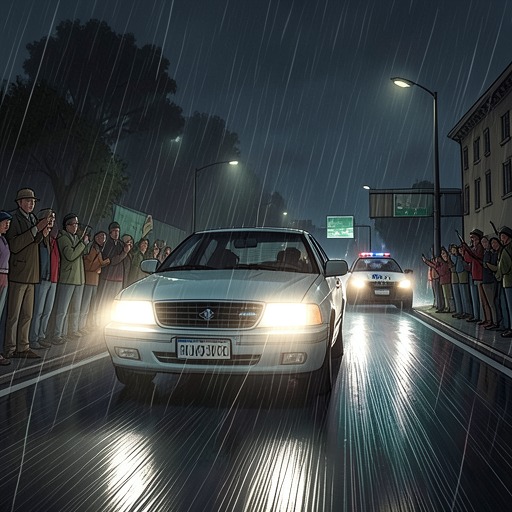
After Sal wakes again, the car is already beyond Mobile, with music and conversation filling the ride. At a gas station, Dean and Marylou play piggyback around the tanks while Ed goes inside and steals three packs of cigarettes. The travelers then roll into Mobile along a long tidal highway, remove their winter clothes, and enjoy the warmer southern air. The small acts of theft, play, and changing clothes make the city a threshold experienced through bodies and movement rather than a destination where they settle.
Dean’s story on the road
Beyond Mobile, Dean begins telling the others about his early sexual experience. He recalls that he was nine and names Milfy Mayfair, the garage behind which it happened, Grant Street, and his aunt calling from a window to ask what he was doing. The memory connects the road trip to Dean’s childhood and to the Denver street where Carlo Marx lived. As Dean talks, he drives through an obstruction of cars by cutting across a gas-station driveway without slowing, then continues his story; the recollection and the dangerous forward motion occupy the same scene.
Dean directs his reminiscence toward Marylou, imagining aloud that she would have been sweet at nine. He touches her and licks her finger while she sits smiling serenely. Ed Dunkel, meanwhile, looks out the window and talks to himself, recalling that he thought he was a ghost on an earlier night and wondering what Galatea Dunkel will say to him in New Orleans. Mobile therefore sits amid sharply different states of attention: Dean turns travel into an intimate, restless performance, while Ed is already preoccupied with the next destination and its consequences.
A threshold in the continental journey
Mobile is one point in a route that repeatedly turns geography into lived transition. Elsewhere, the travelers’ movements pass through the dry western landscape, the plains, and the dark river country of Louisiana; here the change is especially direct, announced by the warmth that lets them take off their winter clothes. The city’s place in the journey is measured by what happens before and after it: the group arrives from the cold North, reaches the Gulf’s coastal plain, and continues west with the road still drawing them onward.