New York City
On the RoadNew York City is the novel’s recurring eastern threshold: Sal Paradise leaves it in pursuit of the West, Dean Moriarty repeatedly arrives there in motion, and their last encounter ends with Dean walking away while Sal remains behind. Its streets and outskirts mark the tension between the freedom promised by the road and the homes, work, relationships, and limits that movement cannot simply outrun.
Departure and the promise of the road
In July 1947, Sal leaves New York with about fifty dollars saved from veterans’ benefits, a canvas bag, and a half-finished manuscript left on his desk. His friend Remi Boncoeur has written from San Francisco, promising a possible berth on an around-the-world liner and a shack in Mill City where Sal can write while they try to get the ship. Sal’s aunt approves of the trip but asks only that he return in one piece. The journey begins not with a vehicle or a clear plan, but with Sal’s willingness to hitchhike west and his confidence in a map.
That map gives the departure its first irony. The red line of Route 6 runs from Cape Cod toward Ely, Nevada, and then down to Los Angeles, but Sal must travel north from New York to reach it. He takes the Seventh Avenue subway to 242nd Street, continues by trolley through Yonkers, and then catches rides toward Bear Mountain. The rain traps him at the roadside, forty miles north of the city, where he runs for shelter and despairs at having spent his first day moving away from the West he longs to reach. The landscape beyond New York is already both invitation and obstacle: the road arches into wilderness, but getting onto it means accepting detours, exposure, and uncertainty.
Arrival as a city that never rests
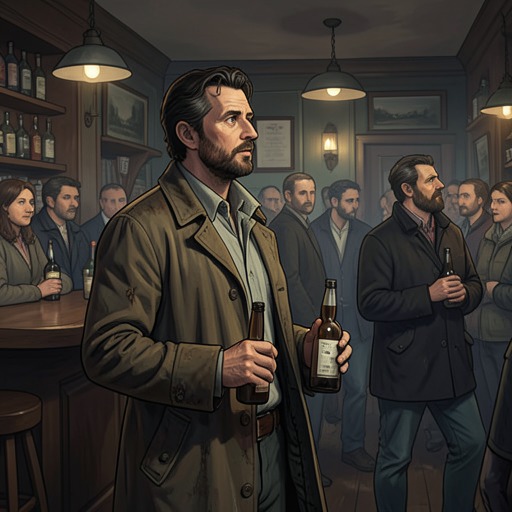
New York reappears as the destination at the end of the frantic drive from Chicago. After the journey through Ohio, the radio brings the travelers the Symphony Sid show and its latest bebop; at dawn they enter Times Square, where the streets are being torn up. The city seems to continue working even at the hour of their arrival. Sal and Dean Moriarty look automatically for Hassel as they pass, carrying their traveling habits into the place that is supposed to end the trip.
Within an hour they are at Sal’s aunt’s new flat on Long Island. She tells Dean he may stay only a few days, putting a domestic boundary around a journey that has brought them from San Francisco across the continent. That night Sal and Dean walk among Long Island’s gas tanks, railroad bridges, and fog lamps. They are so accustomed to traveling that they keep walking, but there is no further land to follow: the Atlantic Ocean stops them. They clasp hands and promise to remain friends forever. New York thus gives their movement an ending in physical terms, while the promise between them tries to make their companionship permanent.
A temporary home and changing circumstances
Sal’s later life in New York is more settled on the surface. After earning money from the sale of his book, he pays his aunt’s rent for the rest of the year. Dean, meanwhile, works in a parking lot on Madison Avenue and 40th Street, directing the noontime rush of cars in ragged shoes, a T-shirt, and trousers hanging at the belly. When Sal visits at dusk, Dean counts tickets in the shack with the radio playing. The contrast is sharp: the restless driver now manages other people’s cars, while the man who once left a manuscript behind has gained money through writing.
Dean lives with Inez in a cold-water flat in the East Eighties. At home he changes into a Chinese silk jacket, smokes a water pipe loaded with tea, and shows Sal a deuce of diamonds from a dirty deck of cards. He describes plans for a farm in Pennsylvania, a station wagon, a large house, and children. Yet the battered trunk beneath the bed remains ready for departure, and his recurring plans for settled domestic life recall the arrangement he once had with Camille in San Francisco. His New York routine does not resolve the conflict between domestic attachment and flight; it gives that conflict another address.
Dean’s connection to New York is also uneasy. He says Frisco is his hometown and that he has had no woman there except Inez, while the city’s parties and crowds do not seem to suit him. Sal remembers him as more himself on empty Madison Avenue at night, huddled in cold rain, than among the city’s drunken gatherings. Their conversation at three in the morning turns toward age and hardship: Dean imagines the two of them searching alley cans at sundown, and Sal asks whether they will end as old bums. The city’s streets hold both their companionship and the prospect of decline.
Departures, returns, and the last meeting
When spring comes, Sal again cannot stay in New York. With money from his book he has settled the rent, but he leaves Dean behind while Dean works at the parking lot. Sal’s departure reverses their earlier pattern: for the first time, he says goodbye to Dean in New York and goes without him. Dean stays with Inez, describing the smaller pleasures of work and home, while Sal’s recurring need to leave makes the city less a fixed home than a pause between journeys.
Dean’s subsequent return from Mexico brings another rush of movement through New York. After driving north to Lake Charles, Louisiana, and flying the rest of the way, he arrives with divorce papers and marries Inez in Newark. That same night he takes a bus across the continent to rejoin Camille and their two baby girls in San Francisco. The compressed sequence makes New York a transit point for Dean’s unstable marital life: one marriage is formalized there, but his immediate departure carries him back toward another household. By then he is three times married, twice divorced, and living with his second wife.
Sal later comes back from Mexico and begins a relationship with Laura, whom he meets after calling his own name up to a New York loft. He and Laura plan to move to San Francisco with their furniture and broken belongings in a jalopy panel truck. Dean writes a very long letter about his youth in Denver and promises to come select the truck and drive them west, but arrives five and a half weeks early, when there is no money to carry out the plan. His unannounced arrival again turns a future journey into a present encounter, while leaving Sal and Laura’s intended departure unrealized.
The city as an ending without closure
On that visit, Dean is no longer able to sustain his old fluency. He struggles to speak to Sal and Laura, listens intently to the sounds of the night, and leaves after three days to cross the continent again by train. Inez throws him out after a night of explanation and conflict; a letter from Camille, addressed to him through Sal, says that she and the children are waiting for him in San Francisco. New York is therefore the scene of a temporary domestic rupture and a renewed pull toward Camille, not a final reconciliation witnessed in person.
The last time Sal sees Dean, Remi Boncoeur has returned to New York after sailing around the world several times. Remi introduces Dean to Sal’s world there, but Dean cannot talk and says nothing; Remi turns away. On a cold winter night Remi’s group is leaving by Cadillac for a Duke Ellington concert at the Metropolitan Opera. Dean stands outside the windows with his bag, ready to go to Penn Station and cross the country once more. He asks to ride with Sal as far as Fortieth Street because it is cold and he wants to be with his old friend, but Remi refuses to include him in the planned evening.
Sal can do no more than wave from the back of the car. Dean walks alone in a moth-eaten overcoat, rounds the corner of Seventh Avenue, and bends toward the street ahead. Sal reassures Laura that Dean will be all right, yet thinks of the more than three thousand miles Dean will ride without knowing why he came except to see him. The city that once sent Sal west and repeatedly received Dean back now holds their final separation. In the closing image, Sal looks across the Hudson toward the long land stretching west and thinks again of Dean and of Dean’s missing father, Old Dean Moriarty. New York remains the place from which the road can be imagined, but the final encounter shows that imagining another crossing cannot restore what has already gone.