Washington, D.C.
On the RoadWashington, D.C. is a recurring stop on the journeys of Sal Paradise and Dean Moriarty, less a destination than a threshold between stretches of road. Its appearances juxtapose national ceremony and military display with hurried travel, improvised plans, and encounters with local police, making the capital a place where the travelers’ freedom of movement meets public authority.
The City on the Route
In one early westward journey, Washington, D.C. belongs to a map imagined from afar: Sal has been studying Route 6, which leads west from Cape Cod toward Ely, Nevada, and then down to Los Angeles. The book also casts the capital as one point in the long east-to-west itinerary of a bus ride from Hollywood, set among the changing landscapes of the American interior and the Mississippi River crossing. The city thus appears within a national geography experienced in motion, rather than through an extended account of its streets or institutions.
A later trip gives Washington, D.C. a more immediate place in the travelers’ route. Sal, Dean, Marylou, and Ed Dunkel drive north with furniture packed into their car, heading toward New York. After a night of driving and a brief stop in Philadelphia, they pass through New Jersey and enter the city through the Lincoln Tunnel. For Dean, the approach becomes a comic performance: he wraps a sweater around his ears and imagines the party as Arabs arriving to blow up New York. The capital is part of the larger corridor connecting the southern states to the northeastern metropolis, while the travelers’ attention remains fixed on the road ahead.
Speed, Work, and Authority
The city also figures in Dean’s account of his railroad work. During a return drive north with Sal’s aunt in the car, he describes the duties of a brakeman in detail, demonstrating signals as they pass rail yards. At one point he gets out of the car to show how a brakeman gives a highball at a siding. The journey through Washington, D.C. therefore briefly turns into a moving lesson in the work that structures Dean’s life beyond the car and highway.
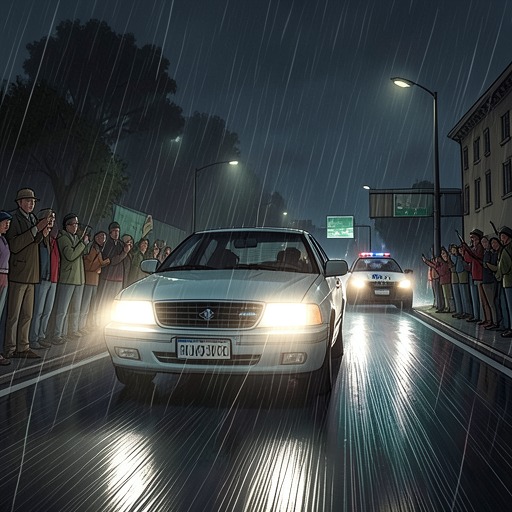
That same return trip exposes the costs of the party’s haste. At four in the morning, Dean calls Camille collect from Washington, D.C. Shortly afterward, police stop the travelers for speeding, although Sal notes that they had been moving at about thirty miles per hour. The officer points to the car’s California license plate, and the party faces the possibility that Dean will spend the night in jail unless they can pay. Sal’s aunt supplies the money. The episode makes the capital a setting for a recurring vulnerability: the group’s mobility depends on a car, money, and the willingness of people outside their party to help.
Public Ceremony and the Road’s Risks
On another passage through Washington, D.C., the travelers arrive at dawn on the day of Harry Truman’s second-term inauguration. Military equipment lines Pennsylvania Avenue, including landing craft, patrol boats, artillery, and a small lifeboat. Dean slows to look at the display and wonders what the authorities are preparing for, remarking on Truman’s connection to Missouri. The imposing military hardware, and especially the small lifeboat at the end of the display, interrupts the party’s forward rush with a moment of wary attention to the nation’s public power.
The interruption does not last. Dean sleeps while Ed Dunkel drives, and Dunkel accelerates recklessly, leading police to stop the car and take the group to a station house. Officers question Marylou and Sal separately; her marriage certificate answers their inquiry about her age. The party has to pay twenty-five dollars before it can continue, and an officer warns that another speeding ticket in Virginia could cost them the car. Washington, D.C. is therefore not merely a ceremonial backdrop: across these journeys, its associations with government and enforcement meet the practical fragility of a group traveling with limited money and little margin for delay.
A Recurrent Passage Point
The city’s narrative significance comes from recurrence rather than a single decisive event. It appears within routes that repeatedly carry Sal and his companions between home, work, reunion, and the next journey. The travelers pass through without settling; meanwhile, the capital’s rail yards, ceremonial avenue, and police station briefly expose the systems that make movement possible or constrain it. Against those fixed structures, the road remains the party’s immediate horizon, but Washington, D.C. shows that the journey is never wholly outside the reach of public institutions.