
Hollywood's Changing Western
Once Upon a Time in HollywoodThis thread traces the industry's move from familiar television cowboys toward a younger, rougher western style that unsettles Rick Dalton and reshapes the Lancer pilot.
increasing Bearing strength in each event
 decreasing
Bearing strength in each eventdecreasingThe Old Television Cowboy
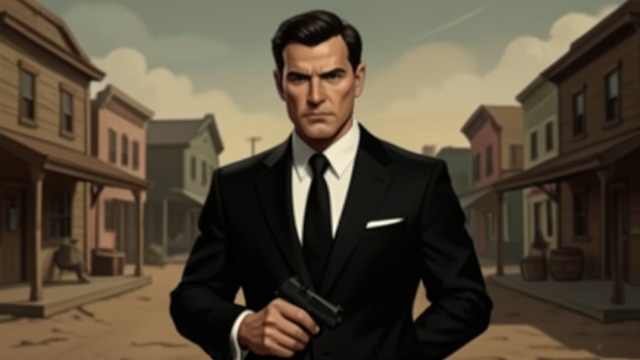
The Old Television Cowboy
A recognizable screen identity
Rick becomes known as the lead of Bounty Law, a respectable black-and-white western built for television audiences. The role gives him fame, steady work, and a public identity as Jake Cahill.
Success becomes a boundary
The same association makes later casting difficult. The industry can still use Rick, but increasingly as a familiar villain who proves a newer hero's strength.
The New Western Look
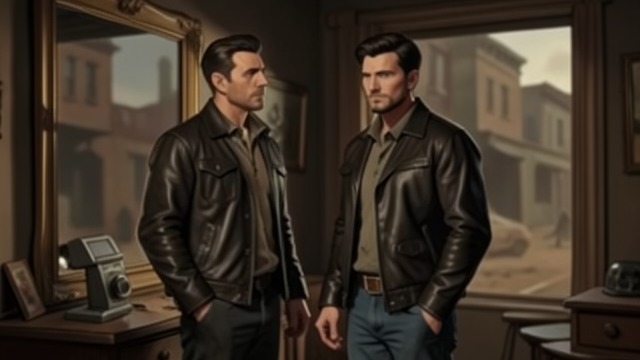
The New Western Look
A rougher model
Italian westerns and changing American films favor younger performers, distinctive clothes, and morally compromised protagonists. Violence becomes less decorous, and traditional heroes are no longer the only viable center of a story.
Rick feels the shift
Marvin Schwarz's description of Rick as an Eisenhower actor in a Dennis Hopper Hollywood captures the mismatch between his image and the new culture. The line is painful because it identifies a real industrial change.
Caleb's Counterculture Costume
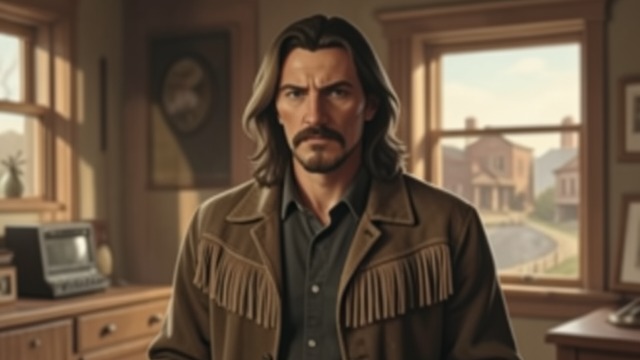
Caleb's Counterculture Costume
A deliberate disruption
Sam Wanamaker asks for a western villain whose look could belong on the contemporary Sunset Strip. Rick receives long hair, a drooping mustache, and a fringed jacket.
The old image loosened
Rick initially sees the outfit as absurd, but the new silhouette begins to look like a character rather than a failed imitation of himself. The costume lets the pilot acknowledge the present without leaving the western genre behind.
The Antiheroic Lead
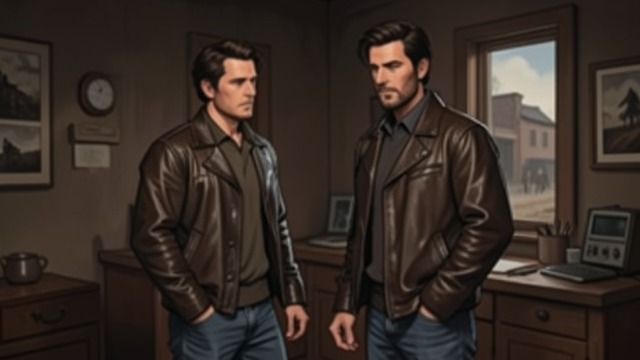
The Antiheroic Lead
A different television protagonist
Johnny Lancer is written with the secrecy, violence, and moral uncertainty usually reserved for a guest villain. He is nonetheless the series lead, a departure from more conventional western heroes.
Rick's professional envy
Rick recognizes the boldness of the role and envies James Stacy's opportunity. The pilot's new form both offers him excellent work and reminds him that the center of television storytelling is shifting away from stars like himself.
The Heavy's New Possibility
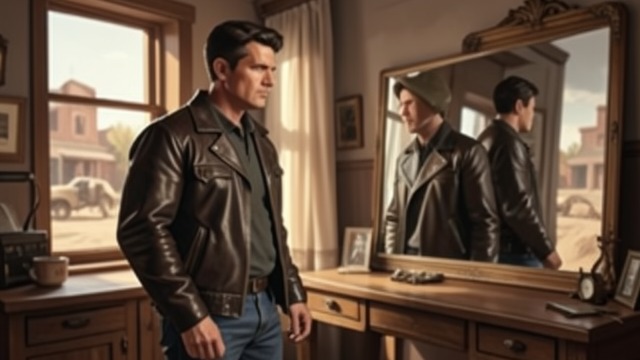
The Heavy's New Possibility
A changed perspective
Rick begins to accept that playing Caleb does not simply repeat the humiliation of losing a fight to a younger lead. The unusual costume and character give him space to create something distinct.
Reinvention through work
The industry shift remains real, but Rick's performance can meet it rather than deny it. His possible future depends not on recovering the old western but on learning how to inhabit its changed form.
During Rick's Bounty Law years
By the late 1960s
February 8, 1969, during Lancer wardrobe preparation
As Rick reads the Lancer pilot on February 8, 1969
During Rick's later reflection on the Lancer set
