Buster Cooley
Once Upon a Time in HollywoodBuster Cooley is a stuntman and longtime friend of Cliff Booth whose inability to repay a $3,200 debt leads him to offer Cliff a share in Brandy, the fighting dog he believes can make them rich. Their venture does earn substantial winnings, but Cooley’s determination to continue after Brandy is badly hurt turns a scheme built on friendship and profit into the confrontation that ends with Cliff killing him.
Identity and Background
Cooley is described as Cliff’s ne’er-do-well stuntman friend. Over five or six years, he borrowed money from Cliff in installments—four hundred dollars on one occasion, five hundred and fifty on another—until the debt reached $3,200. His circumstances were precarious: at different times he needed money to keep his car or television, avoid eviction, pay a Union 76 gas card, or cover the first and last month’s rent on another apartment.
The narrative distinguishes Cooley as a mooch but not a chiseler. Cliff believes that each time Cooley borrowed, he genuinely needed the money, and that Cooley would have repaid him if he had been able to. Rather than call and humiliate his friend, Cliff reasons that pressure would not make repayment come faster and might lead Cooley to avoid him. He has already accepted that the money is probably gone, while remaining glad that he could help when he had it.
The Debt and Brandy
The debt arose during a relatively prosperous period for Cliff. His partnership with Rick Dalton allowed Cliff to double the leading man in studio action movies, and the work gave him more money than he had previously known. Cliff bought a small boat, lived on it, and kept it docked in Marina del Rey; it was during these flush years that he lent Cooley most of the money. For Cliff, the loans were possible expressions of friendship, not merely investments awaiting repayment.
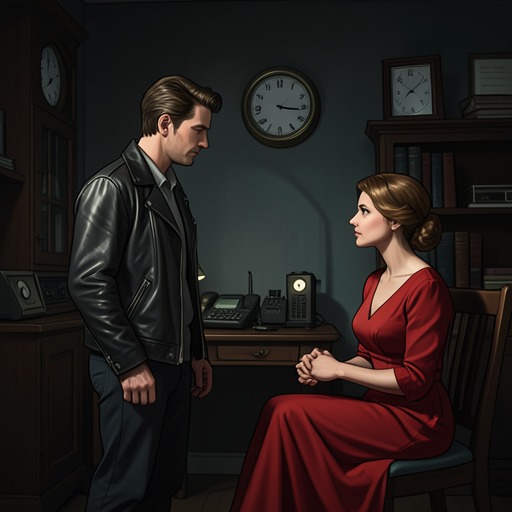
A little over two years before the account’s present-day scene with Brandy, Cliff was in his trailer behind the Van Nuys Drive-In when Cooley called. To Cliff’s surprise, Cooley asked to see him that day. About an hour later, Cooley arrived in a 1961 red Datsun pickup. After the two men opened cans of Old Chattanooga, Cooley raised the debt, initially calling it three thousand dollars. Cliff corrected him: the amount was $3,200. Cooley was surprised by the exact figure, but the sum made clear what he could not offer in cash.
Cooley took Cliff outside to the truck. In a wire-mesh cage in the flatbed stood Brandy. Cliff liked dogs, especially female dogs, but was initially unconvinced that this dog could stand in for thousands of dollars. Cooley’s offer was a half interest in what he presented as an exceptionally valuable fighter. He had $1,200 and proposed entering Brandy in a dogfight in Lomita, betting that stake on her, then taking her around the circuit. In his projection, by the sixth fight they could each have $15,000.
Cliff did not accept the promise of easy money at face value. He understood that Cooley believed his own sales pitch, but did not believe in sure things; dogfighting was illegal and distasteful, and too much could go wrong. Nevertheless, he joined Cooley in the enterprise. The arrangement transformed an unpaid personal debt into a shared financial stake—and made Brandy, rather than cash, the basis of the two men’s partnership.
The Fighting Circuit
For six months, Cooley and Cliff took Brandy to fights across Los Angeles County, Kern County, and the Inland Empire. She fought in Compton, Alhambra, Taft, and Chino, winning each bout, usually without much difficulty. When she was injured, the men gave her time to recover. After the first five fights, however, her success brought tougher opponents and larger bets. Later contests took them to Montebello, Inglewood, Los Gatos, and Bellflower; the fights grew longer and bloodier, Brandy was hurt more severely, and her recoveries took longer.
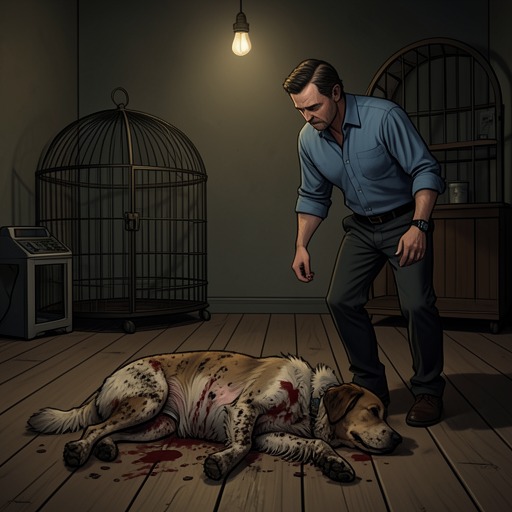
The danger accompanied the increased earnings. By Brandy’s ninth fight, Cliff and Cooley had made about $14,000 each. Cooley had set a new target of $20,000 apiece, after which Brandy could retire. During her tenth fight, in San Diego, she faced a pit bull named Caesar and was badly hurt. The fight was called off without a winner. Cliff believed the stoppage had saved Brandy: had the contest continued for another twenty minutes, Caesar would have killed her. Watching her take that punishment caused Cliff an agony he found unbearable, particularly because he had seen loved ones cut down in both wartime and peacetime.
Conflict and Death
Despite Brandy’s injury, Cooley booked her for another fight in Watts, against a male dog called Augie Doggie, before she had fully recovered. He insisted that the bout would be the last and that they were close to the $20,000 goal. His plan did not require Brandy to win: preserving her undefeated reputation was enough, because he intended to bet on the opposing dog. The proposal made the immediate stakes explicit. Brandy would be entered into a dangerous fight not to earn another victory, but to support a wager against her.
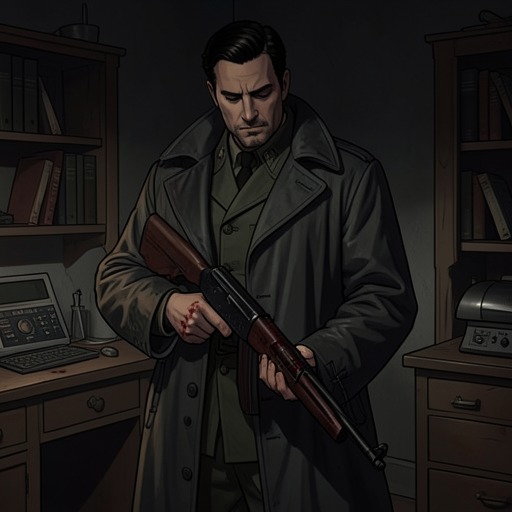
Cliff attacked Cooley in the trailer. They grappled for about four minutes, until Cliff broke Cooley’s neck and killed him. The narrative places the killing in stark contrast with the earlier history of the debt: Cliff had once chosen not to pressure his friend over money, but now responded violently when Cooley’s pursuit of their financial target put Brandy at further risk. The account gives the immediate trigger and the outcome without describing the fight as an accident or providing a later legal resolution.
After the killing, Cliff watched television beside Cooley’s body until about two in the morning. Once the drive-in had closed, he put the body in the trunk of Cooley’s used white 1965 Impala Sport Coupe, a car Cooley had bought with the winnings from Brandy’s fights. With Brandy in the passenger seat, Cliff drove to Compton and left the car there, placing the keys in the sun visor. He then walked with Brandy through the night until daybreak, when they took a bus home to Van Nuys.
Character and Narrative Significance
Cooley is defined by a tension between genuine need and reckless ambition. Cliff does not regard him as a deliberate swindler: Cooley’s past requests were real, and Cliff trusts that he would have repaid the debt if he could. Yet the plan to turn Brandy into a source of winnings depends on escalating risk, and Cooley’s final decision subordinates her recovery to a bet designed to exploit her reputation. His belief in the scheme does not prevent its consequences from becoming fatal.
The story of Cooley’s death also explains the bond between Cliff and Brandy. In the present-day scene, Cliff gives her a steak bone, and her eager response contrasts with his cynical view of human courtship as transactional. That contrast has a concrete history: Brandy was first presented as payment for a debt, then became the center of an enterprise that brought money, injury, and violence. Cooley’s last proposed fight ends their partnership, while Cliff’s flight with Brandy carries their shared history forward.