Charles Manson
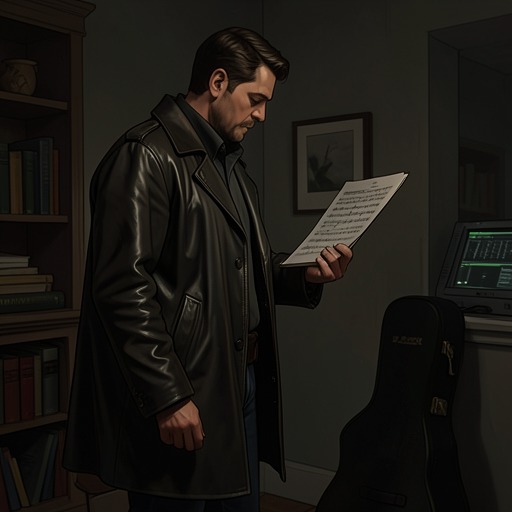
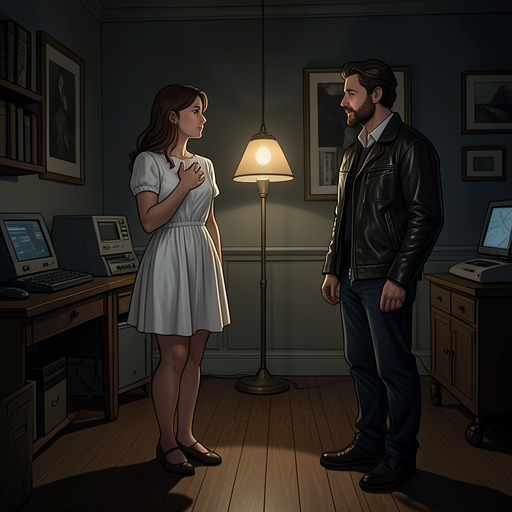
Once Upon a Time in HollywoodCharles Manson is both the self-appointed spiritual leader of The Family and an aspiring musician whose ambitions depend on access to the legitimate music business. The book sets these roles against one another: he can command loyalty and guide a follower into a private test of fear, yet his standing as a prospective recording artist rests on uncertain promises from people who may not come through. His failed effort to secure a hearing with Terry Melcher makes that divide visible to the people around him.
Identity and ambition
The book introduces Charles Manson as an ex-con surrounded by hippies who regard him as their spiritual leader, while noting that he would trade that position for success as a rock-and-roll star. His leadership, then, is not presented as the fulfillment of his deepest public ambition. Music is the goal he came to Los Angeles to pursue; authority over The Family is, in his own earlier conception, something he did in the meantime.
That ambition brought him into contact with musicians and industry figures. Through women in The Family, he formed a relationship with Dennis Wilson of The Beach Boys, which in turn connected him with Wilson’s acquaintances Gregg Jakobson and Terry Melcher. At Wilson’s home, Manson attended gatherings and jam sessions with musicians from the Los Angeles scene. He shared a joint with Mark Lindsay of Paul Revere and the Raiders, encountered Mike Nesmith and Buffy Sainte-Marie, and played guitar with Neil Young. The account describes the session with Young as the closest Manson came to musical legitimacy, and says his improvisation impressed Young. Manson hoped the connection might lead to Bob Dylan, but that hoped-for meeting did not materialize.
Authority within The Family
Manson’s authority is shown not only through the group’s identification of him as its spiritual leader but through the way he directs individual members. In a nighttime scene on Greenbriar Lane in Pasadena, he stands behind Debra Jo Hillhouse, one of the youngest members of The Family, with his hands on her shoulders and speaks softly into her ear. He tells her that she must face fear alone by entering a house on her own. Debra Jo reminds him that she has undertaken a Kreepy Krawl before; Manson accepts that she has, but distinguishes this attempt because she will not have the group with her.
His instruction draws on two ideas that he presents together: strength in numbers and the importance of individual achievement. He frames the solitary test as a way for Debra Jo to confront her fear and emerge more powerful. As she approaches the Hirshberg house, her knees are visibly shaking; she crosses the dew-covered lawn, leaves wet footprints, and quietly opens the backyard gate. Manson’s part in the episode is to define the test, lend it spiritual meaning, and then send her forward. He first reassures her that he will guide her, then steps back and propels her onward with a slap to her cutoffs. The scene makes his influence intimate and physical as well as ideological: he speaks close to her ear, touches her shoulders, and controls the moment when she must proceed alone.
The book also records an observer’s recognition of Manson’s unusual persuasive force. Terry Melcher, who had not been personally won over by Manson’s charm, nevertheless perceived that Manson could influence people to do what he needed. Melcher contrasts that influence with the ability of even a famous rock star to persuade a father to accept an arrangement involving his daughter. The episode is presented as evidence of Manson’s power over others, not as proof that Melcher believed in his musical prospects.
Musical promise and industry limits
Melcher’s assessment of Manson’s music is qualified rather than wholly dismissive: he considered it far from talentless, but saw Manson as a folk singer-songwriter in a crowded field. By the time their association developed, the folk scene that had supported earlier singer-songwriters had faded, while performers were turning toward amplified, rock-oriented music. Melcher’s own work had moved toward Top 40 pop, and Columbia Records already had Bob Dylan. The label was looking for commercially adaptable bands and novelty hits, not another acoustic songwriter. Manson’s aspirations therefore met an industry whose needs and tastes did not favor the kind of artist he was.
The account nevertheless gives Manson some real musical footholds. Dennis Wilson encouraged his ambitions and recorded Manson’s song “Cease to Exist” under the rewritten title “Never Learn Not to Love,” placing it on the Beach Boys album 20/20. Manson’s name was left off the publishing credit. The narrative says the band’s members had reason to resent the damage and expense associated with The Family’s stay at Wilson’s home: members of the group freeloaded, damaged or took property, and contributed to Wilson’s mounting costs. Wilson eventually moved out, leaving a business manager to evict the occupants. The book presents that deterioration as the reason the Beach Boys connection closed just as Manson might have benefited from it. It also notes a rumor that Wilson gave Manson a motorcycle in place of a copyright credit, while marking that detail as uncertain.
The Melcher audition and its failure
By February 8, 1969, Manson’s promising musical contacts had largely dried up. The remaining possibility was a vague commitment from Melcher to hear him play. Manson had lost contact with Melcher after becoming unwelcome at Dennis Wilson’s home, but the Beach Boys’ recording of a song originating with Manson’s “Cease to Exist” offered a possible reason for Melcher to take his songwriting seriously. Melcher agreed to come to Spahn Ranch for an audition; a date and time were set, and preparations were made for the gathering. He did not appear.
As the appointment moved from three-thirty through successive intervals to four-thirty, the absence became unmistakable. For Manson, the failure was not simply a lost professional opportunity. It happened in front of The Family, where his ability to maintain authority depended on never seeming weak. The people around him had seen him face down hostile parents, former members, the Black Panthers, and the police with apparent confidence. Melcher’s no-show left him looking foolish instead. For the first time, some members could consider the possibility that Manson was not a spiritual figure above ordinary disappointment but another hippie with a guitar trying to get on the radio. The book emphasizes that this doubt surfaced without establishing that the members abandoned their belief in him.
Manson later tries to reopen the connection by visiting Rudi Altobelli. He presents himself as a friend of Melcher and Wilson and says that Melcher had been arranging an audition with Columbia Records. He explains that he has no representation and wants a manager who could negotiate on his behalf if the audition led to a contract. His proposed next step is to play Altobelli tapes and perform on guitar; if Altobelli likes what he hears, Manson wants him to represent him and help establish the record-company relationship. The request reveals how much of Manson’s plan still depends on the same fragile chain of access: a promise from Melcher, a hearing at Columbia, and a manager to protect him in a business he does not control.
Narrative significance
Manson’s musical pursuit is a counterpoint to his control over The Family. In the group, he can give fear a purpose, set the conditions of a test, and make another person’s solitary action seem like part of a larger philosophy. In the music business, he is dependent on personal introductions, uncertain commitments, and the judgment of people with power to refuse him. The contrast makes the no-show especially consequential: it weakens his public posture before his followers at the very point where his hoped-for career has narrowed to one remaining appointment.
The account does not treat Manson’s musical prospects as wholly imaginary. His playing impressed Neil Young, Dennis Wilson encouraged him, and a song he wrote was recorded by The Beach Boys, albeit with a new title and without his publishing credit. Yet those limited successes never resolve into the recording career he wanted. The gap between a song reaching an album and its writer gaining a place in the industry sharpens the distinction between proximity and achievement. Manson can be near musicians and producers, and can make people respond to him, without securing the durable professional recognition he seeks. The character’s defining tension is therefore not simply between musician and spiritual leader, but between the influence he can exercise over a small dependent group and the recognition he cannot compel from the institutions that could make him a star.