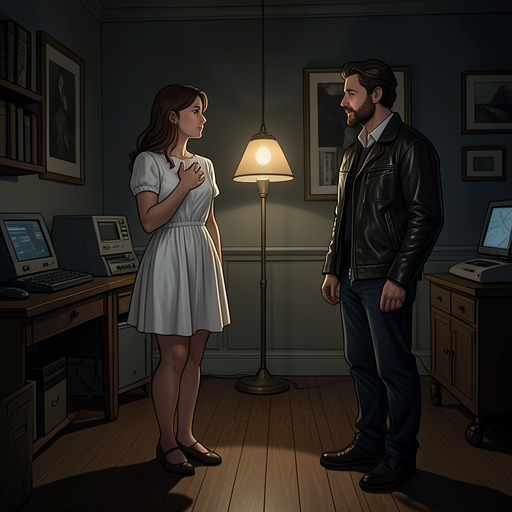
Charles Manson—Squeaky leadership relationship
Once Upon a Time in HollywoodCharles Manson’s leadership relationship with Squeaky is defined by an assignment that served The Family’s interests while drawing her into a genuine bond with the person she was told to care for. At Spahn Ranch, Manson framed Squeaky’s work for George Spahn as part of securing the commune’s foothold; what began as an imposed duty became, for her, an act of sincere affection.
Leadership and communal stakes
After months of moving around Los Angeles, Manson’s commune found a home at George Spahn’s old Western movie ranch. Manson saw the settlement as more than shelter: it offered The Family a place to put down roots, test his social theories, increase its numbers, and potentially create a new world order. His direction to Squeaky was therefore tied to the group’s larger ambitions and its need to maintain its position on the ranch.
The assignment to care for George Spahn
Manson told the twenty-one-year-old Squeaky that she was to serve as George Spahn’s cook, nurse, and companion. The assignment also included periodically masturbating him, which Manson presented as a contribution to the group: “Sometimes, kiddo, ya gotta take one for the team.” His instruction made Squeaky’s intimate labor part of the commune’s practical arrangement with the ranch’s blind, elderly owner.
Squeaky’s response
The night Manson gave her the assignment, Squeaky considered leaving for San Francisco and trying to repair her relationship with her parents. She did not leave. Instead, she fell in love with George—not in a conventional romantic sense, but with what the account describes as a deep affection for a lonely, forgotten man. Her feelings were not, the narrative stresses, merely the commune’s language of love repeated on cue; she sincerely valued caring for him.
Affection within a strategic arrangement
The contrast between Manson’s purpose and Squeaky’s experience gives the relationship its tension. Manson treated her caregiving as a means of securing The Family’s place at the ranch, while Squeaky came to understand the work through the intimate attention George needed and the companionship she could offer. Her affection does not erase the coercive terms of the assignment: she initially considered escape, and Manson had made her private labor serve a collective goal. It does, however, show how a role imposed as strategy could acquire a personal meaning that exceeded its original purpose.