Cheyenne
Once Upon a Time in HollywoodCheyenne is a young hitchhiker whose brief journey through Los Angeles brings her into contact with both Cliff Booth and Sharon Tate. Her two encounters turn on small choices: Cliff declines to take her, while Sharon stops and gives her a ride toward Westwood Village. The contrast gives Cheyenne’s appearance in the story a quiet significance, connecting characters who otherwise pass through separate scenes and placing an ordinary act of generosity beneath the novel’s foreboding view of the future.
Identity and First Encounter
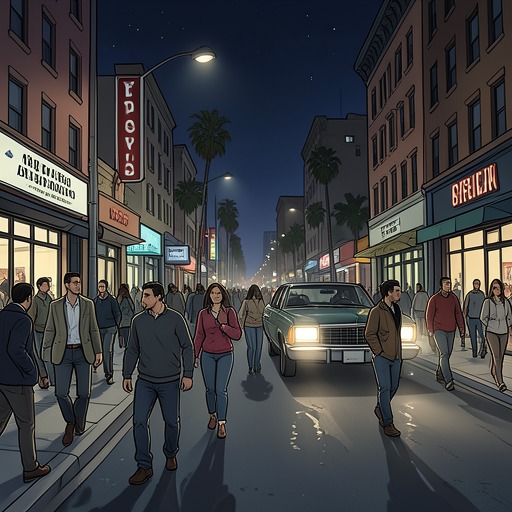
Cliff first sees Cheyenne outside the Aquarius Theater, where she is hitchhiking with another young woman. He recognizes her from an earlier encounter that morning: she is the tall brunette in cutoff Levi’s, a crochet halter top, and bare feet, with grime on her skin and pickles in hand. The distinctive details make her recognizable when she appears again, now beside the theater’s large mural for Hair.
Cheyenne spots Cliff across the traffic in a different car and calls out to him. When she asks for a lift, he explains that he is not going her way. She shakes her head and calls his refusal a “Big mistake!” The brief exchange ends without a ride, but it establishes her as outgoing and quick to engage strangers. It also gives her first meeting with Cliff a playful edge: their paths cross again, though he remains only a passerby in her trip.
The Ride with Sharon Tate
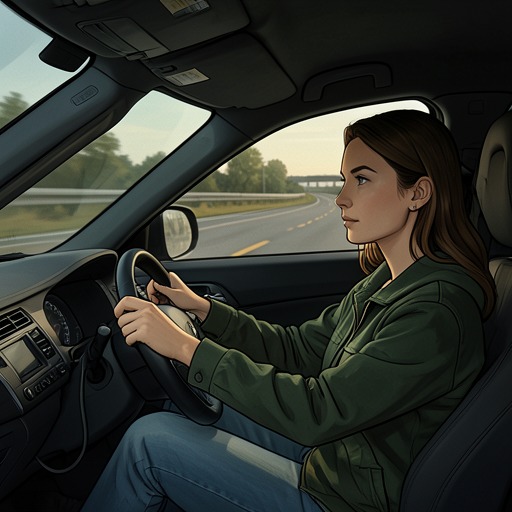
Later, Sharon sees Cheyenne hitchhiking by the road after turning onto Wilshire Boulevard. Sharon is in a pleasant mood and decides to stop. Before getting in, Cheyenne leans toward the open passenger window to see who is driving; on recognizing Sharon, she smiles and accepts the offer. Sharon tells her that she is going only as far as Westwood Village, setting a clear limit on the ride.
The journey lasts thirteen minutes. Cheyenne says she is heading to Big Sur to meet friends and attend an outdoor music festival, where Crosby, Stills and Nash, the James Gang, Buffy Sainte-Marie, and the 1910 Fruitgum Company are due to perform. She and Sharon talk about the trip and its music while listening to Françoise Hardy, and they share sunflower seeds from Cheyenne’s small leather pouch. The conversation is easy and companionable, but brief: Sharon has errands to finish, and Cheyenne is continuing north.
At the pay parking lot behind the Westwood Village Theatre, Sharon says goodbye and hugs Cheyenne. Sharon heads into Westwood Village; Cheyenne resumes her journey toward Big Sur. The farewell closes their encounter without making it into a lasting relationship. Its importance lies instead in the unexpected intimacy of the ride: for a few minutes, two young women share music, conversation, and a snack before their routes divide.
Narrative Role and Significance
Cheyenne’s two appearances create a compact contrast between refusal and welcome. Cliff recognizes her and declines her request because she is not going his way; Sharon, also a stranger to her, chooses to stop. Neither encounter changes Cheyenne’s stated destination, but together they place her within the everyday traffic of the city, where a hitchhiker’s progress depends on the decisions of people passing by.
The narration gives the ride an ominous retrospective shadow by observing that, a year later, a hitchhiker might be feared as a potential killer. In the February 1969 scene itself, that fear is absent: Sharon is relaxed enough to stop, and Cheyenne is simply on her way to see friends and hear music. The gap between the casual ride and the later warning makes the encounter matter beyond its short duration, while leaving Cheyenne’s subsequent journey and fate unstated.