Cliff Booth kills Pat Cardella and Mike Zitto
Once Upon a Time in HollywoodCliff Booth kills Pat Cardella and Mike Zitto in a Cleveland pizza parlor after the two men threaten him over his association with Miss Abigail. The killings expose the episode’s governing bargain: Cliff’s violence is not hidden, but his status as a war hero and the plausibility of his account help him escape legal consequences. The scene’s sudden turn from intimidation to execution echoes the unresolved suspicion surrounding Billie Booth’s death, while making this the first murder for which Cliff is explicitly said to get away with it.
The confrontation at the table
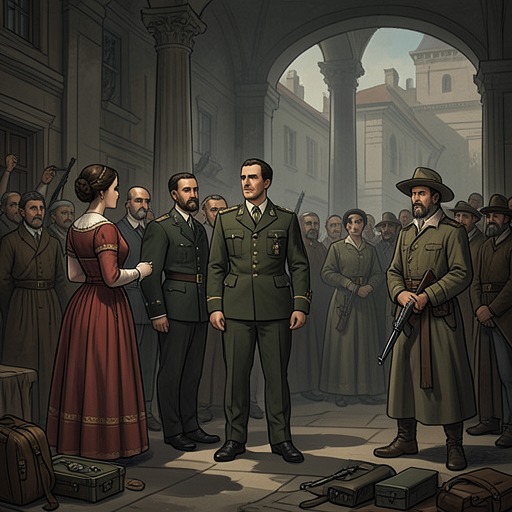
Once Miss Abigail had left the dining room, the two Italian hoodlums came over to Cliff’s table. Mike Zitto sat in her vacant chair; Pat Cardella pulled over another chair. Cliff looked up from his pizza as the men joined him. Pat ordered him to leave and warned that if either of them saw him around Miss Abigail again, he would spend a long time in the hospital. Mike reinforced the threat by asking whether Cliff understood. The confrontation began as an attempt to control where Cliff could go and whom he could see, with the two men treating their numbers and physical presence as sufficient authority.
Cliff answered by pointing between them and asking, “Do you know how many Italians I’ve killed?” When they failed to understand the warning, he repeated the question and reached into his jacket. What he placed on the table was the Medal of Valor, not a weapon: it landed with a loud bang between the men. Cliff used it to make his military history part of the immediate confrontation, explaining that he had killed at least seven Italians on the day he earned it, perhaps as many as nine, and that he had killed Italians every day during his long time in Sicily. The medal transformed the table into a display of the violence behind his reputation—and a warning that the two men had misjudged the person they were threatening.
The weapon and the turn
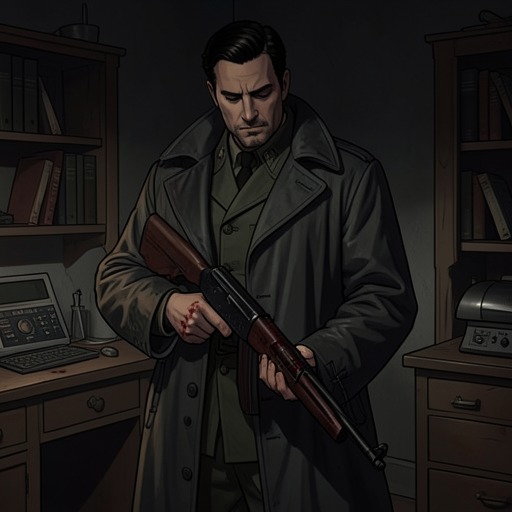
Cliff then took a snub-nose .38 from his other jacket pocket and set it beside the Medal of Valor. Pat and Mike jumped at the sight of the pistol. Cliff argued that his war-hero status gave him a license to carry it, then described how easily he could shoot them both in the pizza parlor, in front of its owner, waiters, customers, and Charlie Chaplin on the wall. He claimed he would get away with it because he was a war hero and they were not. His words turned the men’s threat of future violence into a present calculation: Cliff made clear that he was armed, prepared to act, and confident the law would treat him differently.
The shooting and its aftermath
Mike had had enough of Cliff’s taunts and began to answer, calling him an Army insult. Cliff cut him off, snatched the .38 from the table, and fired once into each man’s skull. The female customers screamed while the male customers hit the floor; Pat and Mike toppled from their chairs onto the sawdust-covered floor. Cliff fired twice more after they were down. The exchange had moved from a warning displayed in objects—the medal and pistol—to lethal force, carried out in the open before the restaurant’s owner, staff, and customers.
When the Cleveland Police Department questioned him, Cliff recast the confrontation as an attempted kidnapping. He said Pat had threatened to shoot him and throw acid in Miss Pendergast’s face, and described himself as frightened and unsure what to do. The police knew who Pat Cardella and Mike Zitto were. In the account’s blunt rendering, a World War II hero could kill men like them in a pizza parlor and have the police pay for his meal; his story did not have to convince so much as remain plausible. Cliff’s account was enough, and the episode identifies this as the first time he got away with murder.
That outcome recalls the earlier uncertainty around Billie Booth’s death. In Hollywood’s stunt community, Cliff’s military distinction coexisted with widespread suspicion that he had deliberately killed his wife; law-enforcement agencies, less familiar with his violent reputation, accepted the plausible account of a diving-equipment mishap. In both cases, the gap between what people suspected and what authorities could establish protected Cliff. The Cleveland killing makes the pattern more stark: the violence is witnessed, but the dead men’s identities and Cliff’s public status help turn a public execution into a defensible story.
The precedent of Billie Booth’s death
The Cleveland shooting also draws force from the earlier death of Billie Booth, around which suspicion and proof had long diverged. Hollywood stuntmen admired Cliff Booth’s military service, yet many believed he had killed his wife. They had seen Billie berate him drunkenly in public and took that history as a clue to what might have happened on the boat. Cliff told authorities that she had been drinking and maintained that her death resulted from a mishap with diving equipment; investigators, who did not know Billie or the couple’s public conflicts, had no way to test what that detail implied. The circumstances left them with two people alone in the ocean and a story they could not disprove, so her death was classified as a misadventure.
Cliff’s response to that death was neither an uncomplicated confession nor a clean denial. He felt regret, but it did not make him surrender to prosecution. Instead, he treated the event as a practical problem already past repair, turning over whether the shot had been a conscious choice or something closer to instinct, and minimizing its consequence by judging Billie undeserving of sympathy. He also invoked the American soldiers he had saved in the war as a reason one death could be weighed against many lives. That reasoning sits uneasily beside his remorse: guilt remains, but it becomes something he believes he can carry and punish himself for, rather than a reason to accept legal responsibility.
The contrast between the stunt community’s suspicions and investigators’ limited knowledge supplies the earlier pattern behind the pizza-parlor outcome. On sets, Cliff’s reputation followed him; to the authorities, his account of Billie’s death remained plausible and unprovable. After Pat Cardella and Mike Zitto were killed in public, his war-hero standing again shaped how plausible his story could be. The difference is that the earlier case left the central act uncertain, while the Cleveland episode makes the killings visible and then shows how visibility still fails to guarantee accountability. Cliff’s notoriety grows from that divide: people in the know regard him as a man who got away with murder, while the legal record leaves him free to keep walking onto Hollywood sets.