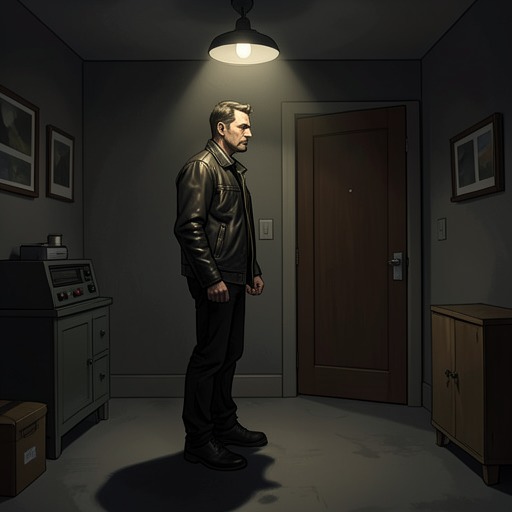
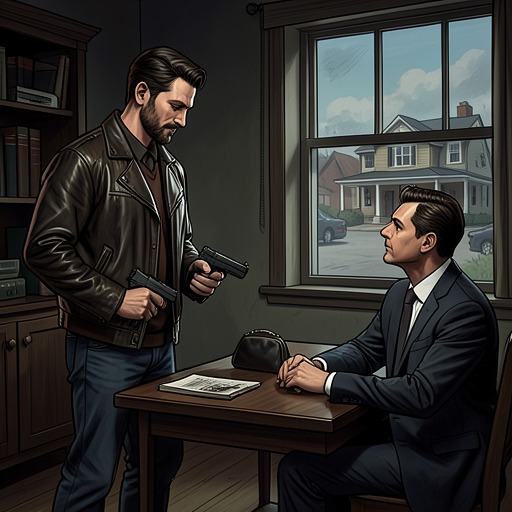
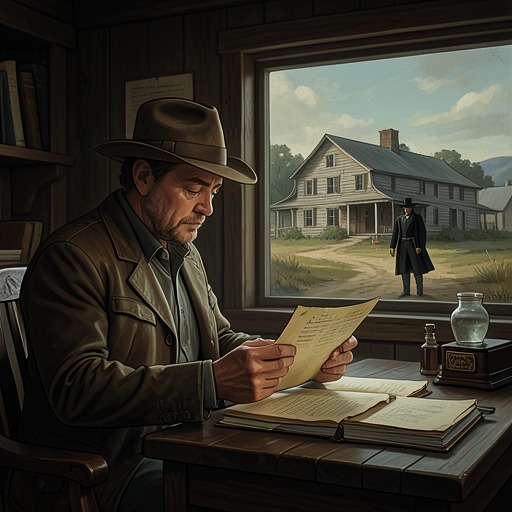
Johnny Lancer
Once Upon a Time in HollywoodJohnny Lancer, who later becomes known as Johnny Madrid, is the long-lost son whose return turns the Lancer family’s ranch conflict into a struggle over kinship, vengeance, and identity. Driven by the belief that his father, Murdock Lancer, cast him and his mother out, Johnny comes back prepared to kill him; the kidnapping of his young half-sister, Mirabella Lancer, instead forces him to choose what kind of man he will be and which family he will defend.
Identity and Background
Johnny was born at Lancer Ranch, the younger of Murdock’s two sons, and had never met his half-brother Scott Foster Lancer. Their different mothers had both died, and neither son had seen Murdock since childhood. The brothers’ estrangement reflected sharply unequal upbringings: Scott was raised by his wealthy maternal relatives in Boston, while Johnny grew up with his mother, Marta Lancer, first at the ranch and later in Mexico.
At the ranch, Johnny’s early life was one of privilege. He had a private tutor, ate Black Angus prepared by a French chef and served on china, and slept in a feather bed. When Marta left with him, his circumstances changed completely. She had no wealthy family to support them and earned money dancing, singing, and having sex in cantinas. Johnny grew up among poor provisions and precarious shelter: beans and hardtack on clay plates, cactus juice in place of milk, jerky instead of peppermint sticks, and sacks of coffee beans for a bed. He learned dirty jokes from men in the cantinas and had to defend himself from rats and men who preyed on children. The gulf between these lives gives his anger a specific history: he remembers both what he lost and what he survived.
Separation, Loss, and Revenge
Johnny was ten when Marta took him from Lancer Ranch on a dark, rainy night. She left in a fancy buggy Murdock had given her for her birthday and traveled sixty miles across the border into Mexico. Johnny never learned why she left. He suspects that Murdock tired of life with Marta and her son and sent them away, but the text presents this as Johnny’s explanation, not as something he witnessed or knows for certain. In his understanding, the departure made his father responsible for the hardship that followed.
When Johnny was twelve, a wealthy customer from Mexico City slit Marta’s throat. Johnny dug her grave in hard-packed earth. The killer was tried and acquitted by a jury whom the narration describes as biased against Marta. Two years later, Johnny killed the man who had murdered her; over the following decade, he also killed every member of the jury. His revenge is therefore not a single act but a prolonged campaign, extending the injustice of his mother’s death into a defining part of his own life.
Johnny Madrid
As an adult, Johnny’s reputation reaches California under the name Johnny Madrid. He is described as a deadly half-white, half-Mexican gunfighter, a feared killer on the Mexican side of the border, and a scoundrel known for exceptional speed with a pistol. The people in the pueblos he passes through call him El Asesino de Rojo, the Murderer in Red, after the distinctive ruffled shirt he habitually wears. The name and clothing make his reputation immediately legible: he is known not through family ties or a settled home, but through violence and a striking public image.
Murdock’s effort to find him began years earlier. A Pinkerton detective eventually located Marta’s grave in an Ensenada boot-hill cemetery, where the inscription on a wooden cross appeared to have been carved by her twelve-year-old son. Murdock traveled there, but the last record he could trace was Johnny’s appearance at the trial of Marta’s killer. His searches failed, and when he paid the detective agency’s final bill, he had come to believe his son was dead. About fifteen years later, Johnny Madrid’s reputation reached California; three years before the ranch’s present crisis, a former Pinkerton detective finally informed Murdock that Johnny was alive.
Return to Lancer Ranch
Murdock sends word to both estranged sons as conflict with Caleb DeCoteau and his men escalates from stolen cattle to loss of life. The proposal offers each son one thousand dollars simply to hear Murdock out, with money for travel and no obligation to accept. For Johnny, the payment is not the central attraction. The invitation gives him the chance to face the father he blames for Marta’s fate and carry out the revenge he has contemplated for years. Before setting out, he is already weighing the consequence: killing a prominent landowner could leave him hanging. He postpones that risk rather than abandon it, reasoning that Murdock is not going anywhere; meanwhile, Johnny has other ways to spend his time and money.
The brothers arrive separately but on the same Butterfield stagecoach in Royo del Oro. Scott steps out first in an elegant baby-blue three-piece suit and top hat, the polished eastern gentleman Mirabella immediately recognizes as her brother. Johnny follows in a vivid red ruffled shirt, brown leather coat, studded black jeans, and a short cowboy hat. He asks the driver in Spanish to lower his handcrafted saddle, while Scott retrieves an embroidered garment bag. Their contrasting entrances make visible the very different worlds in which the brothers were raised. When Mirabella introduces herself, Scott says his mother had no other children; Johnny points out that their father evidently did, then confirms that Murdock is their shared father. He explains that he has come because Murdock offered him a thousand dollars to visit, establishing money and distrust, rather than an existing bond, as the terms of his return.
Choice and Narrative Role
Johnny’s return is complicated by his connection to Caleb DeCoteau. Johnny and Caleb know and like one another, while Johnny’s hatred of Murdock is rooted in the loss of Marta and the hardship he associates with his father. Caleb’s kidnapping of Mirabella for a ten-thousand-dollar ransom makes the ranch conflict personal in a new way. The threatened child becomes the emotional turning point: Johnny must decide not only which side to support, but whether he understands himself as Lancer or Madrid.
That choice redirects the revenge plot. Johnny has come to confront Murdock, yet the kidnapping ultimately pushes him to defend the family he had never known and take the side the story describes as the angels. His resulting place beside his newly found relatives sets him up as a continuing member of the Lancer family in the weekly Western series. The character’s defining reversal is not that his past disappears, but that the name and reputation built through violence no longer determine his only possible allegiance.