Johnny Madrid’s revenge killings for his mother
Once Upon a Time in HollywoodJohnny Madrid’s revenge killings turn his mother’s murder and the legal acquittal that followed into a decade-long campaign of retribution. The killings avenge Marta Lancer, but they do not settle Johnny’s grievance: when the thirteen jurors are dead, his father remains the last person he believes must pay.
The verdict and the first killings
Johnny’s hatred of Murdock Lancer is rooted in what he sees as his father’s responsibility for Marta’s degradation and death. Murdock had thrown Johnny and his mother out into the rain; Johnny also held him responsible for putting Marta in the circumstances that led to another wealthy man slitting her throat. When Johnny was twelve, that man stood trial for Marta’s killing and was acquitted. Two years later, Johnny killed him. He then turned his vengeance on the jurors who had freed the man, making their deaths a prolonged answer to the verdict.
A decade of retribution
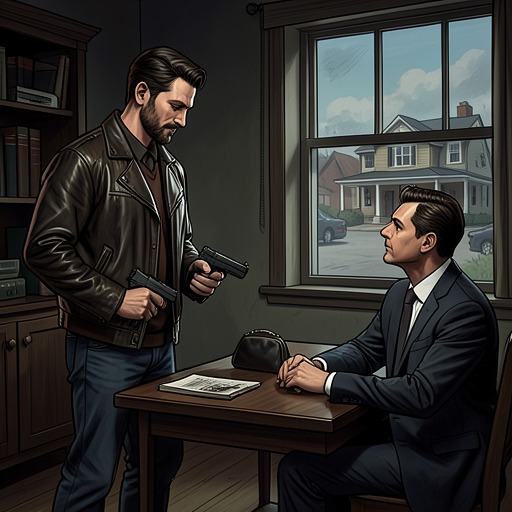
Johnny made the jurors’ deaths answer the manner of his mother’s killing. He slit their throats so they would experience her terror: blood filling their mouths, speech failing, and death arriving slowly as they looked up at him. He smiled at their agony and told each that Marta was greeting them. The violence was not simply a tally of revenge; Johnny made each killing a staged reenactment of the death for which the jury had refused to impose punishment.
The campaign took ten years and claimed all thirteen jurors. Its duration turned the original acquittal into a continuing project, each death extending the sentence Johnny believed the court had evaded. When the last juror was killed, he considered Marta avenged—but the campaign had not erased the grievance that began with his father’s role in her life and death.
The unfinished reckoning
The jurors’ deaths left Murdock Lancer as the final person Johnny believed responsible for his mother’s suffering, but the revenge campaign converged with a new and incompatible prospect. Murdock offered to divide his cattle, land, ranch house, and bank accounts among his two sons and himself, provided they helped drive Caleb DeCoteau’s men from the area and worked the ranch for ten years. For Johnny, accepting meant entering a bargain with the father he still wanted to punish; refusing meant walking away from a fortune he could not make in ten lifetimes.
The offer also placed the old grievance inside an active conflict: Caleb’s land pirates were taxing Royo del Oro’s businesses, and the killing of Murdock’s trusted ramrod, George Gomez, had pushed Murdock to seek his sons’ help. Johnny carried an additional secret into this arrangement: he and Caleb were friends. Thus the years of vengeance had settled one account but left Johnny poised between another, his father’s wealth, and an alliance hidden from the people whose side he had ostensibly joined.
Justice outside the courtroom
The killings belong to a wider pattern in which formal judgment and actual accountability come apart. The man who killed Marta was acquitted, leaving Johnny to make the jurors—not a court—answer for the verdict. Elsewhere, Cliff Booth’s account of Billie Booth’s death as a diving accident survived because investigators could not disprove it, while his later killing of Pat Cardella and Mike Zitto was accepted after he presented the two gangsters as a threat. These episodes differ in their circumstances, but each turns on the gap between what happened and what authorities could or would establish. Johnny’s campaign makes that gap brutally literal: the verdict ends the trial, but not the violence it leaves unresolved.