Marta Lancer
Once Upon a Time in HollywoodMarta Lancer is Murdock Lancer’s wife and Johnny Lancer’s mother, a woman whose departure from the Lancer Ranch turns a wealthy childhood into a precarious life in Mexico. After an affair with a ranch hand, she leaves with her ten-year-old son; there she earns a living in cantinas, and two years later a dissatisfied customer kills her. Her brief appearance in the story is decisive: Johnny’s poverty, his mother’s murder, and the long revenge that follows all begin with the rupture of the family she abandons.
Life on the Lancer Ranch
Marta lives for ten years as Murdock’s wife and Johnny’s mother on the ranch. Their household offers wealth and comfort: Johnny is taught by a private tutor, eats Black Angus prepared by a French chef, and sleeps in a feather bed. The life she shares with Murdock is not described as a love match. The narrative instead says that she respects him, and portrays that respect as the foundation of their household until her affair destroys it.
Marta’s relationship with ranch hand Lazaro Lopez changes that household. Seeing him on horseback roping steers, she understands that her attraction to him puts her marriage and position at risk. The account describes her eventual surrender to that desire as a return to a nature she had suppressed for ten years. When Murdock confronts her, she recognizes that the shared life on the ranch is broken and that she has lost her own respect for herself. She leaves after he falls asleep, taking Johnny and the buggy he had given her for her twenty-eighth birthday.
Flight and life in Mexico
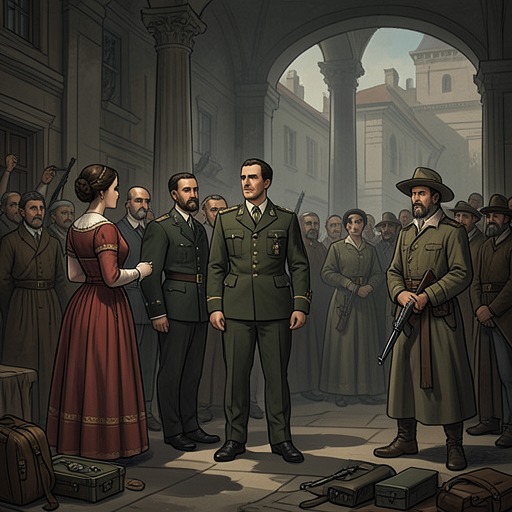
Marta’s departure is a specific crossing from security into hardship. On a dark, rainy night, she and Johnny ride roughly sixty miles across the border in the birthday buggy. She does not return to the ranch. In Mexico, she can stop pretending to be someone other than the person the narration says she was born to be; the book characterizes this freedom through its own severe moral vocabulary, calling her a tramp and a whore.
Her livelihood is made in cantinas across poor, dangerous settlements south of the border. She dances, has sex with customers, and plays castanets. Johnny grows up amid this work and poverty: what he learns about sex is that men pay women for it, as they pay for singing, dancing, cooking, or washing clothes. The move also reverses his material circumstances. The boy who had eaten from china and slept in a feather bed now lives on beans and hardtack, drinks cactus juice, eats jerky, and sleeps on coffee sacks in cantina back rooms. His mother’s work sustains them, but the setting exposes him to rats and to men who might molest him.
Murdock’s estrangement from Marta is accompanied by a prolonged search for her and their son. Unbeknownst to Johnny, Murdock spends five years looking for them. A Pinkerton detective eventually locates Marta’s grave in Ensenada, but the search does not reunite father and son. The distance between the two households—one wealthy and secure, the other exposed to poverty and violence—becomes part of the inheritance Marta’s departure leaves behind.
Murder and its consequences
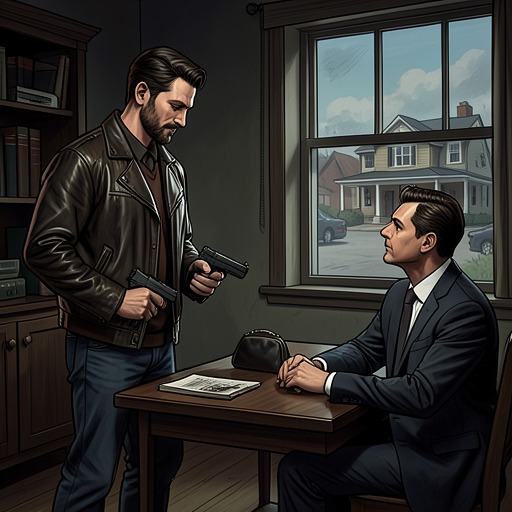
Marta is killed in the back room of an Ensenada cantina by a wealthy, dissatisfied customer from Mexico City, who slits her throat. Johnny is twelve when he digs her grave in hard-packed earth. The marker is a wooden cross bearing her name, carved by the boy himself. The grave records both her death and the early responsibility forced onto her son: he must bury the person who had been his only parent in Mexico.
The killer is tried and acquitted by a biased jury. Murdock later learns that the affluent defendant was found not guilty under prejudicial circumstances; Johnny had appeared at the trial, but his father cannot find him afterward. Two years after Marta’s murder, Johnny kills the man who killed her. He eventually kills every member of the jury as well, although completing that revenge takes a decade. Marta’s death thus remains consequential well beyond the cantina: the failed trial turns grief into a long campaign of retribution.
Memory, judgment, and narrative role
Johnny never learns why Marta took him away from the ranch. He guesses that Murdock tired of her and ordered her to leave, imagining his father as the person who made a money-grubbing whore of his mother. That explanation is Johnny’s conjecture, not knowledge. The narrative supplies a different account: Marta’s affair with a ranch hand humiliates Murdock, destroys their mutual respect, and precedes her decision to flee. The distance between what Johnny believes and what the account reveals makes her departure a family wound that survives without a shared explanation.
Marta is presented through markedly judgmental language, but her story also gives that judgment material circumstances: she leaves a privileged household, supports herself and her child through cantina work, and dies at the hands of a wealthy customer whose status helps him escape conviction. The account imagines her death as an end to the degradation she had endured and as a possible passage to forgiveness. It suggests that she had hoped Christ might forgive her and that, if the promise of paradise were true, she might leave behind the cantina rooms and brothels. That imagined peace contrasts with the life of violence left to Johnny. Marta is absent from the later action, yet the abandoned home, the grave, and the acquittal remain active in her son’s history: her life and death become the source of both his sense of injury and his revenge.