Rick Dalton—Cliff Booth partnership
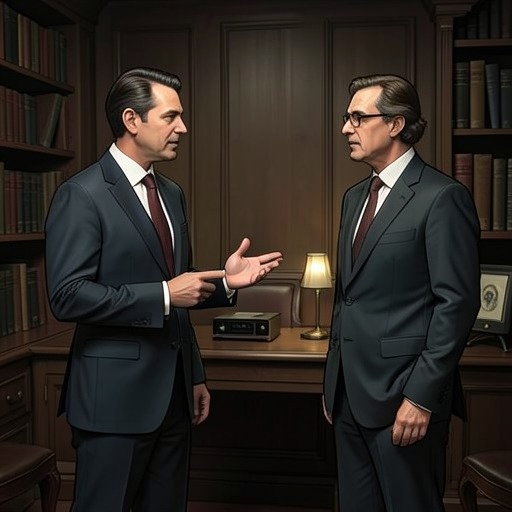
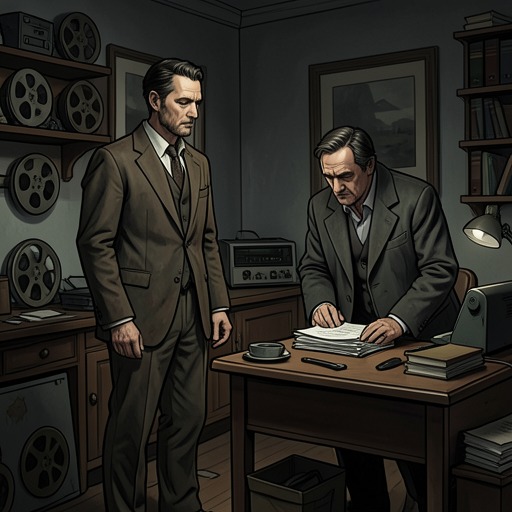
Once Upon a Time in HollywoodRick Dalton and Cliff Booth’s partnership is both a friendship and a working arrangement reshaped by Rick’s fading star power and Cliff’s precarious place in the stunt business. It is forged in a literal fire on the Bounty Law set, then tested as Cliff’s stunt work disappears and his responsibilities shift from doubling Rick to driving him, running errands, and keeping his spirits up. Their bond endures through that change, and in Europe Cliff eventually returns to stunt doubling Rick.
From stunt double to indispensable partner
During the third season of Bounty Law, in 1961–62, Cliff was hired to double Rick, who played the series lead, Jake Cahill. Rick was wary at first: Cliff was so handsome that, in Rick’s view, he threatened to draw attention from the star. But Rick also learned about Cliff’s military record. Cliff had received the Medal of Valor twice, including for killing enemy soldiers in Sicily; in the Pacific, he had more confirmed kills of Japanese soldiers than any other American serviceman. Rick, who would have gone to considerable lengths to avoid military service, nevertheless admired people who had served with distinction.
The decisive test of their working relationship came about a month after Cliff joined the show. For an episode, Rick agreed to perform a fire gag in Jake Cahill’s large white winter coat, though Cliff was ready to do it himself. The coat’s white dye was 65 percent alcohol-based, a fact unknown to the crew, and when a flame touched its back, the garment erupted. Rick felt the fire climb past his shoulders and around his head, and was about to run in panic when Cliff calmly told him to fall into a puddle of water. Rick did so; the flames were put out before they caused serious damage. The rescue made them a team. From then on, Cliff’s role in Rick’s life extended beyond the stunt work for which he had been hired.
A partnership under pressure
By the time Rick is facing the prospect of Italian films, the pair’s jobs have diverged. Rick fumes about having to work abroad, while Cliff drives through Los Angeles traffic and lets him vent. Cliff admits that he cannot know what it feels like to lose a career because he has never had much of one. Rick responds that Cliff is his stunt double, but Cliff corrects him: since The Green Hornet and since Rick lost his driver’s license, he has been Rick’s driver and gofer. He likes taking Rick to sets, auditions, and meetings, and house-sitting in the Hollywood Hills while Rick is away. Still, he has not been a full-time stuntman for some time.
Cliff’s answer is not a rejection of Rick so much as an unsentimental account of their changed circumstances. Rick sees a trip to Rome as professional humiliation; Cliff sees its attractions, including the Colosseum, good food, and a break from Burbank and losing fights to Bingo Martin. Rick concedes that Cliff has a point. Their shared laughter eases the moment, repeating a familiar pattern: Cliff absorbs Rick’s agitation and finds a way to put it in perspective. The exchange also makes clear that Rick’s career anxiety and Cliff’s reduced employment are different problems, even as the two men face them together.
The changing terms of work
Cliff’s place beside Rick no longer guarantees him work on Rick’s productions. There was a period when the arrangement was contractual: if Rick had a role, Cliff doubled him, and on Universal films Cliff even had a chair with his name on it. As Rick increasingly appeared as a guest on other people’s television shows, that guarantee ended. Stunt gaffers generally relied on their own crews; Cliff might get a few days on Tarzan or Bingo Martin only if Rick asked the gaffer to hire him. When Rick arrives at the Lancer set, Cliff agrees to repair Rick’s television antenna but also asks Rick to speak to the stunt gaffer about whether he will work that week. Rick knows he has put off the conversation and explains that the gaffer is close to the one from The Green Hornet. Cliff understands the implication immediately: an old industry connection may again work against him.
The stunt business has other, less formal uses for Cliff’s abilities. In the trade, he is known as a Ringer, a stunt player hired from outside a crew when a director or actor mistreats the regular stunt team. The ringer can do what the team itself cannot: physically retaliate against the offender, ideally in front of the crew. This reputation sits alongside Cliff’s military record and his disputed status as a suspected wife-killer. His value to Rick is therefore not simply that he can safely perform dangerous scenes. He brings a formidable, real-world reputation into a business built around simulated violence, even as that reputation can make him harder to hire.
Conflict, loyalty, and consequences
The Green Hornet set marks a rupture in Cliff’s professional standing. During the third round of his fight with Bruce Lee, the stunt gaffer’s wife intervenes; Cliff is quickly fired. Cliff was not hired to humiliate Lee as a day-player Ringer but to double Rick during the actor’s guest appearance. The gaffer had opposed hiring him because he and his wife believed Cliff had killed his own wife. After the incident, the stunt community had still more reason not to hire Cliff, and he effectively stopped being Rick’s stunt double and became his gofer. Rick was angry enough that Cliff feared he might be fired too, but Rick kept him on. He paid Cliff a modest salary to drive him, handle odd jobs, and be available, with stunt work meant to supplement the income. As suspicion and the fight further narrowed that work, Rick’s continued employment became a practical expression of loyalty.
That loyalty does not erase the difference between Rick’s screen violence and Cliff’s actual capacity for violence. Rick has killed hundreds of people in television and film roles, including in Bounty Law and The Fourteen Fists of McCluskey; Cliff, by contrast, is described as a real killer. Their professional pairing places make-believe heroics beside a man whose past is not confined to performance. The contrast helps explain why Cliff is more than a replaceable employee in Rick’s life, while also leaving the partnership shadowed by the dangerous reputation that limits Cliff’s livelihood.
A return to stunt work
In Spain during the summer of 1969, the working arrangement shifts again. Rick and Cliff have traveled to Europe together, and Cliff is stunt doubling Rick for the first time in a long while. By then they have made four European films in rapid succession: the Italian westerns Nebraska Jim and Kill Me Quick, Ringo, Said the Gringo; the Athens-shot spy film Operation Dyn-O-Mite; and Red Blood, Red Skin, being filmed in Spain with Telly Savalas and Carroll Baker. Cliff is nursing a cut above his right eyebrow, which has begun bleeding again after a rifle-butt blow, and an expanding bruise threatens his usefulness on the set the next day. His injury makes the old occupational risk visible again: returning to stunt work means putting his body back on the line for Rick’s performances.
The European films do not establish that Cliff’s employment has become secure, but they show that the partnership has not been reduced permanently to driving and errands. Their roles can change with Rick’s opportunities and the demands of a production; the relationship persists through those changes. Its defining pattern remains the one established at the fire: Rick is the public performer in danger, and Cliff is the skilled partner who stays close, intervenes when needed, and helps him continue.