Rick Dalton’s Problem Drinking
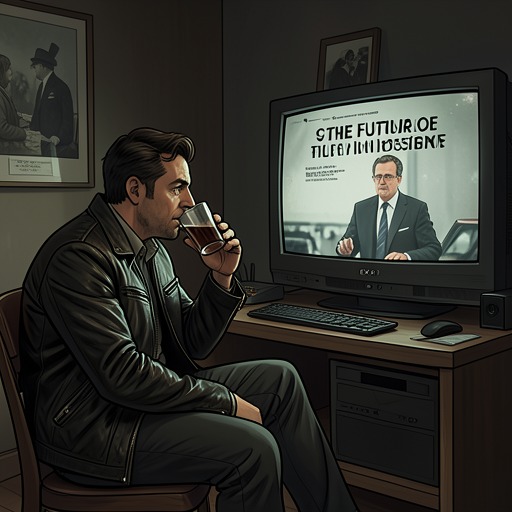
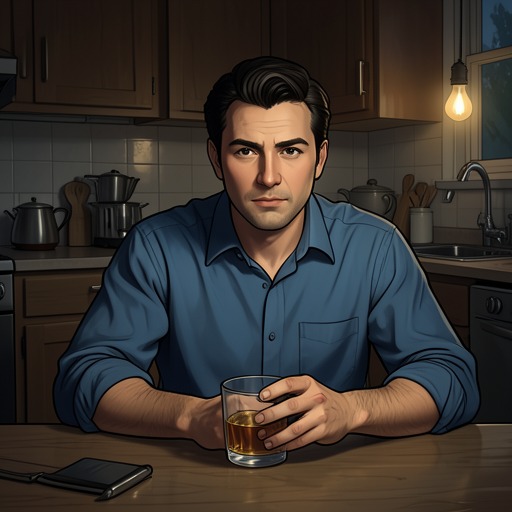
Once Upon a Time in HollywoodRick Dalton’s problem drinking is not presented as a glamorous professional eccentricity or as an excuse for his failures. It is tied directly to self-loathing, self-pity, and boredom, and it threatens the very competence on which his career depends. A night of whiskey sours leaves him unable to remember how he got to bed; the next day, mistakes on set expose the distance between the professional he believes he should be and the actor he fears he is becoming.
Identity and Pressures
The book places Rick’s drinking within an entertainment industry where alcohol is described as a familiar burden among actors. In an earlier generation, many leading men had served in World War II, and actors who entered the profession in the late 1950s and early 1960s had served in Korea. The narrative observes that some had witnessed things they could never unsee, and that their generation’s drinking was therefore tolerated to a degree. It cites George C. Scott’s contract provision allowing three production days to be lost because of his alcoholism, and notes that Aldo Ray’s excessive drinking was also tolerated before his later decline.
Rick, however, is explicitly distinguished from those examples: the narrative says he has no such excuses. His drinking stems from a three-way combination of self-loathing, self-pity, and boredom. The distinction does not make the habit less serious; it makes its immediate emotional and professional costs harder to displace onto the circumstances that excused other actors. Rick’s own account of his responsibilities is plain: professionals know their lines, and he considers himself a professional.
Career Insecurity and the Drinking Pattern
The drinking sits amid an increasingly bruising reckoning with Rick’s place in the business. When Marvin Schwarz bluntly explains that Italian filmmakers want Rick as a substitute for Steve McQueen, Rick feels tears beginning to build behind his eyes. That exchange gives his self-pity and self-loathing a concrete professional context: he is being told that his value may lie not in being the first choice, but in resembling a star whom the producers cannot get.
On the set of Lancer, Rick also confronts the changing western genre and his own screen image. He studies his reflection in Caleb DeCoteau’s fringe jacket and sees how the costume and his altered appearance make him look like a different, more modern actor. He begins to understand Marvin’s description of him as an Eisenhower-era actor in a Dennis Hopper Hollywood. This is not stated as a cause of his drinking, but it sharpens the career uncertainty against which his self-reproach operates: even a possible reinvention arrives entangled with the fear that his established identity no longer fits.
A Night’s Drinking, and Its Cost at Work
After working for three hours to learn his lines, Rick drinks eight whiskey sours and passes out. In the morning he cannot remember how he got to bed. He is not placed in the category of actors who have learned to function as professional drunks; the comparison instead underscores that he is still an amateur at handling the consequences of his drinking.
The consequences become visible during the shoot. Rick keeps getting his lines wrong, and the embarrassment matters to him because he believes a professional should know the material. After the scene, angry with himself, he throws his cowboy hat across his trailer with enough force to break a window. The broken glass turns an inward failure into a practical problem: before leaving, he thinks he will have to clean the trailer and invent an excuse for the damage. When an assistant director comes to summon him to the set, Rick makes sure the man does not get a good look at the mess.
The sequence links drinking to a tight chain of pressure and concealment. The hangover is not described as the only reason for the line mistakes; the narrative does, however, place the blackout immediately before the failed performance and makes Rick’s drinking part of the day’s professional crisis. His attempt to hide the broken window echoes his worry about how he appears to others, while the wrecked trailer records the anger he cannot turn into better work.
Promises, Limits, and Perspective
Later, while socializing with Jim Stacy and Cliff Booth, Rick knows he still has to go home and work on lines for the next day’s shoot with Trudi Frazer. He worries that she will know both her own lines and his, a pointed contrast with his earlier failure to prepare successfully. Although he lifts an empty cocktail glass and jokes about ordering another whiskey sour, he decides that this will be his last drink. He tells himself that when he goes to bed, he will remember doing so in the morning.
That intention is a limited resolution, not evidence that Rick has stopped drinking or overcome the problem. Its modest measure is precisely the point: for this night, success means stopping at one more drink and retaining the memory of going to bed. The book leaves the longer-term outcome unstated rather than turning the promise into a cure.
Near the end, Trudi reminds Rick that their job is wonderful and that they are lucky. For the first time in ten years, he recognizes how fortunate he has been: he recalls the actors and actresses he worked with, the places he visited, the stories he lived, the attention his career brought, and the house he owns because he earned a living pretending to be a cowboy. He tells Trudi that they are lucky. This moment does not cancel the earlier drinking or explain it away, but it shifts the frame from self-pity toward gratitude. The narrative’s final emphasis is on Rick recognizing value in the life and work that his drinking and professional anxiety had made difficult for him to see.