Spahn Ranch’s Decline
Once Upon a Time in HollywoodSpahn Ranch’s decline is the story of a Hollywood location left behind: a once-familiar western back lot now in disrepair, sustained by marginal entertainment work and horseback rides rather than the major productions that made its main street recognizable. The retreat of the industry reshapes both the property and George Spahn’s life there, as the ranch’s old images of cinematic prominence persist around an owner who has nearly lost his sight.
A working movie ranch
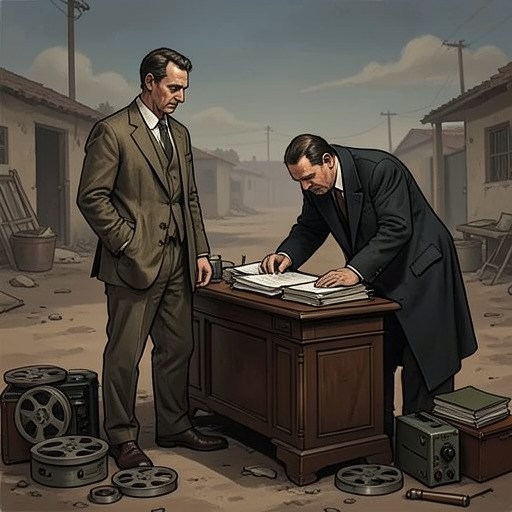
For decades, George Spahn rented the ranch to Hollywood productions. Its back-lot western-town main street served as a setting where the Lone Ranger, Zorro, and Jake Cahill rode, making the property part of the scenery of western movies and television. That history belonged to an active production landscape: the ranch’s built environment was not merely a relic but a working set available to filmmakers.
Hollywood moves on
In the more recent period described in the book, Hollywood has gone elsewhere and the former set has deteriorated. The ranch has not become wholly inactive, but its remaining work is occasional and diminished: it hosts magazine and album-cover photo shoots, including one for the James Gang, rather than the regular movie and television productions associated with its heyday. Its western-town streets remain in use, but the scale and status of that use have changed.
Reduced uses and changing productions
The ranch still keeps horses and offers families follow-the-leader rides through the Santa Susana Canyons. That attraction preserves a connection to the western setting, but it is distinct from the professional production work that once brought Hollywood there. The film work that remains is described as dirty western-themed movies and grade-Z exploitation pictures directed by Al Adamson. The location survives as a usable western backdrop, though increasingly at the margins of the industry that once depended on it.
George Spahn and the remnants of the heyday
George Spahn has gone nearly blind and spends most of his time in a small house on a hill overlooking the back lot. Inside, framed posters for westerns filmed at the ranch, sun-faded photographs of actors who worked there, a collection of western saddles, and cowboy and Indian statues sculpted by George Montgomery preserve the property’s former importance. These objects keep its production history present, even as Spahn can no longer see them clearly. He has also found companionship in Charles Manson’s Family, whose settlement at the ranch rests on an arrangement with him. Squeaky takes responsibility for caring for Spahn and his household, giving her a distinctive position within the group. The ranch’s decline is therefore not simply the decay of a movie set: it is a change in the uses of the property and in the social world that fills the space Hollywood has left behind.