Squeaky—George Spahn caretaker bond
Once Upon a Time in HollywoodSqueaky—George Spahn caretaker bond is at once a practical arrangement and a genuine attachment: The Family places Squeaky in the role of caretaker to help secure a home at Spahn Movie Ranch, but she comes to love George as a lonely man whom others have forgotten. Her care takes shape in repeated, ordinary routines—describing television for him, preparing breakfast, helping him dress and guiding him through the house. Those gestures complicate the original bargain: the work is meant to serve the commune’s interests, yet Squeaky’s affection is not merely a performance.
The arrangement at Spahn Movie Ranch
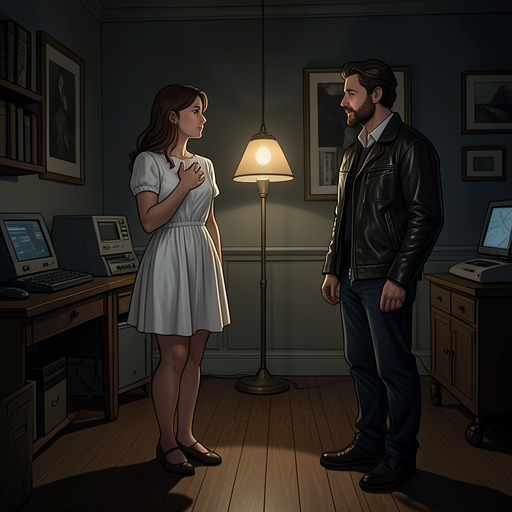
George is eighty, blind and living on the deteriorated remains of a western-town movie set. Squeaky, a twenty-one-year-old redheaded, freckle-faced member of The Family, has been caring for him for several months. Their circumstances are bound to Charles Manson’s effort to establish his commune on the ranch. After moving around Los Angeles for months, the group has found a possible home there, a place where Manson hopes they can put down roots, grow their numbers and test his theories about society.
Squeaky’s position is therefore assigned a strategic purpose. Manson tells her to cook for George, nurse him and keep him company; he also expects her to masturbate the old man periodically, and suggests she may have to do more. His explanation reduces her intimacy with George to a contribution to the group, telling her, “Sometimes, kiddo, ya gotta take one for the team.” The arrangement asks Squeaky to use personal attention and sexual service to help maintain The Family’s position on the ranch. It begins not as a freely chosen romance but as labor imposed under the commune’s hierarchy.
A shared domestic routine
The bond is presented through recurrence rather than a single declaration. Every night, George and Squeaky watch the same episode of Mannix. He sits on the couch in his bathrobe and pajamas; she sprawls there with her head in his lap. Because he is blind, she describes the television action to him, turning a familiar nightly broadcast into something they experience together. Her explanations are part of the practical assistance his blindness requires, but the regularity of the ritual also makes their companionship visible: they watch together night after night.
The morning routine brings that attentiveness into the rest of the house. Squeaky checks what George wants for breakfast, offering a choice between Jimmy Dean sausage and Farmer John bacon, and asks whether he wants to remain comfortable or get dressed. She later helps him into a crisp white western-style shirt and tan slacks, fastens the shirt’s small buttons, ties his bolo tie and combs his wispy white hair. Taking him by the wrist and elbow, she guides him at his slow, steady pace toward the kitchen table. Her teasing praise about how handsome he looks turns assistance with dressing into playful conversation; George protests, and she answers with further flirtation.
Music and food mark the everyday setting of this care. Squeaky cooks eggs and switches on the kitchen radio, where KZLA plays whenever George is awake. The song that fills the kitchen, The Teddy Bear Song, gives the domestic scene a poignant counterpoint, but the routine itself remains concrete: she prepares his meals, tends to his appearance and helps him move through a home whose rooms he cannot see.
From imposed duty to sincere affection
The demand that Squeaky provide sexual service is the only point during her time with Charles Manson when she considers fleeing back to San Francisco and possibly repairing her relationship with her parents. That hesitation exposes the cost of Manson’s arrangement: her place in the commune is made conditional on intimate labor for an older man. Yet she does not regard the relationship only through that coercive beginning. She falls in love with George—not in a Romeo-and-Juliet sense, but with a deep affection—and comes to see that his grouchiness conceals loneliness rather than cruelty.
The distinction matters because Squeaky’s tenderness is not presented as a line she recites to keep the ranch’s owner compliant. She sincerely means it when she tells George, or anyone else, that she loves him. Her friendly voice, loving touch and attentive listening offer companionship that his money cannot buy. The source of that attention is personal care: she sees a forgotten man where the arrangement initially required her to see a means of securing The Family’s place.
George’s dependence is specific and everyday. He needs Squeaky to narrate the television, help him dress and guide him through the house; she answers those needs without reducing him to his blindness. The account does not turn this dependence into evidence of a cure or claim that it disappears. Instead, the routines show how care accommodates it: she describes what he cannot see and physically assists him while preserving the familiar exchanges—his choices, complaints and responses to her teasing—that give their time together a social texture.
Neglect, companionship and the bond’s significance
George’s isolation has a history. The film industry used his ranch for B-westerns and television shows for four decades, then left him behind; his family, too, has forgotten him. He is living in a deteriorated place among hay and horseshit, while the money he put away cannot provide the warmth or company that Squeaky supplies. Her care does not undo that neglect, but it changes what his days contain: meals, conversation, music, help with dressing and a nightly television ritual shared with someone who makes the program present to him.
The relationship consequently holds two truths together. Squeaky is recruited into a calculated scheme by Charles Manson, and her service is intended to strengthen The Family’s foothold at the ranch. At the same time, the attachment that grows within that scheme is, on her part, sincere. The contrast gives the bond its defining significance: a duty imposed for communal advantage becomes a sustained act of care for a man whom both the industry that once depended on his ranch and his own family have neglected.