Terry Melcher
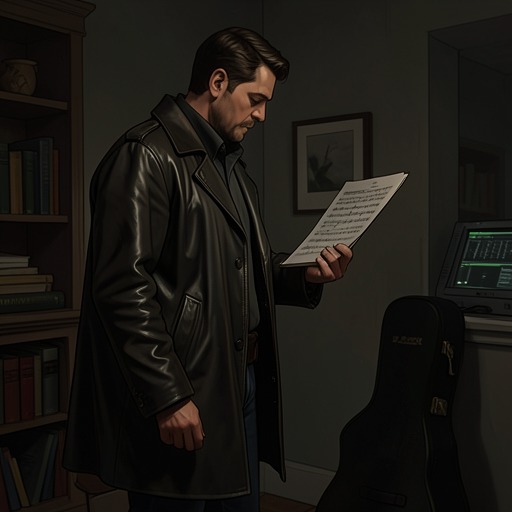
Once Upon a Time in HollywoodTerry Melcher is a record producer and Columbia Records representative whose connections offer Charles Manson a tantalizing, but never secure, route into the Los Angeles music industry. Melcher recognizes some musical ability in Manson, yet does not see him as the kind of act Columbia needs; their association is also shaped by Melcher’s sexual relationship with the teenage Debra Jo Hillhouse. When he agrees to hear Manson’s songs at Spahn Ranch and then fails to appear, a vague professional possibility becomes a public disappointment for Manson and his followers.
Industry Position and Musical Judgment
In 1968, Melcher was established in commercial pop: he produced records for the Byrds, helped shape Paul Revere and the Raiders, and was described as a boy wonder of Columbia Records. His professional priorities had moved far from the acoustic singer-songwriter scene. He was looking for catchy novelty material and shaggy-haired bands suited to Top 40 radio, television music shows, and teen magazines such as Sixteen and Tiger Beat. Columbia already had Bob Dylan, and Melcher was not seeking another folk singer to fill the same space.
Melcher’s view of Manson’s ability was neither simple dismissal nor belief in a major career. He considered Manson’s music “very very very not bad,” but understood him as a folkie singer-songwriter who lacked a distinctive songbook and the discipline to develop what talent he had. In a crowded field, Manson could not compete with established folk performers; by then, many of those performers were adapting to electric rock. Melcher did not believe that a stronger collection of songs would have persuaded Columbia to record a Manson album. At most, better material might have prompted Melcher to take one of Manson’s songs to Linda Ronstadt. That limited possibility was quite different from offering Manson a recording contract.
Association with Charles Manson and The Family
Manson’s access to Melcher grew out of his connection to Dennis Wilson. The women around Manson helped bring him into Wilson’s orbit, which in turn introduced him to Wilson’s friends, including Melcher and Gregg Jakobson. The resulting social access carried Manson into parties and jam sessions with musicians such as Mark Lindsay, Mike Nesmith, Buffy Sainte-Marie, and Neil Young. A session with Young impressed him, and he also recorded some songs onto three-quarter-inch tape. These contacts gave his musical ambition momentum, even though they did not amount to a dependable path to a contract.
Melcher spent time around Manson and The Family while they were staying at Wilson’s Hollywood home, but the narration distinguishes that social presence from genuine business interest. Melcher found Manson interesting, though he was less fascinated by him than Wilson and Jakobson were. The Family’s presence also became a burden at Wilson’s home: its members’ costly behavior strained the connection, and the Beach Boys eventually recorded one of Manson’s songs without crediting him as its writer. The song, Cease to Exist, appeared in altered form on a Beach Boys album. Manson knew that Melcher was among the people who knew where the song came from, and could therefore imagine that Melcher might regard him as a composer of commercially usable music rather than only as a difficult figure from Wilson’s circle.
Debra Jo Hillhouse and the Limits of His Interest
Melcher’s personal relationship with Debra Jo Hillhouse was a major reason he spent time around The Family. She was fifteen when she joined, then the youngest member, and soon became known as Pussycat. The narrative describes Melcher as having sex with her and makes clear that her presence, rather than a business plan for Manson’s music, helped draw him to the group. Dennis Wilson also had sex with her. Melcher’s interest in Manson’s surroundings was therefore entangled with his access to a teenage girl, not evidence that he had committed himself to developing Manson as an artist.
Debra Jo’s route into Manson’s circle differed from that of the other young women described in the book: she remained connected to her father, and her father knew Manson. She told Melcher that her father had picked Manson up while he was hitchhiking. Melcher reacted with astonishment that Manson had entered her life through her father, an influence he considered striking even by the standards of musicians who could persuade young women to do reckless things. The episode helps explain why Manson’s authority could impress Melcher without making Melcher a believer in his music. He could recognize Manson’s unusual sway over people and still doubt his commercial prospects.
The Promised Hearing and the No-Show
Manson’s musical connections gradually dried up after he lost access to Wilson’s social circle. By February 8, 1969, the remaining opening was Melcher’s loose commitment to sit down and hear him play. Melcher had agreed to visit Spahn Ranch for a music audition; a date and time were set, and The Family prepared for the occasion. Its members decorated the ranch, practiced with instruments, and arranged for girls to harmonize and dance in the background. They waited through the afternoon as the appointment time passed from three-thirty to four-thirty. Melcher never arrived.
The absence mattered professionally and personally. Manson had spent the week preparing, and his followers saw him left waiting for an opportunity he had presented as real. His usual ability to face down challenges without appearing weak failed him in this instance; some members of The Family began to wonder whether he was merely another hippie with a guitar trying to get on the radio. Melcher later got word to Manson that he had not missed the appointment out of disrespect, but because something important had intervened. He made no effort to reschedule, and the two men no longer moved in the same circles. The explanation did not restore the opportunity.
Narrative Role and Legacy of the Connection
After the no-show, Manson tries to reach Melcher through Rudi Altobelli. He introduces himself as a friend of Melcher and Dennis Wilson, then tells Rudi that Melcher had been arranging an audition with Columbia Records and that he needs representation if the company wants to sign him. Manson offers to bring tapes and play guitar for Rudi. This is Manson’s account of the opportunity and his pitch for help; it does not establish that Columbia had approved an audition or offered a contract. The distinction matters: Melcher’s actual commitment in the evidence is to hear Manson’s music, while Manson presents that opening as a possible step toward a Columbia deal.
Melcher’s role is defined by the gap between access and commitment. His friendships put Manson in rooms with musicians and created a credible expectation that someone in the record business might listen. His judgment, however, remained cautious; his professional interests had moved toward a different kind of pop, and his personal involvement with Pussycat was more substantial than any demonstrated investment in Manson’s career. The ranch appointment briefly gives The Family a staged image of imminent success—prepared songs, accompaniment, and an audience waiting for the producer—but Melcher’s absence exposes how little control Manson has over the industry’s promises. The connection leaves Manson with a story of a door nearly opened, not a career secured.