World War II
Once Upon a Time in HollywoodWorld War II is less a single narrated episode than a force whose consequences run through the novel’s account of Cliff Booth, his work in Hollywood, and the films he trusts. His service gives him a history of extreme violence that separates him from civilian life and from the performances of actors who seem to him merely to imitate emotion. The war also supplies Hollywood with veterans whose experiences could remain visible as combat records, troubling memories, or drinking tolerated by an industry accustomed to their suffering.
Historical rupture and cinematic realism
The novel contrasts the wartime devastation experienced across Europe and Asia with the relative insulation of American home-front civilians. As countries in Europe and Asia gradually resumed making films, some productions were made amid the rubble left by the war and addressed a more adult audience. Hollywood, described in contrast as sheltered from the conflict’s gruesome details, remained committed to entertainment for the whole family. The difference is not only one of subject matter: it helps explain why Cliff finds that Hollywood performances can feel artificial beside the extremities he has witnessed.
For Cliff, actors including Brando, Paul Newman, Ralph Meeker, John Garfield, Robert Mitchum, and George C. Scott still sound like actors, and their responses resemble those of movie characters rather than people facing events as he understands them. His experience of war gives him a standard of reality that screen acting rarely meets. He favors Alan Ladd in part because Ladd’s directness and comparatively unshowy manner strike him as more like an actual person. The contrast makes the war a lasting measure in Cliff’s judgment of performance, not simply a chapter of his past.
Cliff Booth’s service and combat record
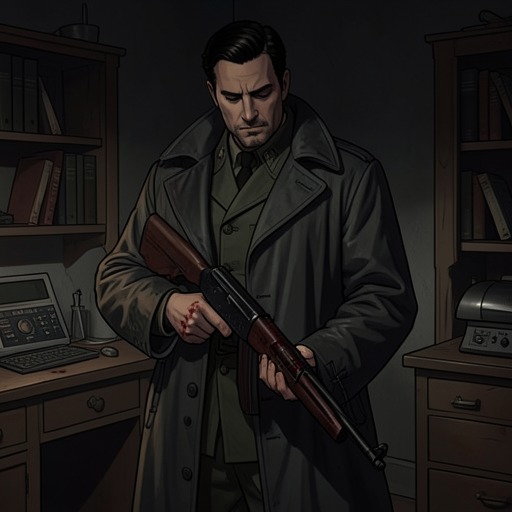
Cliff’s wartime record is central to how other people understand him. When he is brought in as Rick Dalton’s double on Bounty Law, Rick initially resents how handsome Cliff is, but learns about his service and comes to admire him. Cliff has been awarded the Medal of Valor twice: the first time for killing Italians in Sicily, and the second for his record against Japanese forces in the Pacific. The account emphasizes that, apart from the Americans who dropped the bomb on Hiroshima, no American soldier had more confirmed kills of Japanese enemy soldiers than Sergeant Clifford Booth.
His fighting did not end with confirmed battlefield kills. During a conversation with Rick, Cliff counts on his fingers and arrives at sixteen Japanese soldiers killed with a knife. The number turns a broad reputation for combat experience into a stark, specific measure of what he has done. Later, the narration describes his confirmed Pacific kills as unmatched among American servicemen in that theater and suggests that the unconfirmed total may be unknowable to his Filipino guerrilla brothers. His history is therefore both a public distinction and an accumulation of violence that the novel refuses to treat as an abstract medal citation.
The war also placed Cliff in situations that made survival seem unlikely. In Sicily, he thought he would probably die; after his transfer to the Philippines to fight alongside Filipino guerrillas against the occupying Japanese military, he became convinced he would never return home. Captured and held in a makeshift prisoner-of-war camp in the jungle, he considered himself already as good as dead. That expectation of death helps explain why he attempted a dangerous escape: he led Filipino prisoners in overthrowing and executing their captors, escaping into the jungle and rejoining the resistance fighters.
From military history to Hollywood reputation
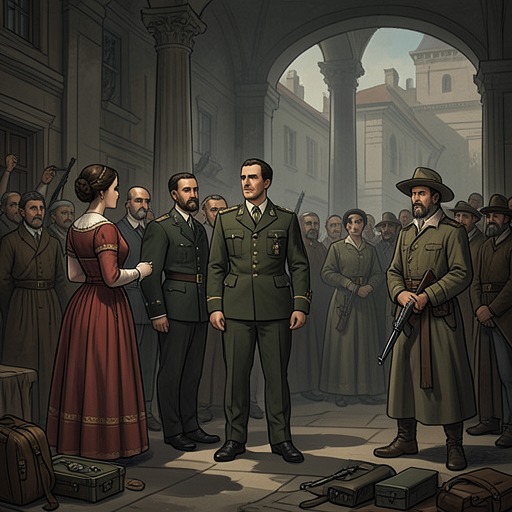
The escape acquired a second life as a film. Columbia Pictures produced Battle of the Coral Sea, directed by Paul Wendkos, as an entertaining but heavily fictionalized account. Its screen version substituted an American submarine crew, led by a captain played by Cliff Robertson, for Cliff and the Filipino prisoners who carried out the escape. Rick Dalton appeared in the film as one of Robertson’s men, although he did not yet know Cliff. The alteration exemplifies the novel’s interest in the gap between lived experience and Hollywood’s reshaping of it: Cliff’s real wartime actions become material for a story that assigns the heroism elsewhere.
Cliff’s record also becomes an occupational resource. In the stunt community, his military heroism is once his most prominent distinction, even though his work as a stunt double is the most legitimate basis for his reputation. His experience later serves as an excuse when he punches director Otto Preminger in the jaw during a tirade. Cliff claims that Preminger’s German accent triggered a wartime flashback and that he forgot where he was. He is sent home, but leaves with an additional seven hundred dollars paid off the books, and the crew celebrates him at the hotel bar. The episode turns his wartime past into both a justification for a present act of violence and a means by which a crew informally rewards the act.
Memory, violence, and moral accounting
The novel links Cliff’s war record to the way he accounts for violence in civilian life. After Billie Booth’s death, he carries guilt and remorse, but his own internal reasoning sets that death beside the American soldiers he believes he saved by killing Japanese soldiers. His wartime service becomes part of the moral ledger through which he understands what he has done; it does not remove the guilt, but gives him a frame for weighing it. The authorities, meanwhile, do not know the extent of the violent tendencies familiar to the stunt community, and Billie’s death is ruled a misadventure because Cliff’s account cannot be disproved.
That connection is deliberately uneasy. The same history that makes Cliff a decorated war hero also makes lethal violence part of his established identity. His service earns admiration from Rick and standing among stunt workers, while the novel also places that record beside the killing of his wife and the community’s suspicions. World War II thus operates not as a simple explanation that absolves him, but as a context that shapes how he and others interpret his capacity for violence.
Veterans and the afterlife of war
The war’s effects extend beyond Cliff. The novel notes that many leading men of the 1950s served in World War II, while many actors who entered the profession in the late 1950s and early 1960s had served in Korea. Some had seen things they could never unsee. Because their generation understood this experience, the industry often tolerated their alcoholism to a degree that might otherwise have threatened a production. The account names World War II veterans Neville Brand and Lee Marvin as actors allowed to drink on set without the insurance company shutting down filming.
Lee Marvin’s later work makes that tolerance especially poignant. During the climax of the 1974 western The Spikes Gang, Marvin was supposed to shoot his young co-star Gary Grimes. The novel recounts that Grimes’s appearance or age apparently recalled a young soldier Marvin had killed during the war. Marvin drank himself into a stupor in his trailer to face what he had done and what he had to pretend to do. The film’s climactic shoot-out remains memorable in the account precisely because the violence carries an expression of something beyond routine screen action. In another glimpse of the veteran generation, Cliff and Aldo Ray are both identified as World War II servicemen, Ray having served as a Navy frogman. Their contrasting physical condition in 1969—Cliff still built like a middleweight boxer, Ray’s former athletic frame softened—places two veterans of roughly the same age on different visible trajectories. Across these episodes, the war persists in bodies, reputations, habits, and performances long after the fighting ends.