the Philippines
Once Upon a Time in HollywoodIn the Philippines, Cliff Booth’s military service turned from a campaign he expected to survive only briefly into a captivity he regarded as a sentence of death. His escape from a makeshift camp in the jungle, alongside Filipino prisoners, became a defining episode in his wartime history—and, later, the subject of a Hollywood film that altered its central facts.
Wartime setting and captivity
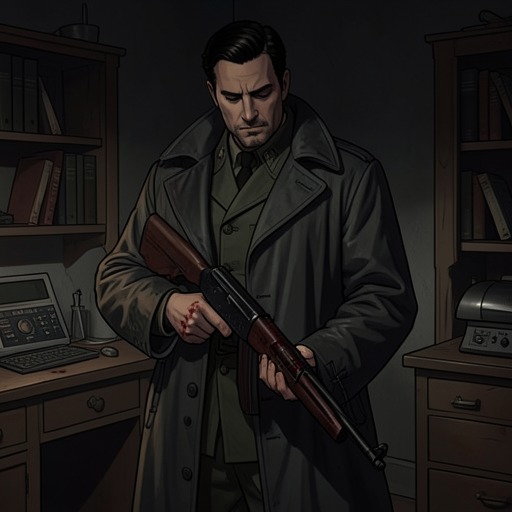
After serving in Sicily during World War II, Cliff was transferred to the Philippines to fight alongside Filipino guerrillas against the occupying Japanese military. He was convinced he would never make it home. Capture deepened that certainty: held in a makeshift POW camp in the Filipino jungle, he considered himself a walking dead man. From that vantage, attempting an escape was not a calculated wager on a secure future; he believed there was little future left to lose.
Escape and its Hollywood afterlife
Believing that survival was unlikely, Cliff attempted a daring escape from the camp. He and the Filipino prisoners overthrew their Japanese captors and executed the camp personnel, then fled into the jungle and rejoined their fellow resistance fighters. The escape turned the Philippines from the place where Cliff expected to die into the setting of his return to the fight; survival, which he had stopped counting on, became an inconvenient fact that left him facing a future he had not planned for.
The episode was later adapted by Columbia Pictures into Battle of the Coral Sea, directed by Paul Wendkos. The film retained the broad outline of a daring escape but replaced Cliff and the Filipino prisoners with an American submarine crew led by a captain played by Cliff Robertson; Rick Dalton had also appeared as one of Robertson’s men. Its omissions were substantial: it left out the Filipinos, the Japanese camp’s routine beheadings of prisoners, and the surviving prisoners’ decapitation of the camp personnel after the revolt. It also transformed the commander into a sophisticated, debonair, intellectual, and honorable figure, rather than the brutal man Cliff had encountered. The cinematic version thus recast a Filipino-led act of revolt as an American adventure and softened the violence on both sides. Cliff thought the movie made the commander so appealing that it nearly left him rooting for the Japanese; nevertheless, he considered the escape itself more or less accurately portrayed.
Survival and the life afterward
Cliff’s survival in the Philippines left him with a future he had not expected to have. When he was discharged after World War II, he had money and two medals recognizing valor, but no settled idea of what to do next. In Sicily he had thought death likely; after his transfer to the Philippines, capture and imprisonment had made him nearly certain he would never see home again. The escape had been undertaken from that expectation of imminent death, not as the first step toward a chosen postwar life. Once he was alive and free, survival itself became a practical problem: he had to decide what came after the war.
He was in no hurry to return to the United States. Instead, he went to Paris, where he spent several months eating cheese and baguettes and drinking red wine. There he encountered a profession he had known nothing about before the war: that of a gentleman of leisure. The shift from jungle captivity to an unhurried stay in Paris gives the Philippine episode an unexpected aftermath. The escape restored Cliff to life, but it did not provide him with a purpose; the man who had led prisoners back to the resistance still had to discover how to live beyond the war.
The wartime record in later moral accounting
Cliff’s service in the Philippines also shaped how others interpreted the violence that followed him home. Hollywood stuntmen admired his military career and regarded him as one of World War II’s great heroes, even as many suspected that he had deliberately killed his wife, Billie Booth, and escaped punishment. His wartime distinction did not resolve that suspicion; it existed beside it, lending his reputation a disquieting split between celebrated violence abroad and an alleged private killing.
Cliff’s own reasoning drew those histories together. He carried guilt and remorse over Billie’s death but still tried to get away with it, treating the act as an impulsive lapse rather than a planned crime. In his self-justification, he invoked the American soldiers he had saved by killing Japanese troops, as if the lives saved in war could weigh against the life he had taken at home. The contrast makes the Philippines more than the setting of a military escape: in the later account of Cliff’s character, his wartime heroism becomes part of the moral arithmetic by which he excuses himself, while the stunt community’s admiration and suspicion remain uneasily joined.