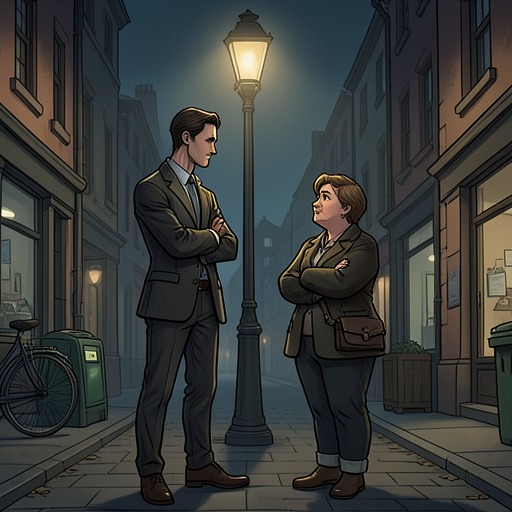
Emma and Dexter reunite at Tilly Killick's wedding
One DayEmma Morley and Dexter Mayhew reunite at Tilly Killick’s wedding on 15 July 1999, in a scene where public celebration collides with private history. Dexter arrives with the life he has built with Sylvie Mayhew, including an engagement and an expected child; Emma arrives carrying the absence between them. Their encounter does not undo that distance, but it turns it into a conversation, a moment of physical intimacy, and a cautious agreement to resume their friendship.
The wedding and its social setting
The reunion is set against a changing culture of weddings. Before the ceremony, the arrival of invitations in Somerset prompts a distinction between successive styles of marriage celebrations. University weddings had been knowing student jokes, staged with picnics, secondhand clothes and modest gifts; the mid-twenties version retained its homemade, secular character even as the wedding list began to appear. Tilly’s elaborate celebration belongs to a more formal present. The wedding is not merely a backdrop: its rituals make partnership visible and give Emma and Dexter’s unresolved bond an unavoidable public setting.
Emma reaches the chapel after the ceremony has begun. Having driven barefoot, she has to force her swollen feet into her shoes and cross the gravel in discomfort before slipping into the packed congregation. Inside, the ceremony has the theatrical variety of a performance: music, an a cappella group, songs and readings. Tilly wears a Marie-Antoinette-inspired pink silk and lace dress, with a hooped skirt and piled-up hair. Emma notices the bride’s happiness, as well as the happiness surrounding her, from the back of the chapel. The abundance of staged celebration throws the less settled feelings of the two returning friends into relief.
Two perspectives across the ceremony
Dexter’s attention wanders during the wedding. As Tilly’s niece reads a sonnet about the marriage of two minds, he tries to relate its romantic sentiment to his feelings for Sylvie, then counts how many people in the chapel he has slept with. He reaches five former lovers and thinks of Emma as a possible five-and-a-half. The tally gives his nostalgia a comic, slightly self-accusing form; even at a ceremony devoted to commitment, his mind moves between his present relationship and the history represented by the guests.
Emma watches him from the back. He is dressed in a black suit and narrow black tie, and she registers that he still looks handsome. Since their falling out, she has seen him three times, always at weddings. On those occasions he embraced and kissed her as if nothing had changed, saying that they must talk, but the conversation never really followed. He had been with Sylvie, and the two of them seemed occupied with each other and with looking beautiful. At Tilly’s ceremony, Sylvie rests a possessive hand on Dexter’s knee and squeezes his hand during the vows. She whispers to him; he smiles and replies, then catches Emma’s eye and grins. Emma can only infer what he has said, but the glance makes their separate histories momentarily visible to one another.
The reunion and its disclosures
After the cabaret ends and the guests spill outside, hugging, cheering and shaking hands, Emma and Dexter seek each other through the crowd. Their greeting is deliberately tentative: each begins with the same small word, and Dexter follows with a joking question about whether they know one another. The humour provides a way into contact without pretending that their estrangement has disappeared. It also echoes the awkwardness of two people who have repeatedly promised to speak and have not managed to do so.
The conversation soon changes the terms of the reunion. Dexter tells Emma that he is engaged to Sylvie. Emma reacts first with surprise, then embraces him and congratulates him; as she moves to kiss his cheek, their mouths briefly meet. Dexter asks whether she is pleased. He then reveals that Sylvie is pregnant, making the engagement part of a larger commitment to family life. Emma responds warmly, holding his face and congratulating him again, while teasing him for delivering several major announcements at once. Her delight is real in the moment, but the news also establishes a boundary around what Dexter’s future now contains.
Dexter invites Emma to his wedding, which he says will have three hundred and fifty guests and a ceilidh. Emma says that she will come, joking that she cannot promise not to disrupt the service. Their exchange keeps affection and danger in the same register: she welcomes his invitation, yet their playful reference to disruption hints at the unsettled feeling beneath the congratulations. In the hedge-lined passage of the maze, they pour the last glasses from the champagne bottle and walk along with their fingertips against the leaves. Dexter asks her to come to the wedding; Emma answers yes, and they continue through the dark corridor together.
Intimacy, separation and a renewed friendship
Away from the crowd, their reunion becomes more direct. Emma tells Dexter that she missed him and that there had been many things she wanted to discuss while he was absent. He says that he missed her too. Their exchange names the cost of the estrangement without explaining away its causes: the important fact is not a detailed account of the falling out, but the recognition that each has felt the other’s absence. When Emma asks him to promise that he will not disappear again, Dexter makes his promise conditional on her doing the same.
They kiss with their eyes open and their bodies still. The scene holds the moment as a confusion rather than a resolution, and Emma soon turns away to ask the time. Dexter checks his watch; it is nearly midnight. He imagines taking her hand and returning to the maze, switching off his phone and staying there to talk, but he does not act on that wish. Instead he asks whether they are friends again. Emma agrees, lets go of his hand, and leads the conversation back toward the public occasion by saying that she wants to find his fiancée and congratulate her. The kiss does not overturn Dexter’s engagement or erase the practical shape of his life; the renewed friendship is the decision they can make together.
Narrative significance
The wedding reunion brings several kinds of knowledge into one scene: Dexter’s count of past lovers, Emma’s awareness of his repeated but unfulfilled promises to talk, and his disclosure of engagement and impending fatherhood. Its movement is from watching at a distance to seeking one another out, from public congratulations to private candour, and then back to the wedding party. That structure lets affection surface without presenting it as a settled alternative to Dexter’s commitments.
The final agreement, “Friends again,” is both a repair and a limit. Emma and Dexter recover a name for their bond, but the sequence preserves the unresolved quality of their attraction: they have kissed, acknowledged how much they missed one another, and still turn back toward Sylvie and the wedding. The scene’s significance lies in that double movement. Reunion restores contact, while the engagement and pregnancy make clear that renewed closeness does not mean returning to an earlier, consequence-free state.