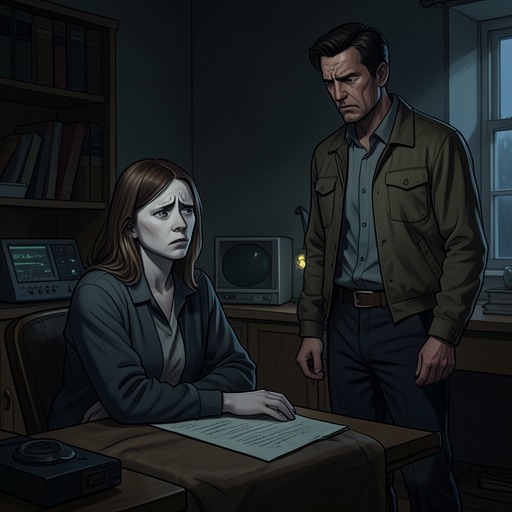
Emma confronts Phil Godalming about their affair
One DayEmma confronts Phil Godalming about their affair at the point when its private arrangement has ceased to feel sustainable to her. She says it does not make her happy, and when Phil asks whether she is unhappy, she identifies the weekly meeting on an institutional carpet as evidence of what is wrong. Her objection is not to sex itself: it is to the circumstances in which their intimacy exists. The scene turns a concealed relationship into a dispute about what it can honestly offer, and ends without the reassurance Phil seeks or a settled decision about what comes next.
What Emma Objects To
Emma’s complaint is both direct and carefully qualified. She tells Phil that the affair does not make her happy, then describes it as “not ideal” because it happens once a week on an institutional carpet. The specificity matters: their intimacy is measured in a recurring appointment and an impersonal setting, rather than presented as a life they share. Her dissatisfaction is not an abstract judgment on the affair but a response to the form it has taken.
Phil answers that Emma seemed happy to him. Her reply separates outward appearance from inward satisfaction. She insists that the issue is not sex but the circumstances, resisting his attempt to treat apparent pleasure as proof that the arrangement is working. The exchange exposes a gap between what Phil thinks he has observed and what Emma says she experiences. By naming that gap, she refuses to let the affair’s physical dimension stand in for the relationship as a whole.
The Choice To Stop or Continue
When Phil objects to her manner, Emma falters and suggests that they get through the summer holiday before working out what to do. Her proposal postpones a decision rather than resolving their conflict. Phil’s response makes the choice stark: they can stop, or they can carry on, and she does not think they should continue. The exchange gives the scene its decisive turn. What began as a complaint about conditions becomes a question about whether the affair should exist at all.
Phil then offers another possibility. Lowering his voice, looking around to make sure they are safe, and taking Emma’s hand, he says he could tell the woman in his life. The gestures give the proposal a clandestine quality even as its content gestures toward disclosure: he checks for onlookers before suggesting that he make the affair known. Emma does not welcome this as a solution. She says she does not want him to tell her and insists there is no point. Phil disagrees, believing there might be a point, but the scene gives no confirmation that he will act on his proposal.
Emma tries to move the decision back into the future by suggesting that they talk next term and pencil in a meeting. The phrasing turns a consequential choice into a scheduled discussion, echoing the affair’s existing pattern of limited, organized time together. Phil is heartened by the suggestion, but it does not amount to a promise to continue. The two speak past one another: he hears an opening, while she has not withdrawn her view that they should stop.
Love, Doubt, and the Unresolved Ending
Phil checks again for onlookers before telling Emma that he loves her. The declaration follows his offer to disclose the affair and his response to her proposal to talk later, making it an attempt to give their relationship a larger meaning than the circumstances she has just criticized. Emma answers that he does not really love her. Her doubt is not simply left unanswered: Phil replies that deciding whether he loves her is for him to decide. Their disagreement is therefore also about who has authority to define his feelings and what those feelings mean for Emma.
His chin-down, headmasterly manner sharpens the imbalance in that exchange. Emma hates the look and tone and wants to kick him in the shins. The reaction punctures the solemnity of his declaration: she is not persuaded by the confidence with which he states his love, and his manner provokes irritation rather than resolving her doubts. The scene does not establish that Phil’s declaration is false, nor does it establish that Emma accepts it. It preserves the difference between his certainty and her judgment.
The confrontation closes on that difference rather than on a completed breakup or reconciliation. Emma has said that the affair makes her unhappy, argued against continuing, refused Phil’s proposal to tell the woman in his life, and suggested a later conversation. Phil has offered disclosure and declared love, but neither gesture settles what Emma wants. The unresolved ending makes the affair’s central problem plain: the question is no longer whether they can meet again, but whether their limited and concealed arrangement can become something Emma finds worth continuing.