Emma joins Sledgehammer Theatre Co-operative
One DayEmma Morley joins Sledgehammer Theatre Co-operative in search of purposeful work rather than an acting career: she sees theatre as a medium for words and ideas, and hopes the co-operative’s art can change young people’s lives. Her first months bring that conviction into contact with both the possibilities of educational theatre and the wear of trying to make collective ideals work in practice.
Invitation and departure
Before joining, Emma is drifting through pub work and fears that her mind is growing dull. Gary Nutkin, who had directed her in a stark production of Brecht’s Fears and Miseries of the Third Reich in 1986, calls late at night with an invitation to join his theatre co-operative. Their earlier encounters had mixed political theatre with sexual attraction: after the production’s last-night party they kissed for hours, and on another occasion Gary took Emma to a Peter Greenaway double-bill before they spent the night together. Emma considers romance, or at least sex, a possible bonus of joining, but it is not her central ambition.
What attracts her more is the co-operative’s stated structure and purpose: shared intentions, a written manifesto, collective zeal, and a commitment to changing young lives through art. She packs her rucksack, says goodbye to sceptical parents, and leaves in the company minibus with the sense of setting out on a cause. The departure is framed in the language of political struggle, though the venture is Arts Council-funded theatre rather than a literal war.
Work on Cruel Cargo
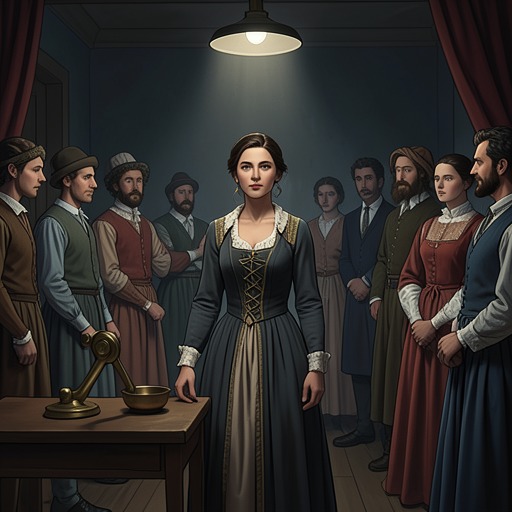
By 15 July 1989, Emma has spent four months devising, rehearsing, and touring with Cruel Cargo, an Arts Council-funded production about the slave trade. The piece uses storytelling, folk song, and mime, and is designed as Theatre-in-Education for children aged eleven to thirteen. Emma plays Lydia, the spoiled and vain daughter of the villainous Sir Obadiah Grimm. In the production’s central moment, Lydia recognizes that her dresses and jewels have been bought through the blood of other people and feels morally stained by that knowledge.
The theatrical method is deliberately direct: a character’s material comforts become the route to recognizing the violence that sustains them. The production’s educational purpose also extends beyond the performance. Emma values workshops in schools, where she is struck by how little some children know about their cultural heritage, including children of West Indian background. She believes that this work can challenge colour prejudice in the West Midlands one child at a time, and says that writing the piece has given her ideas for other plays.
Ideals under pressure
Emma’s account does not present the touring work as an uncomplicated success. Children sometimes throw Maltesers at her, and she initially makes light of the production’s earnestness through cynicism she recognizes as a defence mechanism. Yet she distinguishes those disruptions from the response of children who engage with the work and from the excitement of the school workshops. Her doubts coexist with a genuine belief in the project’s value.
A wider disillusionment emerges after three months in the co-operative. Emma asks what has happened to its warmth, camaraderie, social purpose, and combination of high ideals with fun. The word co-operative is even stencilled on the side of the van, but the name and manifesto do not guarantee a supportive daily reality: a colleague, Sid, says that he hates the job. Emma presses her hands to her ears and asks herself whether she is there for a reason and whether she is really making a difference. The questions complicate, rather than erase, her commitment to educational theatre: joining gives her meaningful work, but also exposes the gap between a collective ideal and the difficult conditions of carrying it out.