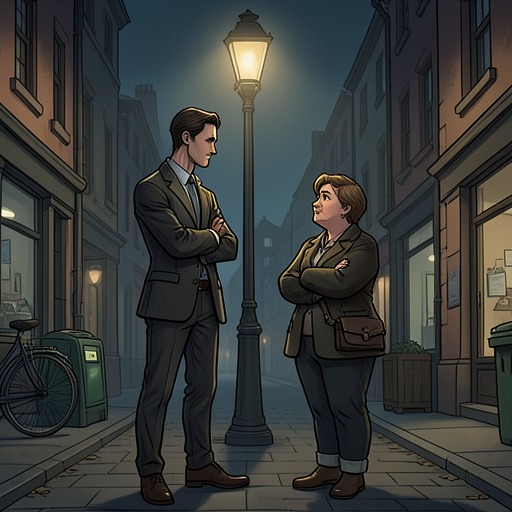
Emma’s move to Paris
One DayEmma Morley’s move to Paris is both a practical escape from the family-centred London around her and a deliberately chosen interval for writing. By making the move she turns an idea she had once dismissed as precious into an adventure: a summer in a small flat in the city, where she can write teenage fiction and live outside the routines that have come to frustrate her. The decision also gives Paris a double role—as a place she is trying to inhabit on her own terms, and as the setting for her reunion with Dexter Mayhew.
Reasons for the Move
The plan had taken shape in April, when the thought of spending the summer in Paris seemed to Emma almost embarrassingly romantic. She was tired of married couples telling her that she could go there whenever she wanted; their casual assurance helped make the idea feel less like a fantasy and more like something she could simply do. London, by then, had become an enormous crèche in her eyes. Leaving for a while offered distance from other people’s children and the prospect of an adventure of her own.
Writing was central to that purpose. Emma was already a commercially successful writer of teenage fiction, but the imagined Paris carried the cultural associations of Sartre and De Beauvoir, Beckett and Proust. The contrast between those literary figures and her own work makes her self-conscious about the romance of the plan, without making the work itself a failure: she has achieved considerable commercial success. Her move brings the aspiration to write into contact with the less grand, more ordinary circumstances in which she actually lives and works.
A Paris of Her Own
Emma chooses the working-class nineteenth arrondissement, on the edge of Belleville and Ménilmontant, rather than the familiar tourist centre. She has memorised a walk through the area, as scenic as possible amid its dust and traffic, and values the neighbourhood for being lively, cheap and multicultural. Its distance from tourist attractions and its scarcity of landmarks are part of the point: she wants to settle somewhere that feels like a lived-in city rather than a ready-made postcard of Paris.
Even so, Emma catches herself describing the neighbourhood as real Paris and recognises the student-like quality of the claim. At thirty-five, living in a two-room flat as if on a gap year, she is alert to the incongruity between her age, her circumstances and the youthful adventure she has arranged for herself. The move is not presented as a seamless transformation. It is a chosen experiment whose appeal coexists with her awareness that she may be performing an idea of what a writer in Paris ought to be.
That self-consciousness also appears in her attempt to alter her appearance. Soon after arriving, she uses a dictionary to manage a visit to a hairdresser and has her hair cropped because she wants to resemble Jean Seberg in A Bout de Souffle. Three weeks later, she no longer wants to cry when she sees her reflection, but her hands still go to her hair as if adjusting a wig. The haircut records both the force of her imagined reinvention and the discomfort of having to live with its result. On the day Dexter arrives, she redirects her attention to a new dove-grey shirt bought on Rue de Grenelle, carefully weighing how many buttons to undo before turning back to the passengers.
Reunion and Consequence
Paris becomes more than the setting for Emma’s writing summer when Dexter comes to meet her. As she waits, she wonders whether he has missed the train; when she finally sees him, he looks gaunt and tired, and his appearance reminds her that the visit could end badly. Their smiles do not immediately make the encounter easy. She watches him approach, uncertain what to do with her hands or eyes, while the distance between them is measured out in hesitant glances.
Emma has chosen a bar beside the Canal Saint-Martin for their walk, then immediately regrets the self-consciously scenic choice. When Dexter compares the canal to Amsterdam, she explains its industrial connection to the Seine and catches herself sounding like a tour guide. Her private effort to calm herself—remembering that Dexter is an old friend—sits uneasily beside the awkwardness of what feels like a blind date. The reunion therefore gives the move an intimate consequence without erasing its original purpose: Emma has made a life in Paris, but Dexter’s arrival unsettles the independence and composure she is trying to establish there.