Emma’s school production of Oliver!
One DayEmma Morley’s school production of Oliver! is a modest theatrical triumph built out of disorder rather than polish. On the night, she has to stop a fight between two young performers, rally a shaken cast and trust the show to work despite missing props and collapsing scenery. Its success matters less as a claim to professional standards than as proof of Emma’s ability to make a group act together: the applause, her students’ pride and her own renewed pleasure in doing something well all grow from that effort.
The crisis before the curtain
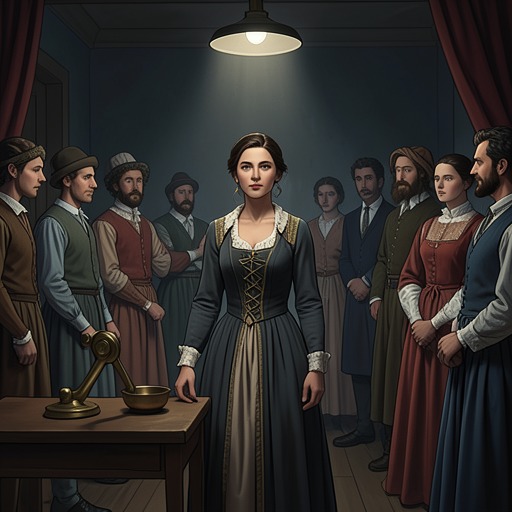
Emma enters to find thirty teenagers dressed in top hats, hooped skirts and stick-on beards gathered around Martin Dawson, the school’s Oliver. Sonya Richards, playing the Artful Dodger, has him pinned down, pressing his face against the dusty floor and gripping his hair. The elaborate Victorian costumes and noisy crowd have briefly become something closer to a mob than a theatrical company. Martin is dazed and close to tears; Sonya’s anger has not yet subsided.
Emma moves into the circle and separates them, holding Sonya by the shoulders until she lets go. As Sonya’s rage gives way to wounded pride, Martin protests that she started it, while other students begin to jeer. Emma cuts off the recriminations and holds the adversaries apart by their elbows, like a boxing referee. The practical problem is immediate—whether the two actors can continue together—but the disturbance also threatens the larger group’s confidence just before the performance. Emma recognizes that simply ordering everyone back into place will not be enough.
Emma rallies the company
To redirect the students, Emma turns the possibility of cancellation into a bluff. She points to the costumes and praises the cast, then warns that the audience outside is expecting a real performance. She deliberately raises the stakes by suggesting that the show may have to be called off. The students answer with a communal groan of protest. Their response gives her the opening she needs: rather than letting the fight define the evening, she makes the possibility of losing the production something they must prevent together.
Emma frames the challenge as a judgment the cast can disprove. She tells them that people doubt they can manage Charles Dickens, work with discipline or perform Oliver!, and insists that the company must show what it can do. Samir Chaudhari, whose stuck-on sideburns have already become a source of laughter, asks who has said this. Emma refuses to make the supposed critic the point; what matters is the doubt itself and the cast’s answer to it. She sends Sonya and Martin with her for a private talk while the others continue getting ready and sit quietly to consider their parts. Behind the drama of her speech is a clear piece of stage management: isolate the immediate conflict, keep the rest of the cast occupied and buy time without allowing the show to unravel.
The performance
The production goes ahead, and its imperfections remain visible. The band plays flat, the singers are sharp, props go missing and sets collapse. Yet the audience is forgiving, and the staging also produces moments of genuine theatrical effect. Nancy’s death leaves Mr Routledge, the Chemistry teacher, in tears; a chase over the London rooftops, with the cast silhouetted, earns gasps and admiration. The band’s rendition of Consider Yourself is cacophonous, but the sound of the school hall does not cancel the evening’s excitement.
Sonya shines as the Dodger and receives the largest round of applause, while Martin grinds his teeth as she takes the attention. Their earlier fight has not erased their contrasting presence in the show: the performer who had lost control in the dressing-room crisis becomes its standout, and the boy she had pinned down must watch her success. At the end, the audience stamps on the benches and hangs from the climbing apparatus. Sonya pulls Emma onto the stage, clutches her hand and tells her the production was amazing. Emma bows with the fourteen-year-olds as the band plays on. After ten weeks of work, she feels the elation of having done something well—and, for the first time in that period, no longer wants to kick Lionel Bart.
Aftermath and significance
The celebration continues in the sports hall, where own-brand cola and five bottles of sparkling perry are shared among the adults. Ian Whitehead waits patiently with mini kievs and a plastic cup of Beecham’s Powders while Emma receives congratulations. One guest declares the show good enough for the West End; Rodney Chance, who plays Fagin, tells Emma she is pretty for a teacher. Phil Godalming congratulates her and suggests they discuss her future at the school in September. His goodbye kiss provokes a noisy reaction from some students and staff, giving the celebration its own small dose of theatrical gossip. Fiona watches, bored and bad-tempered.
The evening ends without show-business glamour: Emma and Ian take the 55, the 19 and the Piccadilly Line home. Ian tells her he is proud of her, though the school’s performance has settled on his lungs. That ordinary journey is part of the event’s scale. This is not a polished professional production or a life-changing public success; it is a school show whose achievement lies in the people who bring it off. Set beside Dexter Mayhew’s drunken appearance on live television, Emma’s experience also makes performance look less like effortless charisma than collective work: she responds to disruption, holds the group together and helps turn an imperfect show into a shared success. The production restores, briefly and concretely, her belief in her own work.