Columbia Gorge tribe
One Flew Over the Cuckoo's NestThe Columbia Gorge tribe enters the narrative through competing accounts of its identity and through Chief Bromden’s memories of what happened to its people and land. Dale Harding reports that Dr. Spivey understood Chief Bromden to be half Indian and associated him with a Columbia Indian tribe he believed was defunct; Harding also says that Chief Bromden’s father had been the tribal leader, explaining the title Chief. Against that uncertain, secondhand description, Chief Bromden recalls a council gathered at his family’s shack, men who left the village to work on a dam’s gravel crusher, and government officials trying to secure a contract. The tribe’s presence in the book is thus both ancestral and active: a people described as finished still appears in the narrator’s memory as a community capable of shared judgment and laughter.
Identity and Leadership
Harding’s account is explicitly qualified: he says he has information from Dr. Spivey, believes the tribe was a Columbia Indian group, and calls it defunct. He cannot explain the Bromden part of Chief Bromden’s name. The narrative therefore does not present a detailed ethnographic history or resolve every question about the family name; it shows what the hospital’s characters believe they know, and where that knowledge stops.
One point in Harding’s account is more definite: Chief Bromden’s father was the tribal leader, and Harding connects that position to his son’s title. The title carries a history that the ward’s first impressions obscure. Billy Bibbit says Chief Bromden was already there when Billy arrived, while McMurphy asks whether Chief Bromden is deaf. The brief exchange frames him as an unfamiliar, silent patient; the information about his father places that silence beside an inherited connection to a community and its leadership.
Work, Land, and Industrial Change
Chief Bromden links the tribe’s village to the construction economy through the men who left in the village’s last days to work on a gravel crusher for a dam. He later recognizes a related pattern in a California cotton mill: people and machines moving in a frenzied, repeated rhythm. The mill recalls the tribal men to him not because the two workplaces are identical, but because both scenes gather people into the motions of industrial routine. His memory makes the dam’s machinery part of the tribe’s history of change, rather than a neutral marker of progress.
The recalled departure is also sharply limited in what it establishes. Chief Bromden remembers men leaving the village for work; he does not give a full account of the project, name the dam, or explain every consequence for the community. The detail nevertheless joins labor and place: the men’s work on the gravel crusher belongs to what he remembers as the village’s final days. In the present-tense ward, the mechanical hum recalls that earlier pattern, carrying the tribe’s history into his perception of institutional routine.
Negotiations with Government Officials
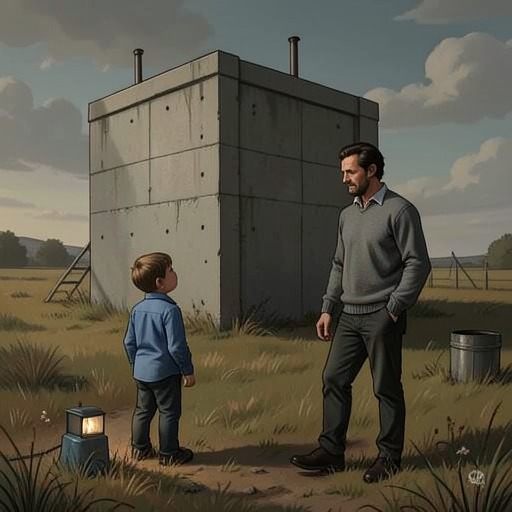
Chief Bromden’s most developed memory of the tribe’s encounter with government officials centers on his father’s refusal to follow their script. The officials arrive to negotiate over a treaty and discuss a contract they claim could benefit the people and change their lives. They speak as though they must explain matters in simplified terms, while Chief Bromden’s father appears not to acknowledge their manner of address. Instead, he looks up at the sky and insists that Canada geese are there—not only in July, but in earlier years as well.
The exchange turns on the officials’ attempt to redirect attention. They first challenge the claim about geese as seasonally impossible, then urge Chief Bromden’s father to forget the birds and attend to the contract. He answers by repeating that the geese have been there year after year. The repetition does not resolve the negotiation; it exposes the officials’ assumption that they can decide which subject matters. By holding to what he sees, Chief Bromden’s father declines to let their paperwork set the whole terms of the encounter.
The council’s response makes the scene collective rather than merely personal. Its members sit on the porch of the shack, moving pipes in and out of the pockets of their red-and-black plaid wool shirts and grinning at one another as Chief Bromden’s father continues. When the officials finally realize they are being mocked, the council breaks into laughter. They leave toward the highway while the people behind them continue laughing. The recollection records no completed contract or final legal outcome; what it does show is the officials’ failure to control the exchange or command the council’s assent.
Narrative Significance
The tribe’s scattered appearances connect a family title, a remembered village, industrial labor, and an encounter over a treaty without turning them into a complete historical chronicle. That incompleteness matters: the tribal identity is filtered through Harding’s uncertain report and Chief Bromden’s selective memories, so the account distinguishes outside description from lived recollection. The narrator’s memories supply concrete scenes where the label defunct cannot by itself convey what the community meant to him.
Laughter provides the clearest link between the tribal episode and the ward’s present. After seeing McMurphy provoke a black aide, Chief Bromden remembers his father provoking the government officials; he takes pleasure in recognizing the same ability to get under an authority figure’s skin, then reflects on what laughter can do. The parallel does not make the two confrontations identical. It lets the memory of the council’s shared amusement sharpen his reading of resistance in the ward, while preserving the tribe as more than a background to Chief Bromden’s hospital life: it is the source of a remembered communal response to people who arrive believing they can dictate the terms.