Columbia River
One Flew Over the Cuckoo's NestThe Columbia River anchors Chief Bromden’s memories of home: a landscape of salmon, the falls, family, and village life that persists against the hospital’s effort to reduce experience to routine and control. It is also the setting of a dispossession remembered through the government’s plans for a hydroelectric dam, and a place Chief hopes to see again after escaping.
A landscape held in memory
The river enters Chief’s thoughts when he hides in the mop closet to avoid being taken to the shaving room. Trying to retreat into memories of the village, he recalls hunting birds with Tee Ah Millatoona near The Dalles. The memory offers shelter, but not lasting escape: the fear of being found presses back into it. The river country is thus both a remembered refuge and a past that cannot entirely protect him from the present.
Another recollection makes the river audible. When Dale Harding explains that the ward’s recorded music has become as unnoticeable as a waterfall to people who live beside it, Chief remembers the falls on the Columbia River as anything but background noise. The remembered sound carries a whole community with it: fish striking the water, children on the bank, and women working at the racks. Against the ward’s repetitive recording, this living sound is particular and communal, inseparable from the people who inhabit the river’s surroundings.
Village life and the proposed dam
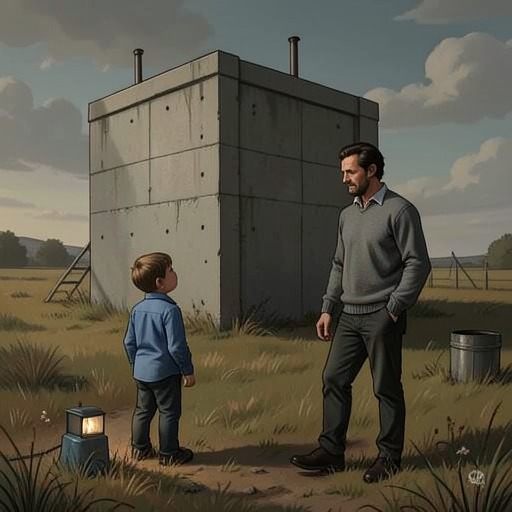
Chief’s childhood memory places the village beside the river. At about ten years old, he is salting salmon for the racks behind the family’s home when a car arrives from the highway, trailing red dust. The visitors are government representatives, and their arrival turns the familiar yard into the site of an approaching negotiation over the village and the falls.
The government’s development plan is presented as an exchange: a hydroelectric dam and lake in place of the village and its falls. One representative proposes sending an offer to Chief’s mother rather than speaking to his father, calculating that this would make the government’s task easier. The strategy treats the home as a matter of administration and the family as an obstacle to be managed. The old scaffolding among the rocks of the falls, built and extended by generations, stands in the scene as a visible record of a different, long-established relationship with the place.
Compensation and loss
Chief later tells Randle Patrick McMurphy that the government wanted the tribe, village, and falls. The promised payment did not settle what the loss meant to Tee Ah Millatoona: the checks could not answer what a person’s way of life or identity was worth. After the sale, members of the tribe gathered outside the family’s door with their checks, asking Tee Ah Millatoona what to do with the money or where to go. He was already diminished by the pressure brought against him and unable to guide them as before. In Chief’s account, the river’s transfer is not simply a change in ownership; it breaks connections among land, livelihood, collective decision-making, and belonging.
The river after escape
After leaving the hospital, Chief considers going to Canada but plans first to stop along the Columbia and revisit Portland, Hood River, and The Dalles, looking for people he knew from the village. He has heard that some members of the tribe have rebuilt their old wooden scaffolding across the hydroelectric dam and are spearing salmon in its spillway. The report joins an inherited practice to the transformed river, suggesting persistence without implying that the earlier loss has been undone. Chief also wants to look over the country around the gorge to make it clear in his mind again. The river remains a destination as well as a memory: a place through which he can recover a sense of home beyond the hospital.