Government appraisers visit Bromden's village
One Flew Over the Cuckoo's NestGovernment appraisers visit Bromden's village is a childhood episode that Chief Bromden recalls years later, on the night before the fishing trip. Its significance lies in the mismatch between what the visitors see and what they refuse to see: they inspect a lived-in village and discuss its value, while treating the boy standing before them as if he cannot hear or speak. In the memory, that disregard becomes one origin of his long performance of deafness—and an early lesson in how power makes a person socially invisible.
The visit and its setting
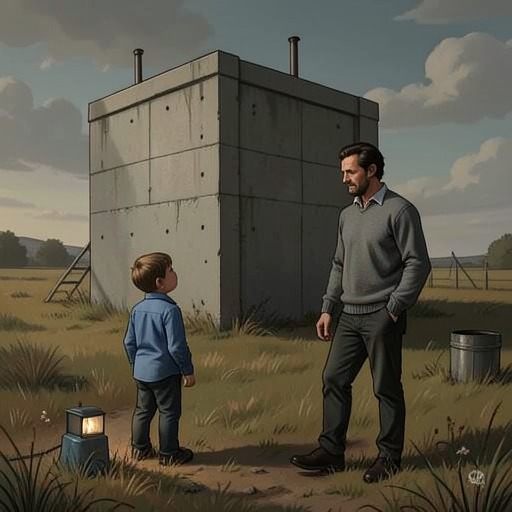
Chief Bromden remembers lying in bed before the fishing trip and questioning whether he could ever stop acting deaf. He traces the habit back beyond the hospital: people had treated him as though he could neither hear nor understand, including people in The Army and, earlier, at school. The recollection settles on a summer when he was about ten, working in front of the family’s shack, sprinkling salt on salmon for the drying racks behind the house.
A car leaves the highway and labors over the ruts through the sage, dragging a dense trail of red dust. Chief Bromden knows its occupants are not tourists: people who buy fish do so at the highway, while outsiders, he thinks, avoid the village because they imagine Indians through movie stereotypes. His thoughts also register a counterexample to those assumptions: some members of the community are lawyers in Portland, Oregon, including an uncle who became a lawyer to prove he could, though he would rather work with salmon. Chief Bromden’s father’s warning, recalled with this scene, is that people may pressure someone into the role they expect—or provoke stubborn opposition in response.
Three visitors climb from the car: two men in blue suits and an old white-haired woman wearing clothing so stiff and heavy that the boy compares it to armor. The short, round man in a white Stetson surveys the village’s fish racks, secondhand cars, chicken coops, motorcycles, and dogs with open disdain. He speaks loudly, unaccustomed to the roar of the falls. The detail matters: the village is not an abstract parcel but a working place, with salmon being prepared and people fishing in the water nearby.
A village reduced to property
One of the men, John, makes notes in a book as he turns to inspect the shack, garden, and the family’s clothes drying behind the house. He looks at Chief Bromden only after completing his circuit, although the boy is standing nearby. John asks where the boy’s parents are and suggests speaking with the man while they are there. The other visitor refuses to enter the family’s home, dismissing it as a hovel and speculating about its dirt and heat. John corrects him: the Chief lives there, and the visitors have come to deal with him. The correction establishes the purpose of the visit, but it does not lead to a conversation with the boy or his family.
Chief Bromden grows angry as the men discuss the house, village, and property around him. He understands their disregard as a consequence of their assumption that he does not know English. After letting them continue, he stands and answers the fat man in what he calls his best schoolbook language. He argues that the sod house is cooler than buildings in town, including his school and a movie house in The Dalles, Oregon, whose sign advertises coolness. His reply is specific, composed, and addressed directly to the visitors; it is not a failure to communicate on his part.
Yet none of the three acknowledges having heard him. The fat man watches the fishermen working on scaffolds in the falls, while John and the woman also look away. Chief Bromden is left outside their attention even as he speaks in front of them. Their response sharpens the scene’s central reversal: the child expects his words to correct their contempt, but their silence instead makes their judgment seem fixed in advance.
The machinery of not hearing
The pause after Chief Bromden speaks takes on a strange intensity in his memory. The sun seems brighter on the three visitors than on the ordinary summer scene around them: chickens move over the earthen roofs, grasshoppers pass through the grass, and children stir flies around the fish racks with sage flails. The contrast is not simply between visitors and village. Chief Bromden imagines seams in the visitors and apparatus inside them, as if their machinery receives his words, searches for somewhere to place them, and disposes of them when no ready-made category fits.
That image turns a social slight into a perception of mechanized judgment. The visitors are not portrayed as literally mechanical; rather, the child’s vision makes their refusal to register him feel automatic and sealed off from the evidence of his speech. Even the swing stops with the fat man suspended at an angle, until Papa’s guinea hen barks from the juniper tree. The bird’s sudden noise breaks the spell. The man jumps up and moves away, then discovers that the alarming sound came from a chicken.
The episode’s remembered strangeness also connects its childhood scene to Chief Bromden’s later question about his own deaf act. He had not, in his account, begun by pretending that other people could not reach him; he recalls people first behaving as if he could not receive or return their words. The encounter does not establish that this single visit explains every later silence. It does give the remembered performance a concrete social beginning: a boy speaks, and adults carry on as though he has not.
Appraisal and its human cost
After the interruption, the fat visitor says that whatever offer they make on the village will be sufficient. John still thinks they should make an effort to speak with the Chief, but the woman steps forward and twice refuses. Her manner reminds Chief Bromden of the Big Nurse. As she looks around, her eyes move to the family’s carefully hung dresses, and he describes her expression as resembling figures jumping in a cash register. In that gesture, the household’s ordinary belongings become visible to her as part of what can be assessed, while the people who own and use them remain at risk of being overlooked.
The visitors’ stated work is appraisal, and the scene shows how that work frames the village as a collection of structures and property to be priced. It does not, in the recalled moment, show the completed outcome of the appraisal or establish the eventual terms of an offer. Its force instead comes from the encounter itself: John records what he sees, the fat man declares the likely offer adequate, and the woman refuses the proposed effort to speak with the Chief. The child’s voice has already been treated in much the same way as the visitors treat the village—present, but not allowed to alter their account of it.
Narrative significance
The episode is presented as a memory within Chief Bromden’s account, not as a scene occurring in the present of the fishing-trip narrative. Its order follows his attempt to understand his own silence: the night before the trip prompts reflection, and that reflection returns him to the village. The shift in time supplies a personal history for a behavior that might otherwise be mistaken for an innate inability. The remembered boy can hear, speak, compare, and recognize prejudice; the obstacle lies in the listeners’ assumptions, not in an absence of language.
The visitors’ appraisal and their failure to hear the child reinforce one another without becoming identical acts. They arrive to judge the value of a place, yet their attention excludes much of the life that gives the place meaning. Chief Bromden’s memory counters that exclusion with exact particulars: salted salmon, drying racks, the school and movie house, clothes on a line, and men lifting fish from the water. The scene therefore makes his later self-understanding inseparable from a broader conflict over recognition—who gets treated as a speaking person, and whose home can be discussed as property without being met as a human world.