McMurphy undergoes a lobotomy
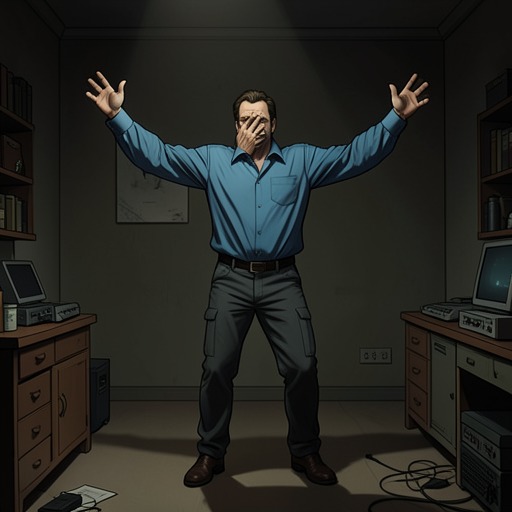
One Flew Over the Cuckoo's NestMcMurphy undergoes a lobotomy after a sustained struggle with Nurse Ratched and returns to the ward three weeks later in a condition his fellow patients recognize as a profound loss of self. The postoperative gurney turns the institution’s threat of escalating treatment into an irreversible-seeming outcome: McMurphy is physically present, but the face that once carried his defiance appears empty.
Background and Escalation
The possibility of severe treatment is established well before McMurphy’s operation. When Maxwell Taber challenges the medication routine, Nurse Ratched grips his arm, declares that kindness has failed, and tells him he may leave if he refuses to take his medication orally. The ward’s black aides later drag him to the mattress room and restrain him while he is forcibly treated. The episode shows how quickly a dispute over compliance can become physical.
McMurphy is also warned that open hostility can carry consequences beyond an argument. Fredrickson explains that patients labeled potentially assaultive may be sent to the Disturbed Ward, where they lose ordinary ward privileges; Harding warns that continued resistance could lead to the Shock Shop and even an operation. These threats make treatment part of the ward’s disciplinary structure, not simply a clinical backdrop.
The ward’s supposedly democratic procedures reinforce the same imbalance. When McMurphy tries to change the television schedule, Nurse Ratched declares the vote defeated because only twenty of the forty patients voted. She then calls attention to his apparent agitation and asks Dr. Spivey to note it. Later, McMurphy discovers that most of the patients he had been confronting Nurse Ratched for are voluntary, while he is committed. He realizes that they had not warned him how much he risked by antagonizing her, including the possibility of lengthening his confinement. The revelation helps explain why his resistance becomes more personally costly than theirs.
Repeated Treatment and Resistance
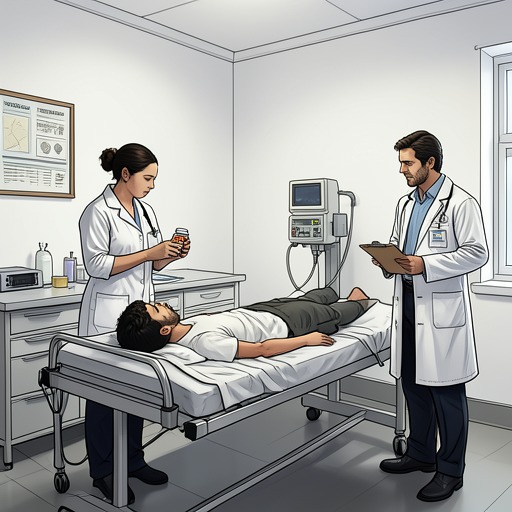
The novel places the lobotomy after a series of electroshock treatments. During one Friday visit to Building One, Chief Bromden sees patients taken through an unmarked metal door for treatment. One man, drugged and unsteady, braces his heels against the cement as staff pull him toward the table. McMurphy listens to the explanation that electricity is sent through a patient’s skull and asks what purpose it serves. The scene makes the treatment room’s physical force visible before McMurphy himself undergoes repeated shocks.
In the Disturbed Ward, Nurse Ratched and the doctor repeatedly approach McMurphy as he begins to recover from a treatment and ask whether he is ready to return to the ward and face his problem. He refuses, answering with a defiant patriotic boast and an insult rather than agreeing to their terms. Each refusal is followed by another treatment authorized by Nurse Ratched. He turns the encounters into performances for the watching patients, standing to bow to them afterward. On one occasion he pinches Nurse Ratched through the back of her uniform; the doctor appears to hide a grin. His humor and gestures preserve a visible form of resistance, but they do not stop the treatment cycle.
Return to the Ward
After McMurphy has been gone for three weeks, Nurse Ratched makes what Chief Bromden understands as her final move. The ward door opens and the black aides wheel in a gurney. Its chart identifies the patient as Randle P. McMurphy, postoperative, and lists a lobotomy. The gurney is left beside the patients whom the ward calls the Vegetables, placing McMurphy among those whose condition marks them as removed from ordinary participation.
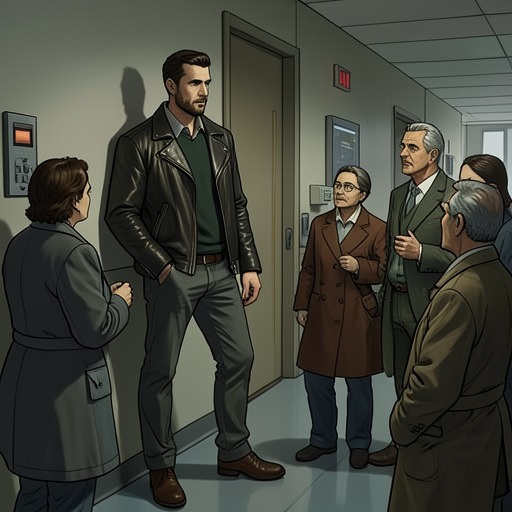
The patients first read the chart, then look at the head on the pillow: red hair, a milk-white face, and heavy purple bruises around the eyes. Scanlon rejects the possibility that this is really McMurphy. Martini points to the broken nose, scar, and sideburns as recognizable features, but Chief Bromden distinguishes resemblance from identity. Those physical marks can be reproduced; what is missing is the look in McMurphy’s face. The group’s close inspection turns the return into a collective recognition that the familiar body has come back without the presence they associate with him.
Consequences and Significance
The operation reverses the terms of McMurphy’s contest with Nurse Ratched. His earlier defiance could unsettle her authority, rally the patients, and make the ward’s rules look less inevitable. The gurney instead presents a body that can be identified by its chart and scars but no longer answers to the identity those signs once represented. The patients’ attention to his blank expression makes the loss legible through what they cannot find in his face.
Chief Bromden’s narration also connects this outcome to the institution’s incremental methods of control: medication enforced by restraint, threats of transfer and shock treatment, repeated electroshock, and finally the charted operation. McMurphy’s return does not restore the ward to its earlier balance. It exposes the human cost of a system that can answer resistance by reducing the resister to a managed patient, while leaving his companions to recognize, and mourn, the difference between the man they knew and the figure on the gurney.