Rabbits and Wolves Metaphor
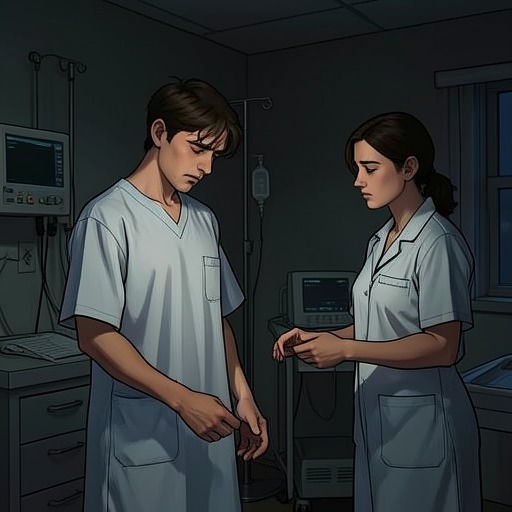
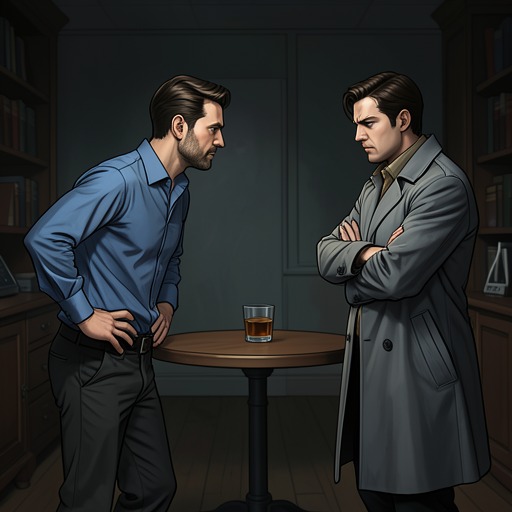
One Flew Over the Cuckoo's NestThe Rabbits and Wolves Metaphor gives Dale Harding a language for describing the ward as a hierarchy that its vulnerable residents have learned to treat as natural. In his account, Nurse Ratched occupies the position of the wolf, while Harding, Billy Bibbit, Cheswick, Dr. Spivey, and the other patients become rabbits who hide, endure, and accept their assigned place. Randle Patrick McMurphy challenges the fatalism built into this comparison. The exchange makes the metaphor more than a label for weakness: it shows how domination can be reinforced when those subject to it adopt the hierarchy as common sense, and it tests whether defiance can break that pattern.
The Metaphor of Natural Hierarchy
Harding first presents the rabbit-and-wolf relation as a law of existence. The strong grow stronger by consuming the weak; rabbits recognize the wolf’s superior strength, become frightened and elusive, dig holes, and survive by hiding rather than fighting. His conclusion is not simply that resistance is dangerous. He describes submission as appropriate to the order of the world, as though the rabbit’s place were a fact of nature rather than a position maintained by power.
That reasoning shapes Harding’s account of the ward. He identifies Nurse Ratched as the strong wolf who can teach patients to accept their role, and names himself, Dr. Spivey, Cheswick, and Billy Bibbit as rabbits. The image of patients “hippity-hopping through our Walt Disney world” makes the classification at once comic and demeaning: its playful surface does not soften Harding’s claim that they are diminished and vulnerable. He insists that they are not confined because the ward made them rabbits; they would be rabbits anywhere, because they cannot adjust to being what they are. By locating the cause within themselves, he turns a condition of subordination into an identity.
Harding and McMurphy Contest the Label
McMurphy refuses Harding’s claim that the rabbit role should be accepted. He asks whether Harding will let “some old blue-haired woman talk you into being a rabbit,” directly challenging the idea that Nurse Ratched’s authority deserves consent. Harding replies that he was “born a rabbit” and only needs the nurse to make him happy with his role. The difference between being talked into submission and believing oneself born submissive is central to the exchange: Harding presents the hierarchy as already internal, while McMurphy treats that belief as something that can still be opposed.
McMurphy’s protest does not settle who belongs in which category. When Harding calls him “soft and fuzzy and rabbit-souled” beneath his swagger, McMurphy jokingly accepts the rabbit image and asks what makes him one, listing his fighting and sexual tendencies. Harding answers with an ironic distinction: McMurphy may be a healthy, functioning rabbit, whereas the other men fail even by the standards of the role. The banter exposes the instability of Harding’s taxonomy. Even the traits that seem to contradict rabbit-like weakness can be folded into it, and the group’s self-description turns difference into another measure of inadequacy.
Shame, Complicity, and the Group
Harding’s performance also turns the metaphor back on the patients who have gathered around McMurphy. He asks Billy Bibbit and Cheswick to hop for McMurphy and show how furry they are. In Chief Bromden’s account, Billy and Cheswick change into hunched-over white rabbits, but their shame prevents them from doing what Harding demands. The image makes the metaphor visible in the scene while preserving its emotional force: the men are not simply named as weak; they are made to confront how exposing and humiliating that identity feels.
Harding then connects their embarrassment to a recent failure of solidarity. He suggests that they feel guilty because they did not stand up for their friend and once again allowed Nurse Ratched to turn them into her interrogators. He immediately undercuts that possibility of collective responsibility by calling their silence wise: in the rabbit’s world, he says, it is not the rabbit’s place to defend another rabbit. Cheswick begins to object, but Harding tells him not to become angry at the truth. The exchange reveals how the metaphor can help reproduce the conduct it describes. If self-preservation is treated as the only sensible response, each patient’s retreat leaves the others more isolated and the authority of the wolf less challenged.
The Unsettled Wolf
The metaphor finally turns toward McMurphy himself. Harding argues that beneath McMurphy’s “cowboy bluster” and “sideshow swagger” he may be as soft and rabbit-souled as the rest of them. McMurphy answers with bravado, but Harding’s assessment complicates any simple opposition between a fearless outsider and a helpless group. McMurphy’s visible confidence does not, by itself, prove that he stands outside the same vulnerability Harding attributes to the patients.
After Nurse Ratched’s order abruptly silences Harding, he turns to McMurphy and quietly suggests that he may be a wolf. McMurphy rejects both sides of the classification, insisting that he is no wolf and Harding is no rabbit. Harding’s final reply—that McMurphy has “a very wolfy roar”—preserves the metaphor while shifting its emphasis from identity to performance. A roar can signal strength, but Harding’s wording does not establish that McMurphy is invulnerable or that the ward’s hierarchy has been overturned. The scene leaves the classification unsettled: the patients may be more than their assigned roles, yet the language through which they understand those roles remains powerful.
Narrative and Thematic Significance
Because Chief Bromden narrates the exchange, Harding’s argument reaches the reader through a witness who renders its images with startling literalness, including the men’s transformation into rabbits. That account makes the metaphor vivid without reducing it to a detached theory. It is simultaneously a way the characters explain the ward’s power and an image through which the narration presents their shame, fear, and uneven capacity to resist.
The metaphor’s sharpest implication lies in Harding’s insistence that the wolf-and-rabbit arrangement is natural. McMurphy challenges the patients’ acceptance of that claim, while Harding demonstrates how thoroughly it has shaped their expectations of themselves and one another. The scene does not simply classify Nurse Ratched as powerful and the men as weak; it shows a contest over who gets to define weakness, whether submission is fate, and whether a patient can stand up for another without first ceasing to think of himself as a rabbit.