The Blank Television Protest
One Flew Over the Cuckoo's NestThe Blank Television Protest is a collective act of defiance in which McMurphy turns an extinguished television into the focus of a silent sit-in. What begins as his refusal to resume the ward’s housework becomes a public test of the nurse’s command: when she blacks out the screen and orders him back to work, he continues to watch it, and the other patients gradually join him. The protest makes an empty screen speak through the contrast between the patients’ stillness and the nurse’s mounting anger.
Background and the Challenge
The action follows the nurse’s announcement that the meeting is closed. She walks from the day room into the Nurses' Station with her smile still in place, but the back of her neck is red and swelling. For a time she sits behind the glass, breathing; about an hour later, the ward is still organized around work. McMurphy is on his knees scouring a baseboard, the narrator is sweeping the broom closet for the tenth time that day, and Scanlon and Dale Harding are running a buffer up and down the hall, polishing the wax into figure eights.
McMurphy looks at the clock and says it is game time. He stands, leaves his rag where it lies, and walks past the window where the nurse watches him. His grin and wink turn the passage into a visible challenge: rather than simply neglecting his work, he acts as if the nurse’s glare cannot dictate what he does next. The other patients keep working, but watch him from the corners of their eyes. His first move is individual; the unspoken question is whether anyone else will make it collective.
The Blank Screen
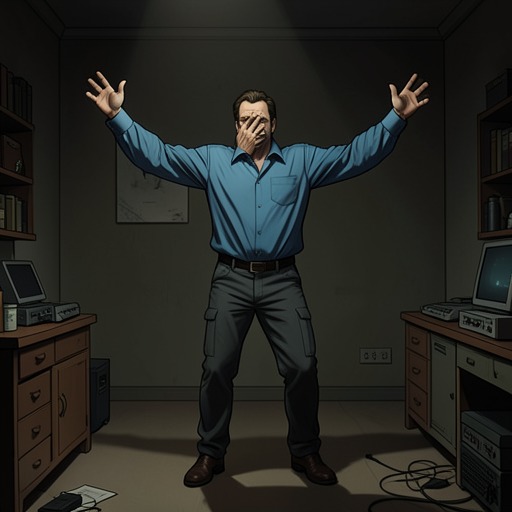
McMurphy drags his armchair in front of the television and switches it on. The picture resolves into a parrot on a baseball field singing razor-blade songs. He turns up the set to drown out the music from the ceiling speaker, pulls another chair in front of himself, crosses his feet on it, leans back, and lights a cigarette. His relaxed posture makes the act look less like an argument than a claim to ordinary choice. He jokes that all he needs now is a can of beer and a red-hot.
The nurse sees that everyone is watching her response, including the ward’s black aides, the little nurses, and residents beginning to arrive for the staff meeting. She waits until the song ends, then goes to the steel door with the controls and switches off the picture. The image swirls away, leaving only a small eye of light on McMurphy. The intervention removes the program but does not make him move. He does not even acknowledge that the picture is gone: with a cigarette between his teeth and his cap pushed forward, he settles back with his hands behind his head and his feet propped on the chair, watching the screen.
That persistence changes the meaning of the television. It is no longer a program the nurse can permit or withhold; it becomes the place where the patients can display their refusal to be redirected. McMurphy does not need a visible game to sustain the gesture. The nurse’s shutdown supplies the protest with its starkest image: a man watching a blank screen while the institution insists that he return to work.
From Refusal to Sit-In
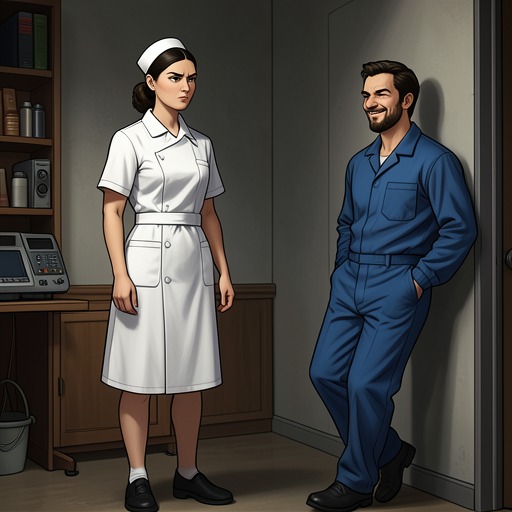
The nurse first calls from the Nurses' Station for McMurphy to help with the housework. He ignores her. She warns him that he is supposed to be working during those hours, then steps toward him and invokes his commitment and her jurisdiction, insisting that he is under her control and the staff’s. The command makes explicit the power behind what had seemed like a routine chore schedule. Yet the order does not produce the expected return to work.
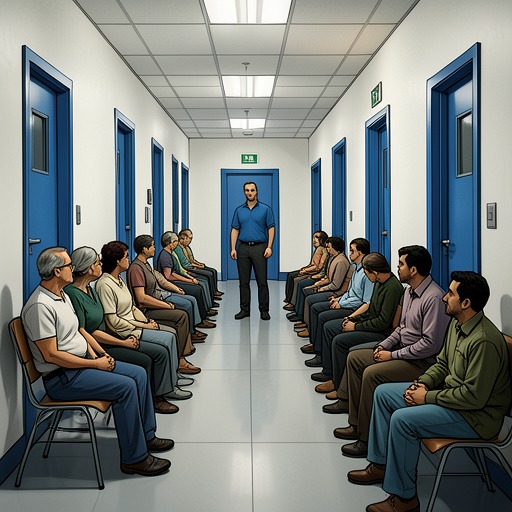
Dale Harding is the first to answer McMurphy’s example. He switches off the buffer, leaves it in the hall, brings a chair alongside McMurphy, sits, and lights a cigarette. The nurse orders him back to his scheduled duties. Her rebuke does not restore the work pattern. Cheswick gets a chair next; Billy Bibbit follows, then Scanlon, Fredrickson, and Sefelt. Finally, the patients put down their mops, brooms, and scouring rags and bring chairs to the television.
The progression matters: McMurphy’s defiance is no longer an isolated breach that staff can manage by reprimanding one patient. Each new chair makes the refusal more public, while each abandoned tool marks a departure from the work that had filled the hall. The protest takes shape through observable choices—switching off the buffer, leaving a rag behind, setting down a broom, sitting beside someone already seated—rather than through a formal speech or a negotiated demand.
The Nurse and the Watching Ward
The patients line up in front of the blanked-out set and watch the gray screen as if the baseball game were still visible. Behind them, the nurse rants and screams about discipline, order, and recriminations. The arrangement reverses the scene’s usual direction of attention: the patients face the screen, while the nurse, who has tried to command their attention, is left addressing their backs. The screen shows nothing, but the patients’ shared performance makes their refusal unmistakable.
The narrator registers the scene’s absurdity. An outsider entering the ward might see men watching a blank television while a fifty-year-old woman hollers behind them and conclude that the whole group was crazy. That incongruity is not incidental to the protest. The same tableau can appear as senseless behavior or as a deliberate answer to a rule-bound order: by maintaining the pretense of watching, the patients reveal that their coordinated stillness is itself the point.
The episode ends with the group seated together, not with a restored broadcast or an announced change in ward policy. Its immediate consequence is a shift in who acts and who watches: the patients have stopped their work and made the nurse’s response visible to the room. McMurphy’s tactic converts an ordinary television and a compulsory work period into a small collective refusal, while the gray screen holds the contradiction at its center—nothing is being shown, yet the ward’s struggle over control is on display.