Therapeutic Community disclosure and reporting rules
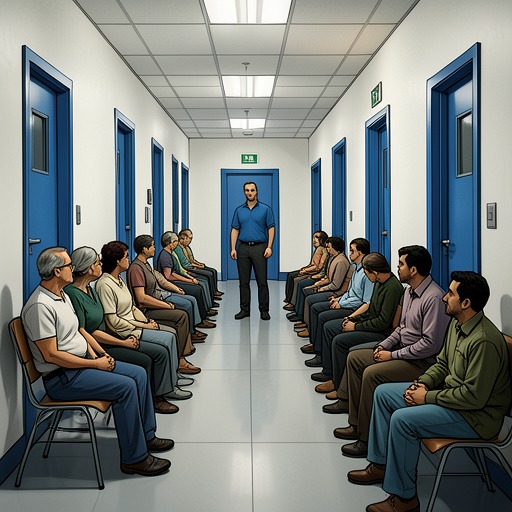
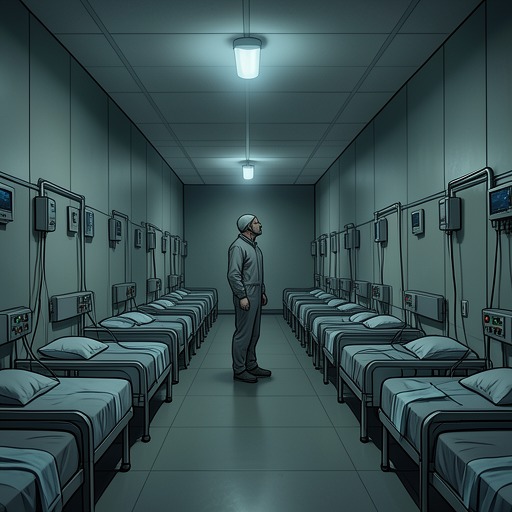
One Flew Over the Cuckoo's NestThe Therapeutic Community disclosure and reporting rules make openness a duty of treatment: patients are expected to discuss grievances and emotional problems before the group, confess personal information, and record what they hear from one another. Their stated purpose is rehabilitation through democratic participation and mutual help. In practice, the rules bind conversation to institutional observation. The logbook preserves disclosures for staff, while patients learn that what they say—and what they hear—may shape how the ward treats them.
Therapeutic Rationale and Procedure
When a new patient arrives, Dr. Spivey commonly explains the Therapeutic Community as preparation for life outside the hospital. The group is supposed to show a patient where he is out of place and help him learn to function among other people. Patients may bring a grievance or proposed change to the group rather than letting it build privately, and they are encouraged to discuss emotional problems in front of patients and staff. The ideal is a democratic ward, governed by patient votes and modeled on the free neighborhoods to which patients are expected to return.
Disclosure is built into that ideal as more than an invitation to speak. Patients are urged to confess old secrets and participate in group discussion, while recording a friend’s revealing remark in the logbook is described as helping him rather than informing on him. The logic makes the group responsible for exposing hidden trouble: personal knowledge is treated as material that can be examined collectively and made useful to treatment. Yet the same procedure gives staff access to private disclosures and makes secrecy appear incompatible with friendship. The language of shared responsibility thus joins peer conversation to institutional recordkeeping.
The Logbook and Peer Surveillance
The daily practice described by Chief Bromden shows how quickly this arrangement becomes surveillance. Patients watch one another; if someone lets slip something personal, a fellow patient may leave the table, go to the large logbook by the Nurses’ Station, and write it down. The example of an Acute who mentions that he used to watch his sister bathing makes the process concrete: the disclosure becomes an opportunity for the men at his table to compete to be the one who records it. Information presented as therapeutically significant is therefore also a commodity within the ward’s system of privileges.
The patient who enters a report receives a star beside his name on the roll and permission to sleep late the next day. That reward gives a direct incentive to monitor companions and convert their unguarded speech into a record. Chief Bromden suspects that the institution can use such material to justify sending a patient to the Main Building for reconditioning. That is his understanding of the logbook’s purpose, not an independently established account of every entry’s use; the contrast nevertheless exposes the distance between the official claim of mutual help and the narrator’s expectation of institutional punishment.
Disclosure, Discipline, and Unequal Risk
The pressure to speak openly operates alongside consequences for challenging ward authority. Fredrickson explains that a patient who tells Nurse Ratched to go to hell can be listed as Potential Assaultive and sent upstairs to the Disturbed ward; he says this has happened to him three times. He also describes the prospect of the Shock Shop and an operation if hostile behavior continues. These warnings are not presented as a specific penalty for making a confidential disclosure. They show, instead, the wider disciplinary environment in which the rules demand candor while patients have reason to fear how their words and conduct may be classified.
Randle Patrick McMurphy eventually learns that antagonizing Nurse Ratched carries risks beyond an argument in the day room. After discovering that other patients have more to lose, he says he understands why they defer to her and explains that he does not want to provoke an extension of his own sentence. Dale Harding clarifies the unequal stakes: he is a voluntary patient, whereas Randle Patrick McMurphy is committed; only a few men on the ward are committed. The expectation of openness therefore sits within sharply different conditions of liberty. A patient’s willingness to speak or resist cannot be separated from his status and from the consequences he believes the institution can impose.
Democratic Voting and Its Limits
The same tension appears when Randle Patrick McMurphy asks to change the television schedule so the patients can watch the World Series. Nurse Ratched rejects his proposal, invoking the delicately balanced schedule. At first the Acutes remain silent when he asks what they think, and only Cheswick raises his hand in favor. Later, after Randle Patrick McMurphy calls for a vote and asks to see the hands, all twenty Acutes raise them. Chief Bromden describes the bandaged hand of Randle Patrick McMurphy—wounded when he tried to lift the control panel—as the first to rise, followed by the others emerging from the fog.
The vote exposes the limits of the ward’s democratic promise. Nurse Ratched counts twenty votes but declares the proposal defeated because there are forty patients on the ward and a majority is required to change policy. The patients have been invited to vote, yet the threshold allows the administrator to close the question when only half the ward participates. When Randle Patrick McMurphy objects, Nurse Ratched asks Dr. Spivey to note that he seems upset, turning his protest into something to be recorded and interpreted as evidence about him. The procedure permits a public display of patient choice without guaranteeing that the choice can alter policy.
Collective Action and the Rule’s Contradiction
The vote also shows that disclosure and discussion do not produce only compliance. Randle Patrick McMurphy’s persistence gives the other men a visible first move to follow; the twenty raised hands register opposition not only to the television schedule but also to Nurse Ratched’s attempt to send him to the Disturbed ward and to years of being beaten down. Chief Bromden’s image of men being drawn out of the fog makes collective participation a change in what the patients can do together. Their action briefly turns the meeting’s prescribed discussion into open resistance.
That solidarity does not erase the power built into the rules. The institution retains control over what counts as a valid majority, while staff can observe, record, and interpret patients’ speech and reactions. The governing contradiction is that the Therapeutic Community calls for democratic self-management while routing private information toward staff authority and leaving policy enforcement in institutional hands. Participation can help patients recognize shared interests, but the logbook, disciplinary classifications, and controlled vote also make participation legible to the same system they contest.