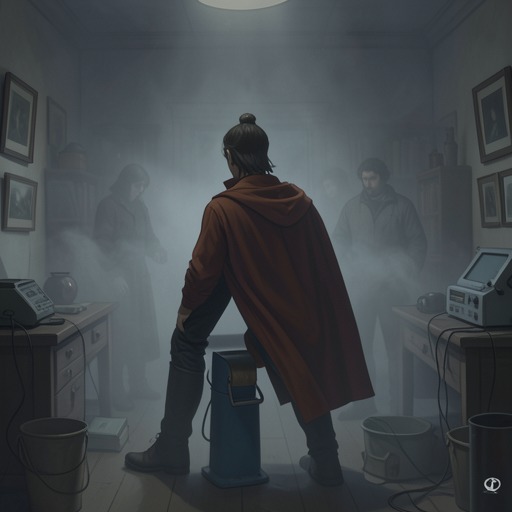
Ward fog device
One Flew Over the Cuckoo's NestThe Ward fog device fills the hospital ward with a cold, dense whiteness that obscures its occupants and unsettles their sense of time. In Chief Bromden’s account, it is at once a material part of the ward’s machinery and an image of the disorientation imposed on patients: it can smother perception, yet also seem to offer somewhere to hide.
Appearance and Operation
Chief Bromden describes the fog as issuing from a machine in the ward. During an episode in the shaving room, the ward’s black aides have dragged him from the mop closet when the machine starts again. The fog comes down cold and white, like skim milk, and thickens until he cannot see six inches ahead. Its reach is physical and immediate, reducing the room to a space he can barely perceive while the aides hold him.
The device’s controls and precise operating mechanism are not explained. Its presence is nevertheless part of a larger environment of institutional machinery: elsewhere, Chief Bromden imagines the ward’s daily routine being processed through a machine behind the Nurses’ Station, with punched Order Daily Cards organizing patients’ schedules. The fog machine is not identified as part of that card system, but both belong to his account of a ward where people are subjected to forces that seem mechanical and difficult to resist.
Disorientation and Institutional Control
The shaving-room episode shows the fog intensifying an already coercive encounter. As it obscures the room, Chief Bromden cannot quiet his scream; Nurse Ratched rushes down the hall, and the aides continue to restrain him. The fog does not free him from their grasp. Instead, it narrows his perception while the staff retain physical control, making concealment seem possible but unavailable in that moment.
The fog also alters the patients’ experience of time. Chief Bromden describes it as one of the few reprieves from Nurse Ratched’s control of the ward clock: within the fog, time loses meaning. That relief is limited. He observes that the ward has not been filled to full force with fog since Randle Patrick McMurphy arrived, and contrasts the fog with the clock’s manipulation of the daily schedule. One erases the sense of time; the other accelerates it until ordinary activities become a frantic scramble.
Concealment and Narrative Meaning
When wisps of fog seep from beneath Randle Patrick McMurphy’s bed at night, Chief Bromden hopes McMurphy knows to hide in it. The moment links the device’s obscuring effect to the possibility of evasion, but it remains a hope rather than a confirmed use of the fog as a successful hiding place. Its double meaning is central: the same whiteness that can make a patient feel trapped and unable to see might also screen someone from view.
Because the machine is presented through Chief Bromden’s first-person perceptions, its significance rests on both the ward’s apparent machinery and the narrator’s fearful, image-rich understanding of that machinery. The fog is not merely an atmospheric effect. It makes institutional power palpable as a force that can alter what patients see and how they experience time, while its potential to conceal leaves a narrow opening for imagined resistance.