Chief Bromden’s killing of McMurphy
One Flew Over the Cuckoo's NestChief Bromden’s killing of Randle Patrick McMurphy follows McMurphy’s return to the ward after a lobotomy. Chief sees the operation’s result not only in the bruised, blank face on the gurney but in the prospect that Nurse Ratched could leave McMurphy there for years as a warning against resistance. His decision to suffocate him is both a death and a refusal to let the ward turn what remains of McMurphy into its example.
The Treatment Behind the Return
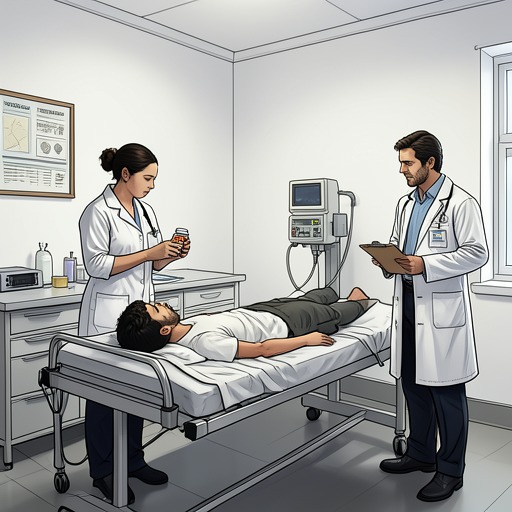
The event belongs to a ward where treatment and coercion have become difficult to separate. Earlier, Maxwell Taber questions why he must take medication; Nurse Ratched grips his arm, calls his behavior childish and hostile, and tells him he may leave if he will not take the medicine orally. The ward’s black aides later seize him in the latrine and drag him to a mattress room, where he is held down for an injection. The scene establishes the physical force that can stand behind the ward’s language of care.
Electroshock treatment supplies another part of this context. On a Friday three weeks after the vote on television, patients are sent to Building One under the explanation that they are receiving chest X-rays. Chief recognizes the trip as a check on whether their machinery is functioning. From a bench outside an unmarked metal door, he hears a patient scream and sees a man dragged inside, struggling against the technicians. McMurphy watches another patient taken through that door and asks whether electricity is sent through a person’s skull. His blunt question makes the procedure’s bodily reality harder to disguise with institutional terminology.
McMurphy later undergoes three more treatments in one week. As he begins to emerge from each, Nurse Ratched and a doctor ask whether he is ready to return to the ward and face his problem. He answers with defiance, bows to the grinning patients, and refuses to give up the ship; the doctor then authorizes another treatment. Once, McMurphy pinches Nurse Ratched through the back of her uniform, reddening her face. The recurring exchange makes his resistance visible, but also shows how the ward can answer it by sending him back for treatment.
The Gurney and the Recognition
Three weeks after McMurphy has been gone, a gurney is wheeled through the ward door. Its chart identifies him as postoperative and records that he has had a lobotomy. The patients read the chart, then look at the head on the pillow: red hair, a milk-white face, and heavy purple bruises around the eyes. The sequence makes the institutional label precede the patients’ effort to recognize the person beneath it.
Scanlon rejects the body as a fake, though Martini points out the familiar broken nose, scar, and sideburns. Chief, standing beside Martini, says the features can be copied but the look cannot: there is nothing in the face. When another patient finds tattoos beneath the sheet, Chief insists that the arms, once so big, cannot be reproduced either. Their argument separates recognizable marks from the force and presence that had made McMurphy himself. The body carries evidence of his identity while seeming to the patients to have lost its defining expression.
For the rest of the afternoon, Scanlon, Martini, and Chief ridicule the figure as a sideshow fake. Yet more patients drift over, pretending to go to the magazine rack or drinking fountain so they can look again. Chief watches them and considers what McMurphy would have done. He is certain McMurphy would not have allowed his body to remain in the day room for twenty or thirty years, his name attached, while Nurse Ratched used him to show what happens to someone who challenges the system. That imagined future gives Chief’s decision its immediate purpose.
Chief’s Decision
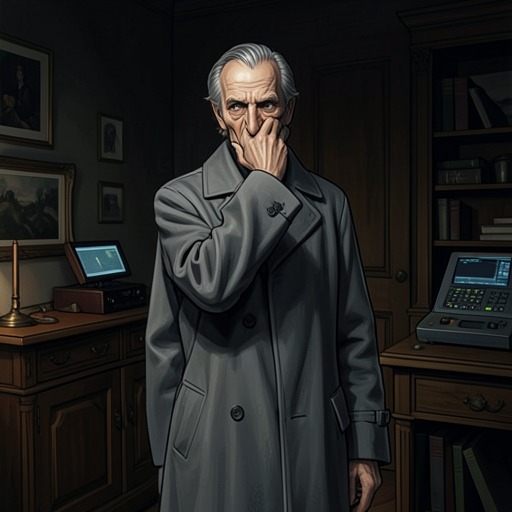
At night, Chief waits until the dormitory sounds indicate that everyone is asleep and the ward’s black aides have stopped their rounds. He has listened for hours to McMurphy’s uneven breathing, hoping it will stop for good, but has not yet turned to look at him. Moonlight fills the dormitory; when Chief sits up, his shadow falls across the body. The eyes are open and follow his movement as he crosses the few feet between the beds.
Chief presses a pillow over McMurphy’s face and holds him down. McMurphy’s body resists fiercely, kicking and thrashing; Chief lies full length on top of it and scissors the legs with his own until the struggle ends. He continues to hold the pillow until the body is still, then lifts it. The expression has not changed. Chief closes the eyes with his thumbs, lies back in bed, and covers his face. Scanlon’s quiet reassurance from the next bed reveals that Chief has not acted entirely unseen: Scanlon is awake and knows enough to tell him to take it easy.
Consequence and Significance
The killing prevents McMurphy’s lobotomized body from remaining in the day room as a long-term warning to the other patients. Its immediate meaning is therefore bound to the contrast between the recognizable body and the absent expression: the scar, broken nose, tattoos, and red hair persist, but the patients cannot find in the face the presence they associate with McMurphy. Chief’s action answers not just to a death already imposed by surgery, but to the prospect of that altered body being made to serve Nurse Ratched’s authority.
The scene also completes a reversal in which Chief, who has long hidden behind silence and apparent deafness, becomes the person who acts decisively. The narration gives the killing through his close attention to breathing, movement, and the body’s resistance, without making the act clean or effortless. McMurphy fights for life; Chief keeps him from being displayed. The ending holds those facts together: an act of violence, an act of refusal, and a final protection of the dignity Chief believes the ward would otherwise take from his friend.